
September 10, 2026
Best Car Wash Water Filter: How to Actually Compare Your Options
Search "best car wash water filter" and you'll get a list of products ranked by review count, not by whether they'd hold up on your line. There's no single best filter. There's a filter that's sized correctly for your flow rate, rated for the particulate size you're dealing with, and built with enough capacity to justify the plumbing labor to install it. Everything else is marketing copy.
Micron Rating: What It Tells You and What It Doesn't
Micron rating tells you the smallest particle size a filter is designed to catch. Lower number, finer filtration. That's it. It doesn't tell you flow rate, it doesn't tell you how fast the filter will clog with your specific water, and it doesn't tell you anything about sediment load if your source water is hard or high in iron. A 5-micron filter sitting in front of water with heavy sediment will clog fast regardless of what the packaging promises. Match the micron rating to what your pre-treatment setup and water quality actually require, not to whatever number sounds most impressive on a spec sheet.
Flow Rate Is the Number Most Operators Skip
This is where undersized filtration causes real problems. A filter rated fine for a single mobile detailing rig will bottleneck a self-serve bay running multiple guns, and it won't come close to handling tunnel throughput. If your filter can't move water at the rate your equipment demands, you get pressure drop at the nozzle — which shows up as customer complaints, not filter alarms. Before comparing filters, know your site's actual GPM demand at peak use, not average use.
Capacity: How Long Until You're Back Here Again
Capacity is rated in gallons treated before performance drops off, and it's tied directly to your water quality and usage volume. A high-capacity filter on a low-volume mobile setup might last months. The same filter on a busy tunnel could need replacement in weeks. This is where "best" gets site-specific — a filter that's overkill for a one-bay operation might be exactly right for a five-bay tunnel, or the reverse.
What Marketing Claims Won't Tell You
Terms like "premium," "industrial-grade," or "advanced filtration" aren't standardized. They don't map to a micron rating, a flow rate, or a certification you can verify. When you're comparing filters, ask for three numbers: micron rating, rated flow (GPM), and rated capacity (gallons). If a listing doesn't give you those, you're evaluating a marketing page, not a spec sheet.
Sizing by Site Type
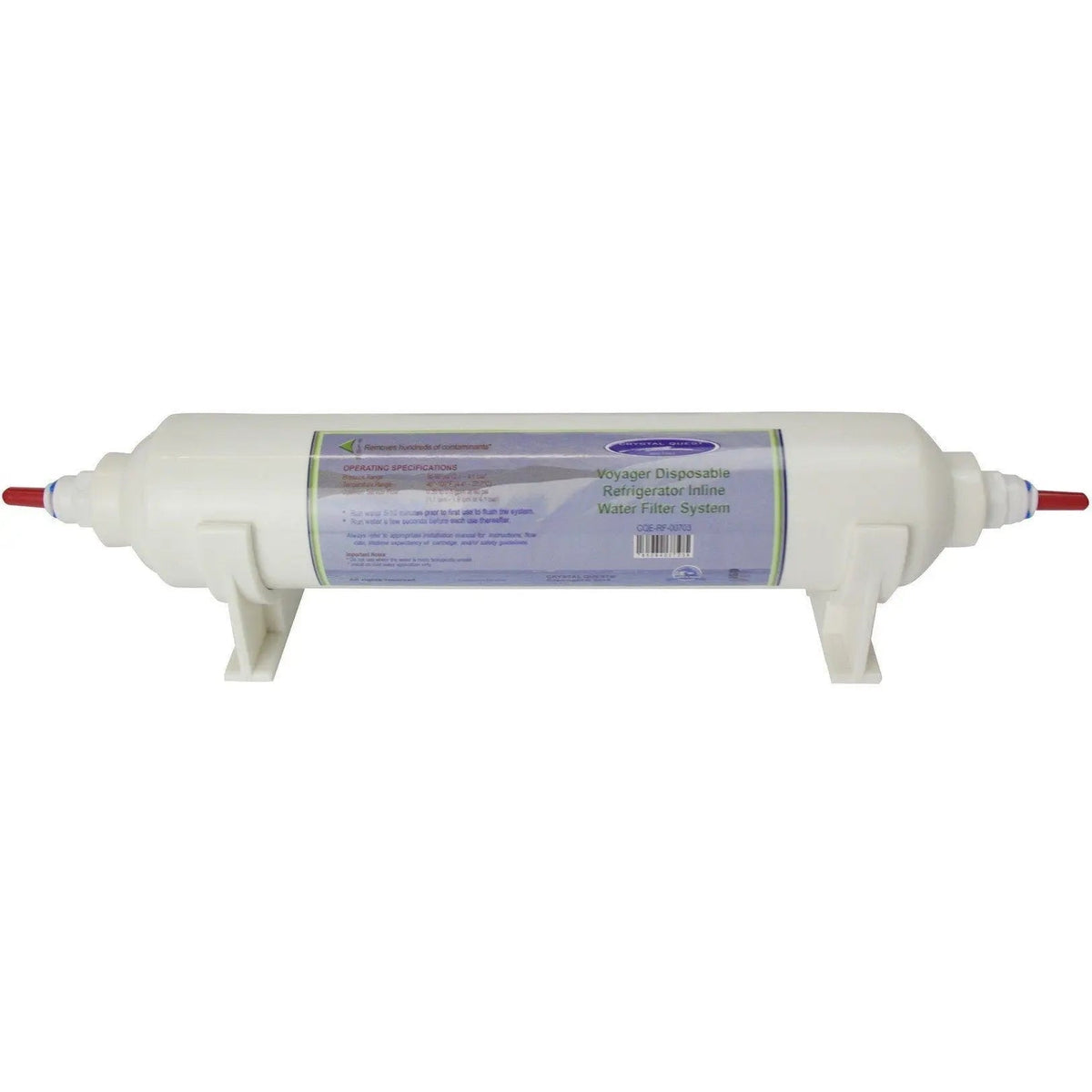
Mobile detailers and single-line setups usually need something compact and simple — a point-of-use inline filter covers a single line without adding plumbing complexity. Fixed self-serve bays typically step up to a single inline commercial filter for higher flow and capacity. Multi-bay and tunnel operations often need a triple inline system to handle sustained flow without pressure drop, sometimes paired with whole-site pre-filtration ahead of softening or RO stages. If you're not sure which tier fits your GPM and sediment load, the car wash water filtration systems page breaks down configurations by site type, and the full buyer's guide walks through how filtration fits alongside softening and RO in a spot-free setup.
What's Outside This Conversation
One thing worth being direct about: reclaim tank design, wastewater plumbing, and discharge permit compliance are not part of what we sell or advise on. Those are site engineering and regulatory questions for your plumber or local authority. What we can speak to is the treatment stages — filtration, softening, RO, and DI — that sit on the intake side of your system.
The Real Comparison
Stop comparing filters by star rating. Compare them by micron rating against your water quality, flow rate against your peak GPM demand, and capacity against your monthly volume. That's the whole evaluation. Everything else is packaging.
Not sure what fits your site's flow rate and water quality? Request a free quote and we'll help you size it correctly the first time.