
September 07, 2026
Best Water Softener for Espresso Machines? Why That's Often the Wrong Question
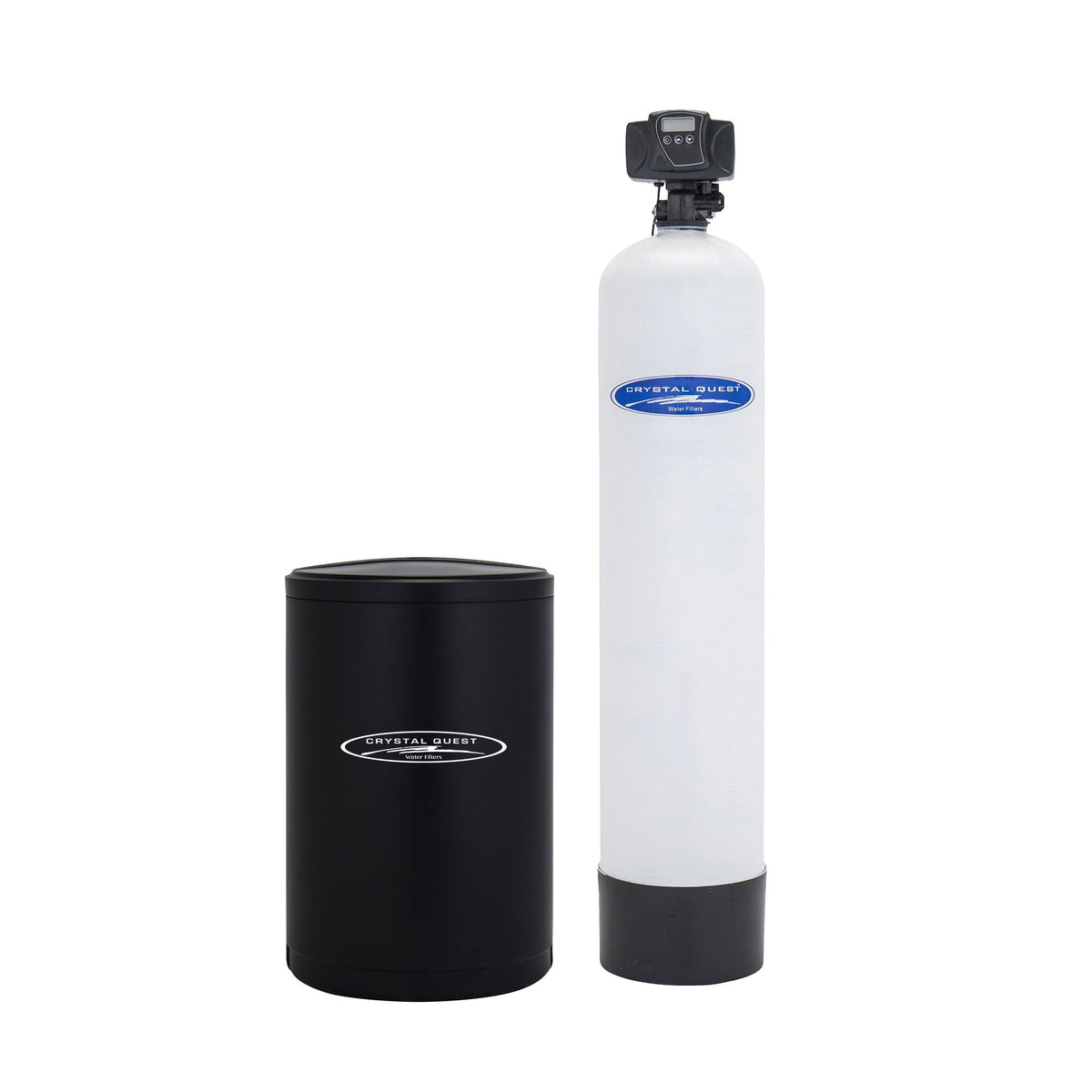
Search "best water softener for espresso machines" and you'll get a lot of generic advice built for whole-house residential use. Espresso equipment isn't a house. It's a small boiler running hot water through tight internals, day after day, with zero tolerance for scale buildup. The right answer depends on what's actually in your water, and half the time a softener isn't even the correct piece of equipment.
A Softener and an Inline Filter Are Not the Same Tool
An inline filter reduces chlorine taste/odor, sediment, and sometimes scale-forming minerals to a limited degree through media like catalytic carbon or a small scale-inhibiting cartridge. A water softener does one specific job: it uses ion exchange resin to pull calcium and magnesium out of the water entirely, replacing them with sodium. That's the only thing that actually stops hardness at the source.
If your water is genuinely hard, an inline filter will slow scale accumulation but won't eliminate it. If your water is only moderately hard, or the chlorine taste is the bigger issue, a full softener is overkill you'll pay for in salt, maintenance, and counter space.
When Hardness Is the Real Problem
Hardness matters because scale forms inside the boiler, on heating elements, and inside the group head and steam wand. Once it builds, you get inconsistent extraction temperatures, slower steam recovery, and eventually a service call for descaling or element replacement. If your municipal water report or a hardness test strip puts you above roughly 7-10 grains per gallon, you're in territory where scale will accumulate on schedule, not by chance.
This is where a dedicated softener earns its cost. For a single espresso machine or a small café's full water line, a light commercial softener system (30,000-60,000 grains) is sized appropriately without the footprint or salt consumption of a full-building unit. It's built for exactly this: protecting equipment, not treating an entire restaurant's water supply.
When an Inline Filter Is Enough
If your hardness reading is moderate and your bigger complaint is chlorine taste affecting espresso flavor, you likely don't need a softener at all. A properly specced inline filter handles that job and protects the machine from sediment and chlorine-driven gasket degradation.
- Single machine, moderate water quality: point-of-use inline filter for straightforward, low-cost protection.
- Single machine, higher volume or harder water: commercial single inline filter for more filtration capacity per cartridge change.
- Multiple machines or a full bar setup: commercial triple inline filter to cover higher flow without shortening service intervals.
None of these remove hardness the way a softener does. They reduce scale-forming tendency and clean up taste. That's a meaningful difference when you're deciding what to buy.
Softener Plus Filter: The Combination Some Sites Actually Need
Some locations have both problems: hard water and taste/odor issues. In that case the softener handles hardness upstream, and a smaller inline filter downstream refines taste right before the machine. This is common in locations on well water or municipal systems with variable seasonal chlorine dosing. It's not the cheapest setup, but it's the one that actually solves both issues instead of half-fixing one.
How to Decide Without Guessing
Get a hardness number before buying anything. A softener sized for water that isn't actually hard is wasted money and unnecessary maintenance. An inline filter installed on water that's genuinely hard is a slow, expensive path to a boiler descale. If you're unsure which category your site falls into, our F&B buyer's guide covers the broader decision framework, and our food & beverage filtration hub breaks down equipment options by use case.
Tell us your water hardness reading, machine count, and location size, and we'll tell you straight whether you need a softener, an inline filter, or both. Request a quote and we'll size it correctly the first time.