
November 05, 2026
Brewery Filtration Results That Protect Every Pour
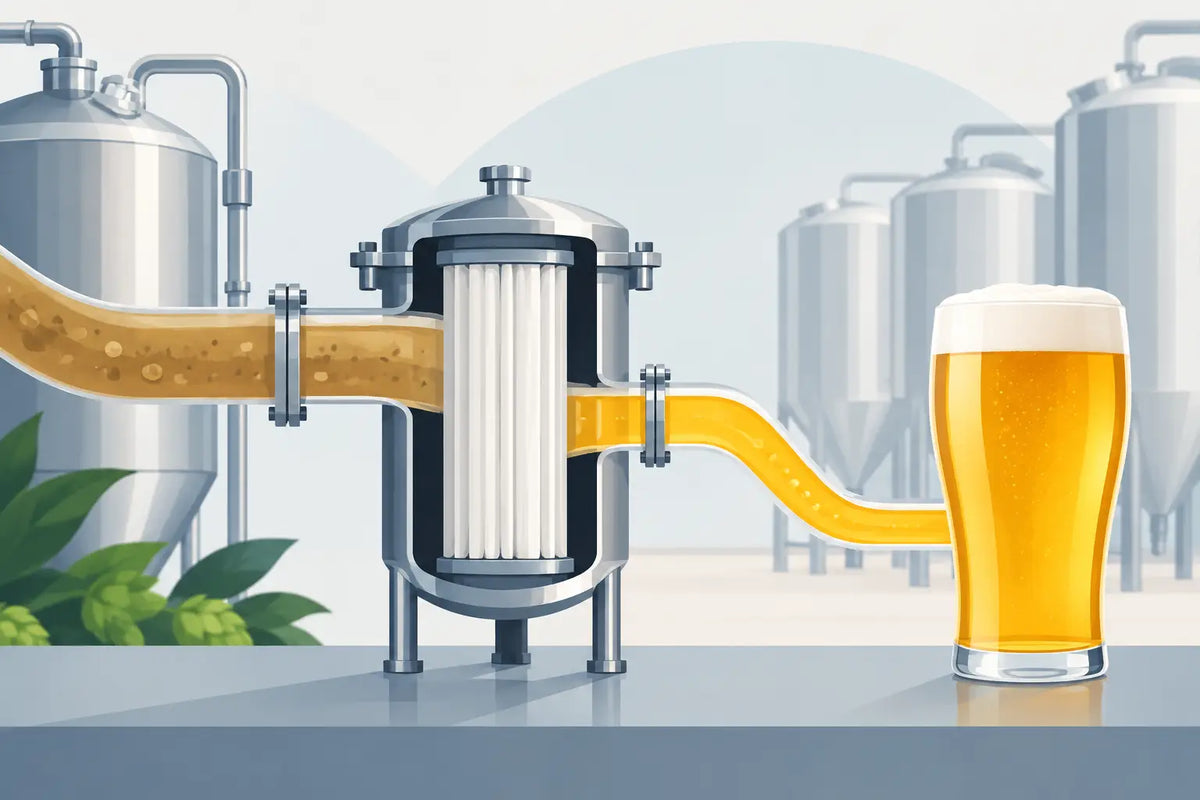
A pilsner that tastes crisp in one batch and dull in the next may not have a recipe problem. It may have a water problem. Brewery filtration results influence more than clarity at the tap: they affect flavor consistency, brewhouse scale, membrane life, cleaning efficiency, and the confidence that every pour meets your standard.
For breweries, tap water is rarely a finished ingredient. Municipal supplies can change seasonally, well water can carry iron or sulfur, and even water that appears clear may contain chlorine, hardness minerals, sediment, or dissolved solids that interfere with brewing and equipment. The right filtration plan starts with the source water and the result you need from it.
What Good Brewery Filtration Results Look Like
Good results are measurable, repeatable, and tied to a specific purpose. A system intended to protect a steam boiler has different targets than one preparing water for a pale ale or polishing final product before packaging. Treating every brewery application as if it needs the same filter is a costly mistake.
At the incoming-water stage, breweries commonly look for lower sediment, reduced chlorine or chloramine, controlled hardness, and more consistent dissolved mineral content. Carbon filtration can help protect flavor and remove disinfectants that may create medicinal or plastic-like off-notes. Sediment filtration protects downstream valves, carbon tanks, membranes, and process equipment from particulate loading.
For brewing liquor, the goal may be a dependable baseline that supports mineral additions and pH control. Reverse osmosis can significantly reduce dissolved solids, giving brewers more control when their local supply is hard, highly variable, or unsuitable for delicate beer styles. It also creates a blanker canvas, but it is not automatically the right answer for every operation. RO water often needs intentional remineralization to support mash chemistry and the desired beer profile.
Final beer filtration has another set of goals. Depending on the beer and packaging process, a brewery may seek brighter appearance, yeast reduction, microbiological stability, or longer shelf life. Some breweries choose unfiltered products because haze, mouthfeel, or live yeast is part of the intended character. In that case, filtration should focus on process water and sanitation support rather than stripping the finished beer of what makes it distinctive.
Start With a Water Test, Not a Filter Size
The most reliable brewery filtration results begin with a current water analysis. A city water report is helpful, but it does not always show the conditions at your building, at your production flow rate, or during seasonal source changes. Private wells need even closer attention because iron, manganese, sulfur, hardness, bacteria, and turbidity can vary significantly.
A useful analysis should consider hardness, pH, total dissolved solids, alkalinity, chlorine or chloramine, iron, manganese, turbidity, and microbiological concerns where applicable. Breweries may also need to account for silica, sulfates, chlorides, and sodium, especially when evaluating RO performance or building a mineral profile.
Flow demand matters just as much as chemistry. A small taproom may need modest filtered water for brewing, ice, glass washing, and a few points of use. A production facility may require steady high-volume flow for brewing, cellar cleaning, boilers, packaging, and employee use. If a filter is selected only by nominal gallons per minute, pressure drop and peak demand can quickly expose the mismatch.
Know Which Problem You Are Solving
Chlorine and chloramine call for properly sized carbon treatment. Sediment calls for filtration rated for the particle load and desired micron level. Hardness may require softening for equipment protection, while high dissolved solids may point toward reverse osmosis. Iron and sulfur generally need dedicated well-water treatment ahead of fine filtration or RO.
These distinctions matter because no single cartridge or tank solves every issue. Installing carbon ahead of heavy iron contamination, for example, can foul the media early. Running untreated hard water into an RO system can cause scale and reduce membrane output. A staged design protects each treatment step and makes maintenance more predictable.
Build the Treatment Train Around the Brewery
A practical commercial water treatment train often begins with sediment reduction, followed by carbon filtration for chlorine or chloramine removal. From there, the configuration depends on the source water and intended use. Softening can be appropriate before hot-water equipment, boilers, or RO membranes. RO may serve all brewing water, a dedicated brew line, or specific applications that require lower mineral content.
Ultrafiltration can be useful when a brewery needs fine particulate and microbial barrier performance without removing dissolved minerals the way RO does. UV disinfection may add protection where microbiological control is a concern, particularly for well water or stored water. UV works best with clear, low-turbidity water, so it is generally installed after adequate pretreatment.
For finished beer, the filtration approach should follow the brewer's quality objectives and the packaging process. Depth filters, membrane filters, and other beer-specific equipment are selected according to haze tolerance, yeast load, throughput, and whether sterile filtration is required. This is not an area for guesswork. Pore size, differential pressure, compatibility, and sanitation procedures all affect product quality.
Monitor the Numbers That Warn You Early
Filtration systems rarely fail without signals. Pressure gauges before and after a filter reveal rising differential pressure, a common sign of loading or fouling. Flow rate shows whether production demand is exceeding system capacity. For RO, permeate flow, feed pressure, rejection rate, and conductivity help indicate membrane condition and overall performance.
Establish a simple operating log from the first day. Record incoming-water conditions, flow, pressure drop, filter change dates, salt use where applicable, RO conductivity, and any quality concerns noticed by the brewing team. The log does not need to be complicated. Its purpose is to make changes visible before they become downtime, wasted product, or a flavor consistency issue.
Testing treated water on a schedule is equally valuable. A carbon bed that has reached chlorine breakthrough can affect beer flavor and damage downstream membranes even if the water still looks and smells normal. A softener that is not regenerating correctly can allow hardness through to a boiler or RO system. Routine checks are less expensive than reacting to a failed component during a brew day.
Common Reasons Results Fall Short
Undersizing is one of the most common problems. A system may perform well during a slow test but struggle when brewhouse demand, cleaning cycles, and packaging operations overlap. Commercial systems should be sized for realistic peak use, not average consumption alone.
Poor pretreatment is another frequent cause. Fine filters and RO membranes are not designed to carry the full burden of heavy sediment, iron, or scale-forming hardness. The order of treatment matters. Protecting the most sensitive equipment upstream extends service life and improves operating stability.
Maintenance also affects results. Filters have finite capacity, carbon media must be changed or rebedded on schedule, and membranes need appropriate cleaning and monitoring. Delaying service to save a small amount today can lead to lost production and much higher replacement costs later.
Finally, do not confuse filtered water with controlled water. Removing chlorine may solve one problem while leaving alkalinity or mineral variability untouched. For breweries focused on repeatable recipes, water treatment and water chemistry should work together.
Choose Support That Scales With Production
A brewery does not need the largest treatment system available. It needs a system matched to its water report, production schedule, floor space, drain access, operating budget, and expansion plans. A well-designed setup can start with the immediate pain point while leaving a clear path for added capacity or additional treatment later.
PureWaterGuys helps commercial operators evaluate source-water concerns and specify filtration, softening, reverse osmosis, and UV solutions that fit the application. The goal is practical: protect equipment, support consistent production, and avoid paying for treatment your brewery does not need.
Before the next expansion, seasonal menu release, or equipment replacement, test the water at the brewery and compare it with the water your beer recipe expects. That single step can turn filtration from a maintenance expense into a dependable part of every great pour.