
November 16, 2026
Brewery Water Treatment: Water Chemistry Basics for Craft Brewers
Beer is mostly water, so whatever is in your water ends up in your beer. Chlorine, chloramine, dissolved minerals, and inconsistent hardness don't just affect taste at the tap - they affect mash chemistry, yeast health, and batch-to-batch consistency. Before you spec any equipment, it helps to understand what you're actually treating and why.
Chlorine and Chloramine: The First Thing to Pull Out
Most municipal water supplies are disinfected with chlorine or chloramine. Chlorine is relatively easy to remove with activated carbon. Chloramine is more stable and takes more contact time and the right media to strip out. Either way, leaving either compound in your brewing water is a problem - chlorine and chloramine react with phenolic compounds during the mash and fermentation, producing chlorophenols that create medicinal, plastic-like off-flavors. This happens at levels far below what most people notice in drinking water.
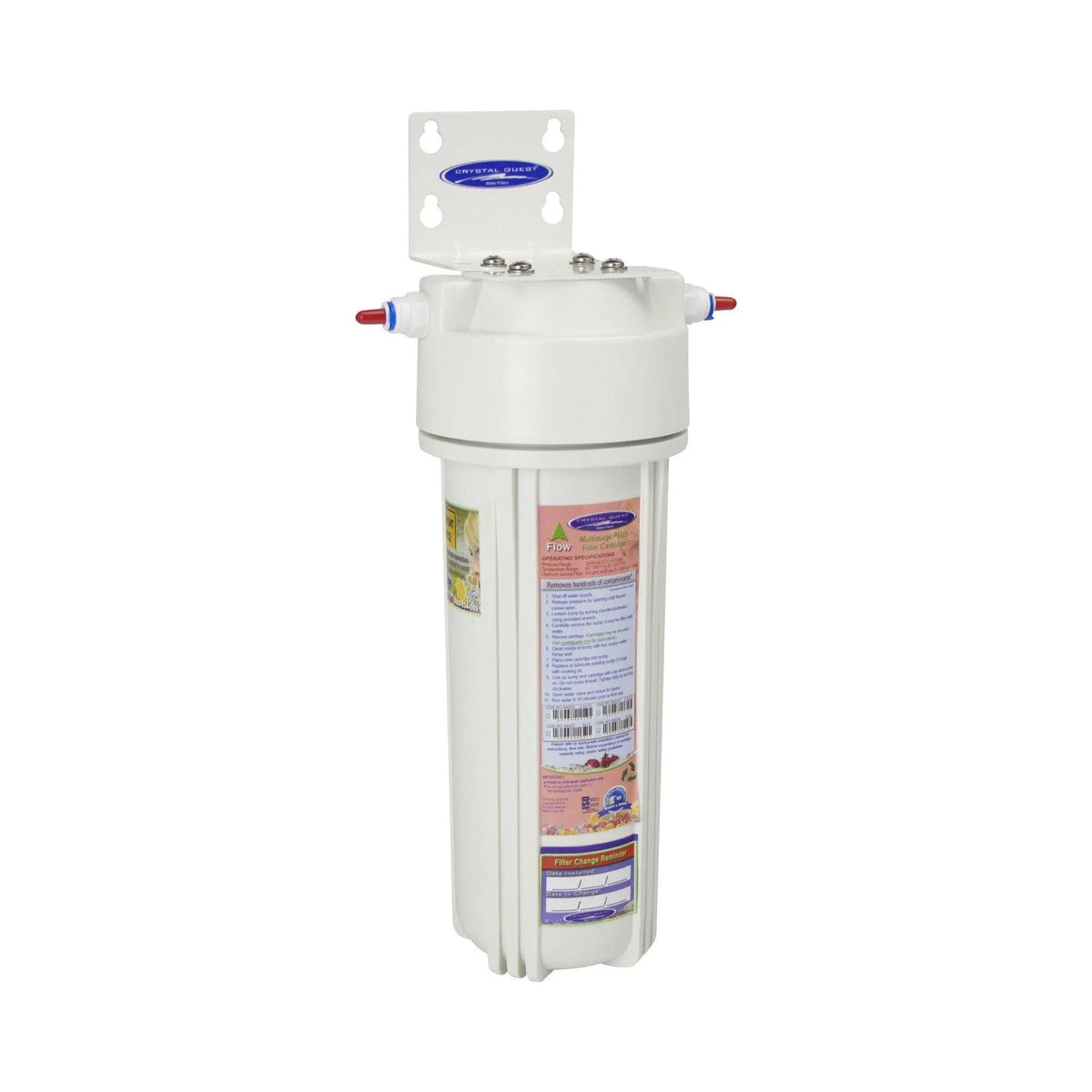
For a single brewhouse line, a carbon-based inline filter rated for chloramine reduction is usually the first line of defense. Smaller operations running one system off a single water line can use the Commercial Single Inline Water Filter, while breweries feeding multiple points - brewhouse, CIP, rinse water - often need the added capacity of the Commercial Triple Inline Water Filter.
Hardness: Not Automatically a Problem, But Not Optional to Ignore
Hardness (calcium and magnesium) isn't something you automatically strip out the way you do chlorine. Some hardness is actually useful for mash pH and enzyme activity, depending on the style you're brewing. The issue is consistency. If your source water swings in hardness from week to week or season to season, your mash pH and extraction swing with it, and so does your beer.
Hard water also causes scale buildup inside heat exchangers, kettles, and boilers - which is a maintenance and efficiency problem even before you get to flavor. If your water report shows consistently high hardness, a softener ahead of your brewing water supply gives you a stable starting point instead of a moving target. A light commercial unit like the Light Commercial Softener (30,000-60,000 grains) is sized for operations that need to control hardness on boiler feed or CIP lines without over-building the system.
Reverse Osmosis and the Mineral Build-Back Problem
Many craft breweries use reverse osmosis to strip water down to near-zero dissolved solids, then rebuild mineral content intentionally using brewing salts - gypsum, calcium chloride, Epsom salt - to match a target water profile for a given style. This "blank slate" approach gives the most control, but it only works if the RO system is sized correctly for your brewhouse volume and if the build-back step is handled deliberately, not as an afterthought.
Undersizing RO capacity is one of the most common mistakes we see - a system that can't keep up with brew day demand becomes a bottleneck instead of a tool. For brewhouse-scale volume, the Commercial Mid-Flow RO System (500-7,000 GPD) covers most small-to-mid craft operations. If you're not sure what GPD rating matches your mash and sparge water needs, the Commercial RO Pricing & Sizing Guide walks through how to size against actual brew volume rather than guessing.
On the remineralization side, some operations want a simpler baseline adjustment rather than manually dosing salts for every batch. The Eagle RM-1000 Alkalize/Ionize/Remineralizer adds back minerals and adjusts pH post-RO, which can work as a starting profile that brewers then fine-tune with targeted salt additions.
Building the Right Treatment Train
No single filter solves brewery water chemistry. The right setup is usually sequential: sediment and chlorine/chloramine removal first, hardness control if your source water calls for it, then RO for precise mineral control, with remineralization as the final adjustment step. For multi-line operations - brewhouse plus kitchen, bar, and ice - a whole-location pre-filter like the Crystal Quest Whole House Compact Filter protects everything downstream, including your brewing-specific equipment.
If you're building out a full food-and-beverage water program and brewing is just one piece of it, the Food & Beverage Water Filtration Systems hub covers how brewhouse, kitchen, and bar needs fit together.
Every water supply is different, and the right treatment train depends on your source water report and your brewhouse volume. Request a quote and we'll help you size a system around your actual water, not a generic recommendation.