
August 05, 2026
Your Filter Media Replacement Schedule Explained
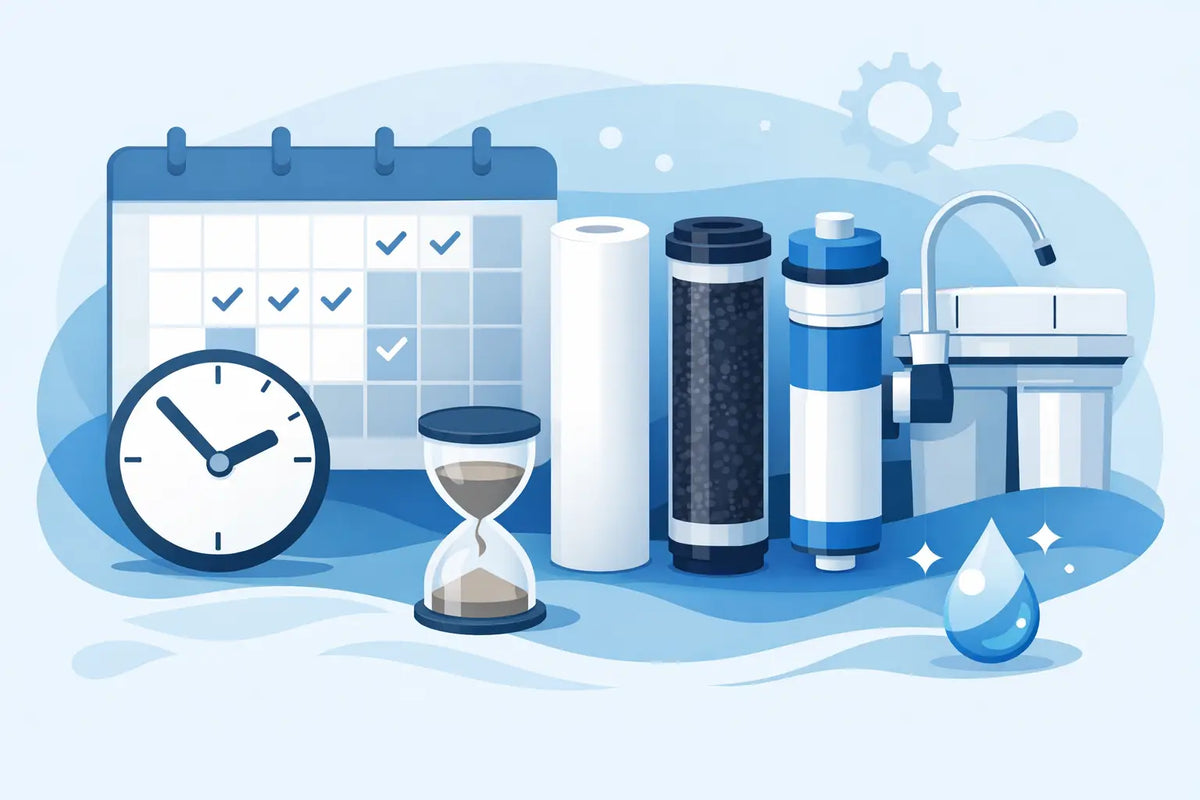
A filter that is past its service life can still look clean from the outside while allowing taste, odor, sediment, or contaminants to return to your water. A reliable filter media replacement schedule protects the performance you paid for, helps prevent pressure loss, and keeps your family, customers, equipment, and plumbing better protected.
There is no single calendar that fits every system. Your water source, household demand, contaminant levels, and filter design all affect how long media lasts. The best schedule combines the manufacturer’s rated capacity with what your water is actually asking the system to remove.
Start With the Job Your Filter Is Doing
Filter media works by capturing, reducing, exchanging, or neutralizing specific water issues. Once its capacity is used, performance declines. In some cases, water flow slows first. In others, the return of chlorine smell, metallic taste, staining, or scale is the first warning.
Sediment filters trap sand, silt, rust, and other visible particles. Carbon media is commonly used for chlorine, unpleasant taste and odor, certain organic compounds, and many PFAS-focused applications when the media and system are specifically rated for that purpose. Reverse osmosis membranes reduce a broad range of dissolved contaminants, while softener resin exchanges hardness minerals for sodium or potassium.
Because these materials do different work, they do not belong on the same replacement timeline. Replacing them too early can waste money. Waiting too long can reduce water quality and place unnecessary strain on pumps, appliances, membranes, and downstream filters.
A Practical Filter Media Replacement Schedule by System
Use the schedule below as a planning baseline, not a substitute for the instructions supplied with your system. A water test and actual usage may point to a shorter or longer interval.
Sediment Cartridges: Every 3 to 6 Months
Most whole-house sediment cartridges need replacement every three to six months. Homes supplied by private wells, older municipal lines, or water with visible sediment may need changes more often.
A pressure drop is often the clearest signal. If faucets feel weaker, a filter housing looks dark or loaded, or flow to a reverse osmosis system has slowed, inspect the sediment stage. Sediment filtration is inexpensive protection for more specialized media downstream, so it is rarely a stage to stretch beyond its useful life.
Carbon Cartridges and Carbon Block Filters: Every 6 to 12 Months
Carbon cartridge life depends heavily on chlorine or chloramine levels and total gallons used. A point-of-use drinking water filter may last six to 12 months, while a larger whole-house carbon tank can last several years before media replacement is needed.
The return of chlorine taste or odor is a practical sign that carbon capacity may be exhausted. If your system protects a reverse osmosis membrane, UV equipment, or sensitive commercial equipment, replacing carbon on time matters. Chlorine can damage many RO membranes, and organic loading can reduce the performance of downstream treatment.
Whole-House Carbon Media: Typically Every 3 to 5 Years
Backwashing carbon tanks often provide three to five years of service, depending on tank size, media volume, water chemistry, and household demand. A large family, high chlorine level, or commercial application may use capacity much faster than a lightly occupied home.
Carbon media replacement is more involved than changing a cartridge. The tank may need to be emptied, inspected, refilled with the correct media, and returned to service carefully. For systems with control valves or multiple treatment stages, professional guidance can help ensure the media type, amount, and backwash settings match the application.
Reverse Osmosis Prefilters: Every 6 to 12 Months
Most reverse osmosis systems use sediment and carbon prefilters that should be changed every six to 12 months. These filters do more than improve taste. They protect the membrane from particles and chlorine exposure.
If you delay prefilter replacement, the membrane can foul faster or suffer permanent damage. That turns a routine maintenance item into a more expensive repair. Keep a dated service record near the system so the interval does not become guesswork.
Reverse Osmosis Membranes: Every 2 to 5 Years
An RO membrane commonly lasts two to five years. Its lifespan depends on incoming water quality, prefilter maintenance, water pressure, and daily production. Well water with iron, hardness, or high total dissolved solids may shorten membrane life unless it is properly pretreated.
Do not replace a membrane based on age alone if you can verify performance. Compare treated-water total dissolved solids with the incoming water using a TDS meter, and follow the membrane manufacturer’s rejection-rate guidance. A noticeable decline in water production or quality can indicate that service is due.
Softener Resin: Usually Every 10 to 15 Years
Water softener resin is long-lasting, but it is not permanent. Chlorinated municipal water, iron fouling, sediment, and poor regeneration settings can shorten its life. In many residential systems, resin lasts 10 to 15 years. Systems on challenging well water may require inspection sooner.
Hard water symptoms returning after a normal regeneration cycle are a reason to investigate. Before replacing resin, check salt supply, brine draw, control valve operation, and resin fouling. A service issue may be the cause, not exhausted resin.
UV Lamps: Replace Every 12 Months
A UV lamp is not filter media, but it belongs on the same maintenance calendar. Many lamps continue to glow after their effective germicidal output has declined. Replace the lamp annually unless the manufacturer specifies otherwise, and clean or inspect the quartz sleeve during lamp service.
UV systems need clear water to work properly. Keep sediment filtration ahead of the UV unit in good condition so particles do not shield microorganisms from treatment.
What Can Shorten Replacement Intervals?
Rated service life assumes reasonably predictable source water and normal flow. Real-world conditions often vary. You may need a shorter schedule if your home has well water, high sediment, elevated iron or manganese, high chlorine or chloramine, very hard water, a large household, frequent guests, irrigation connected to treated water, or a high-demand business application.
Restaurants, offices, rental properties, labs, and multi-unit buildings should base maintenance on measured gallons and operating conditions whenever possible. A calendar reminder alone may not reflect the amount of water processed. For commercial and light industrial systems, scheduled inspections, pressure readings, water testing, and documented service intervals protect both water quality and operational continuity.
Watch for Performance Signals, Not Just Dates
A schedule is the foundation, but your system may tell you it needs attention sooner. Common signs include reduced water pressure, slower RO production, new taste or odor, visible particles, spotting or scale, staining, frequent softener regeneration, or changes in treated-water test results.
Do not assume every issue means media has failed. A clogged screen, valve setting, pressure problem, plumbing repair, or changing source water can produce similar symptoms. Testing the water before and after the system gives you a clearer answer and helps avoid replacing the wrong component.
Build a Maintenance Record That Works
Record the installation date, media type, rated capacity, replacement date, water test results, and any changes in pressure or water quality. For cartridge systems, writing the service date directly on the housing or cartridge box is simple and effective. For tanks and commercial equipment, keep a service log with the system specifications and backwash or regeneration settings.
Set reminders a few weeks before the expected service date. That gives you time to order the correct replacement filters or media instead of letting a system run beyond capacity. If you are unsure which stage needs replacement, match the issue to the system’s job first: sediment for particles, carbon for chlorine and odor, RO for dissolved contaminants, softening resin for hardness, and UV for microbial treatment.
Pure Water. Protected Family. The right replacement interval keeps your treatment system working as intended and gives you confidence every time you turn on the tap. When water conditions, system sizing, or commercial demand make the answer less clear, expert guidance and a current water test are the safest way to set a schedule that fits.