
August 31, 2026
Home Filtration: Choose the Right Water System
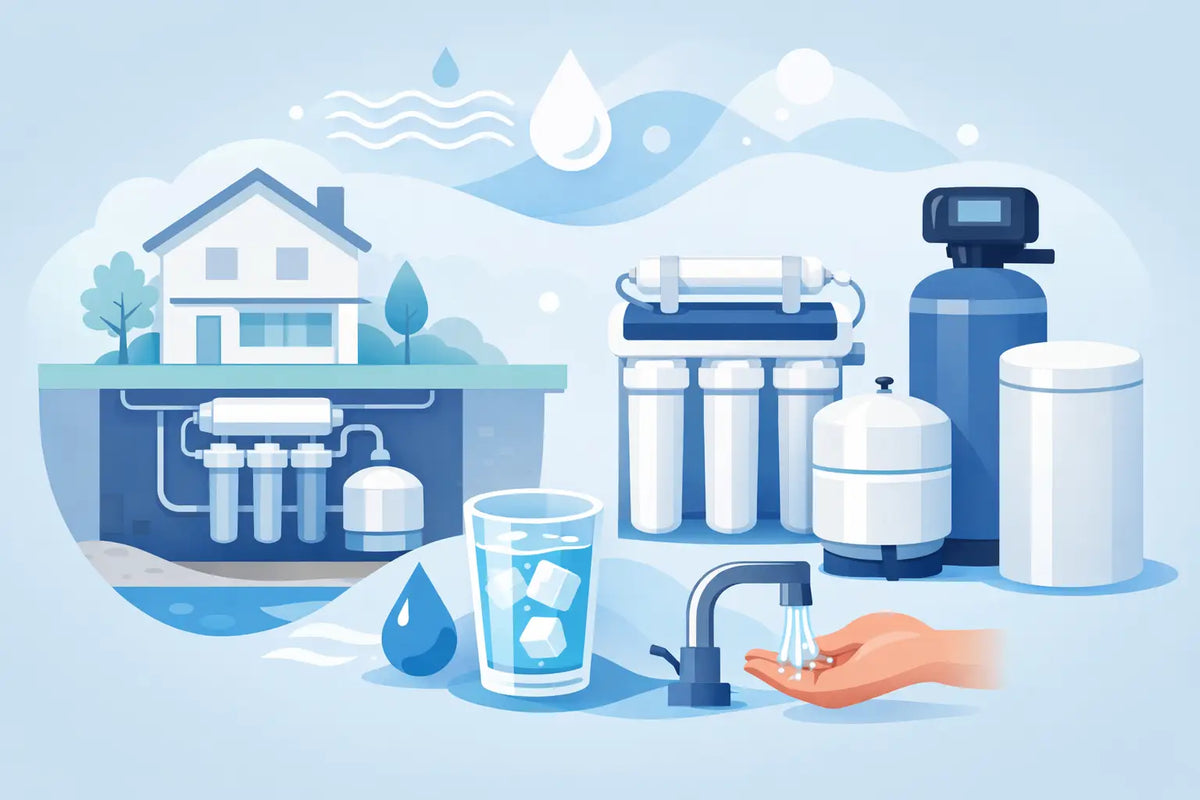
A glass of water can look perfectly clear and still carry the issues that matter most to a household: chlorine taste, hard-water minerals, lead from aging plumbing, sulfur odor, or contaminants such as PFAS. The right home filtration system is not simply the largest unit you can buy. It is a targeted solution built around your water source, the problem you want to solve, and how much water your family uses every day.
For some homes, a simple under-sink drinking water filter is the practical answer. For others, a whole house system, reverse osmosis unit, UV sterilizer, or a combination of technologies delivers better protection. The goal is clear: Pure Water. Protected Family. Getting there starts with understanding what is actually in your water.
Start With the Water Problem, Not the Product
Water treatment works best when the system matches the condition. A filter designed to improve chlorine taste may do little for scale buildup caused by hardness. A water softener can protect appliances from mineral deposits but does not replace a certified drinking water system for contaminant reduction. Buying by category alone can leave a real problem unsolved.
Municipal water and private well water also require different thinking. City water is typically disinfected before it reaches your property, yet it may contain chlorine or chloramine, sediment from pipe disturbance, and trace contaminants that concern your household. Well water is not treated by a public utility and can vary substantially by location, season, rainfall, and nearby conditions. Iron, manganese, hydrogen sulfide, bacteria, sediment, and hardness are common well-water concerns.
A current water test gives you a stronger starting point than taste, smell, or assumptions. If you use municipal water, review the local water quality report, then consider testing at the tap if your home has older pipes or a specific concern. Well owners should test regularly and any time water changes in taste, odor, color, or clarity.
What Home Filtration Systems Actually Do
A complete water treatment plan may use one technology or several. Each has a different job.
Whole House Filtration for Water at Every Fixture
A whole house filtration system is installed at the point where water enters the home. It treats water before it reaches showers, sinks, washing machines, water heaters, and appliances. This makes it a strong fit for families dealing with chlorine odor throughout the home, sediment, general water quality concerns, or a desire for filtered water at every tap.
Carbon media is widely used for chlorine, many taste and odor concerns, and certain organic compounds. Sediment filters catch particulate matter such as sand, rust, silt, and debris. These systems can be combined, often with a sediment stage placed first to help protect the carbon media and preserve flow.
The trade-off is that whole house filtration requires proper sizing. A small system may restrict water flow when multiple showers, appliances, and faucets run at once. A larger home, a high-flow shower setup, or a property with several bathrooms needs a system designed for its peak demand, not just its average daily water use.
Reverse Osmosis for High-Quality Drinking Water
Reverse osmosis, commonly called RO, is typically installed under the kitchen sink and provides purified drinking water through a dedicated faucet. It uses a semipermeable membrane to reduce a broad range of dissolved contaminants, including many heavy metals, salts, and other dissolved solids. Depending on the system and certifications, RO can also address specific concerns such as PFAS.
RO is especially useful when the priority is drinking and cooking water. It is generally not the most cost-effective way to treat every gallon used for showering, laundry, and flushing toilets. Most systems also produce some wastewater during filtration, although efficient designs can reduce the amount compared with older units.
For households that want better-tasting water without constant bottled-water purchases, an RO system often provides a reliable point-of-use solution. It should be maintained on schedule, with prefilters, postfilters, and the membrane replaced according to the system requirements and water conditions.
Water Softeners and Salt-Free Conditioners
Hard water contains dissolved calcium and magnesium. Those minerals are not usually a health concern, but they can create scale in water heaters, dishwashers, coffee makers, pipes, and fixtures. They also interfere with soap, leaving spots on glassware and making skin and hair feel less rinsed.
A conventional ion-exchange water softener removes hardness minerals and replaces them with sodium or potassium ions. It is the most direct choice for serious hardness and scale protection. It does require salt, a drain connection, and periodic replenishment.
Salt-free water conditioners work differently. They are designed to alter how minerals behave so they are less likely to form hard scale. They do not remove hardness from the water, so they should not be presented as equivalent to a true softener. They can still be a sensible option for households seeking lower-maintenance scale control or where a salt-based system is not preferred.
UV Systems for Microbiological Protection
Ultraviolet systems use UV light to inactivate microorganisms in water. They are most commonly considered for well water, properties with bacterial concerns, or applications where microbiological protection is required. UV does not remove sediment, chemicals, minerals, or bad taste, so it is normally one part of a larger treatment system.
Water entering a UV chamber must be sufficiently clear. Sediment, iron, or cloudiness can prevent the light from reaching microorganisms effectively. Pretreatment is not an optional detail here. It is central to system performance.
Match the System to Common Household Concerns
Chlorine taste, chemical odor, and dry-feeling shower water often point toward whole house carbon filtration, with an under-sink RO system added if purified drinking water is also a priority. Visible grit or recurring clogged faucet aerators may indicate sediment filtration is needed first.
For white scale, spotted dishes, stiff laundry, and shortened appliance life, look at hardness testing and consider a water softener or salt-free conditioning approach. If a well has a rotten-egg smell, iron staining, or black residue, the solution may involve oxidation, specialized media, and filtration rather than a standard carbon cartridge alone.
PFAS concerns deserve a more precise approach. Look for a system with performance claims or certification relevant to the contaminant you are addressing, and confirm its capacity and maintenance schedule. General-purpose filters are not automatically designed for every emerging contaminant.
Lead concerns may come from household plumbing rather than the incoming water supply. In that case, point-of-use filtration at the drinking-water tap can be particularly valuable. Use a system specifically rated for lead reduction and replace cartridges on time. A filter that is overdue for maintenance cannot deliver the performance it was selected for.
Size and Installation Matter as Much as Filtration Media
Two homes can have the same water issue and need very different equipment. System size depends on the number of bathrooms, occupants, plumbing size, incoming water pressure, flow demand, and water chemistry. A family of five with three bathrooms may need a different whole house filtration setup than a couple in a one-bathroom home, even when both receive the same municipal water.
Installation requirements also vary. Whole house systems need a suitable location near the main water line, room for service access, and often a bypass valve. Softeners need a drain. RO systems require space beneath the sink and access to a drain line. UV systems require power and should be installed where the lamp and sleeve can be serviced.
Do not overlook replacement costs. Cartridges, media, RO membranes, UV lamps, and softener salt are part of ownership. A lower initial purchase price can become less attractive if replacement intervals are short or the system is undersized for your usage. The best value is a system with the right capacity, clear maintenance expectations, and treatment performance that addresses your actual water problem.
Build a Practical Treatment Plan
Many homes benefit from a layered approach rather than one all-purpose device. A well-water property may need sediment removal, iron or sulfur treatment, softening, and UV protection. A city-water household may choose whole house carbon filtration for showers and appliances, then add reverse osmosis at the kitchen sink for drinking water.
There is no benefit in paying for treatment you do not need, but there is real value in protecting the water your family drinks and the plumbing systems your home depends on. At PureWaterGuys.com, knowledgeable support can help translate a water test, home size, and budget into a system that makes sense without unnecessary complexity.
Your water should not be a guessing game. Start with the concern you can identify, verify it with reliable testing when needed, and choose equipment designed to solve that specific problem. A properly matched system gives you more than better water at the tap - it gives your household a dependable layer of protection every day.