
September 22, 2026
Iron Filters for Well Water: Choose the Right One
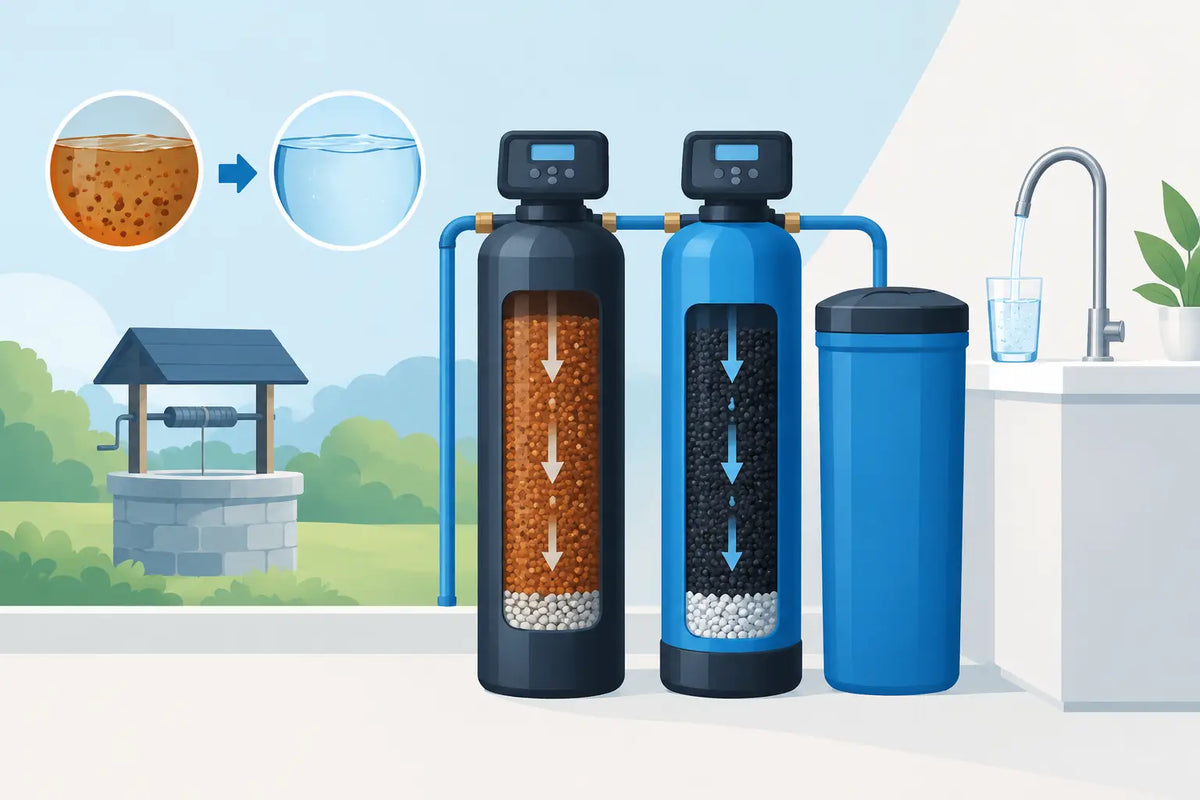
A rust-colored ring in the toilet bowl, orange streaks on laundry, and a metallic taste at the kitchen sink are not just cleaning frustrations. They are common signs that iron is entering your home’s water supply. The right iron filters can solve those problems at the source, protecting your plumbing, fixtures, appliances, and confidence in the water your family uses every day.
For most homeowners, especially those on private wells, the goal is not simply to buy a filter. It is to match the treatment method to the form and concentration of iron in the water, along with related issues such as manganese, sulfur odor, hardness, and low pH. That starts with knowing what you are treating.
Why iron in water deserves attention
Iron is a naturally occurring mineral found in soil and rock. As groundwater moves through the earth, it can dissolve iron and carry it into a well. While iron in typical household concentrations is usually more of an aesthetic and maintenance concern than a health emergency, it can create expensive and persistent problems throughout a property.
Iron deposits can stain sinks, tubs, toilets, dishwashers, and light-colored clothing. They can clog faucet aerators, showerheads, irrigation equipment, water heaters, and appliance valves. Over time, buildup may reduce water flow and shorten the service life of equipment that depends on a clean water supply.
The problem can also become biological. Iron bacteria are not the same as iron minerals, but they use iron as an energy source and can create a slimy orange, red, or brown residue inside plumbing. That residue can contribute to unpleasant odors, clogged fixtures, and recurring maintenance issues. A standard sediment filter alone rarely solves a significant iron problem.
The type of iron determines the right treatment
“Iron” is not one single water condition. It can appear in different forms, and the best system depends on what your water test shows.
Clear-water iron
Clear-water iron, also called ferrous iron, is dissolved in the water when it first comes from the tap. The water may look clear in a glass, then turn yellow, orange, or brown after it sits and reacts with oxygen. This is a frequent well-water issue and is often treated by oxidizing the iron and filtering out the particles that form.
Red-water iron
Red-water iron, or ferric iron, has already oxidized before it reaches your home. It appears as visible rust-colored particles or cloudy water. Because it is already particulate, it may be removed with appropriate sediment filtration, though the filter must be sized for the loading and flow rate. A small cartridge filter can plug quickly when used as the primary treatment for heavy iron.
Organic iron and iron bacteria
Organic iron is bound to natural organic matter and can be harder to remove with conventional oxidation and filtration. Iron bacteria can create slime, odors, and recurring deposits. These conditions may require disinfection or specialized treatment before, or alongside, a whole-house iron removal system. This is one reason a laboratory water test and an informed system recommendation matter.
How iron filters work
Most whole-house iron removal systems use a simple but effective process: change dissolved iron into solid particles, then capture those particles in filtration media.
Air injection systems introduce air into the treatment tank or a retention area. Oxygen converts dissolved iron into filterable particles, and the media bed traps them. These systems are often a strong choice for well water with iron and sulfur odor, particularly when water chemistry supports oxidation.
Other systems use specialized oxidizing media. Depending on the media, the system may need periodic regeneration with an oxidant or may rely on dissolved oxygen, chlorine, or another treatment step. Certain media can also target manganese, but manganese removal usually requires more demanding water chemistry than iron removal. pH, dissolved oxygen, flow rate, and contaminant levels all affect performance.
Backwashing is central to many effective iron filters. Instead of relying on a replaceable cartridge, a backwashing valve reverses water flow on a schedule to flush captured iron and sediment to a drain. This cleans the media bed and helps preserve treatment capacity. Backwashing requires adequate water flow and a suitable drain connection, so installation conditions should be reviewed before selecting a system.
Start with a water test, not a guess
An orange stain gives you a useful clue, but it does not tell you everything needed to size a system correctly. A comprehensive well-water test should evaluate total iron and, where possible, the form of iron present. It should also review manganese, hydrogen sulfide, hardness, pH, alkalinity, total dissolved solids, and bacteria when appropriate.
These results guide the equipment decision. For example, a home with moderate clear-water iron and rotten-egg odor may benefit from an air injection system. A property with high iron, manganese, low pH, and heavy household water use may require a more specialized configuration. If bacteria or organic iron are involved, treatment may need to address those issues before the filtration media can perform reliably.
Water demand matters just as much as water quality. A system must provide enough flow for showers, appliances, and fixtures without creating a noticeable pressure drop. A small system may cost less upfront but can underperform in a larger household, regenerate or backwash too often, and require more maintenance. For businesses, rental properties, and light commercial facilities, peak demand and operating schedules become even more important.
Choosing iron filters for your property
When comparing iron filters, focus on the water problem and the property, not only the advertised iron-removal number. A well-matched system accounts for iron concentration, additional contaminants, service flow rate, plumbing size, drain access, and available installation space.
For a typical home, whole-house treatment is usually the practical answer because iron affects every water-using fixture. Point-of-use filters at a kitchen sink can improve drinking water, but they will not prevent stained toilets, damaged water heaters, or iron buildup in washing machines. If the water also has hardness, an iron filter is commonly installed ahead of a water softener. Removing iron first helps protect the softener resin from fouling and supports better overall performance.
A sediment prefilter may be helpful when a well produces sand, silt, or visible debris. It should not be viewed as a substitute for iron treatment, however. Fine cartridges can clog rapidly when they are asked to capture oxidized iron day after day. In many setups, a properly sized backwashing iron filter does the heavier work, while cartridge filtration handles finer sediment where needed.
For homes with strong sulfur odor, look beyond iron removal alone. Hydrogen sulfide can produce the familiar rotten-egg smell, and some oxidation-based systems can address iron and odor together. The correct approach depends on the hydrogen sulfide level, iron level, pH, and whether the odor originates in the well water, water heater, or plumbing.
Installation and maintenance expectations
A whole-house iron filter is usually installed where the main water line enters the home, after the pressure tank on a well system. It needs an electrical outlet for the control valve, a drain for backwash water, and enough space for the tank and service access. The drain must be able to handle the backwash volume and comply with local plumbing requirements.
Maintenance is generally manageable, but it should never be ignored. Backwashing systems need their valve settings checked periodically, and some media require replenishment or replacement after a number of years. If a system uses chemical oxidation or regeneration, homeowners must maintain the associated solution tank or feed equipment. Changes in water quality, such as a seasonal shift in well output or a drop in well pressure, can also affect results.
Watch for returning stains, reduced flow, unusual odors, or a change in the color of water after it sits. These signs do not automatically mean the equipment has failed. They may indicate that the system needs service, its backwash schedule needs adjustment, or the well water chemistry has changed.
Protect the water that reaches every room
The right iron treatment does more than make fixtures easier to clean. It helps preserve plumbing, protects appliances, reduces frustrating laundry stains, and makes everyday water use feel more dependable. That matters whether you are caring for a family home, managing a rental property, or operating a business that cannot afford water quality surprises.
Before choosing a system, use current water test results and your household’s real water demand to guide the decision. If the results are complicated or the property has multiple concerns, expert system guidance can prevent a costly mismatch. Clean water should not be a guessing game - it should be a solution built for the water you actually have.