
August 25, 2026
Scale Prevention for Tankless Heaters That Works
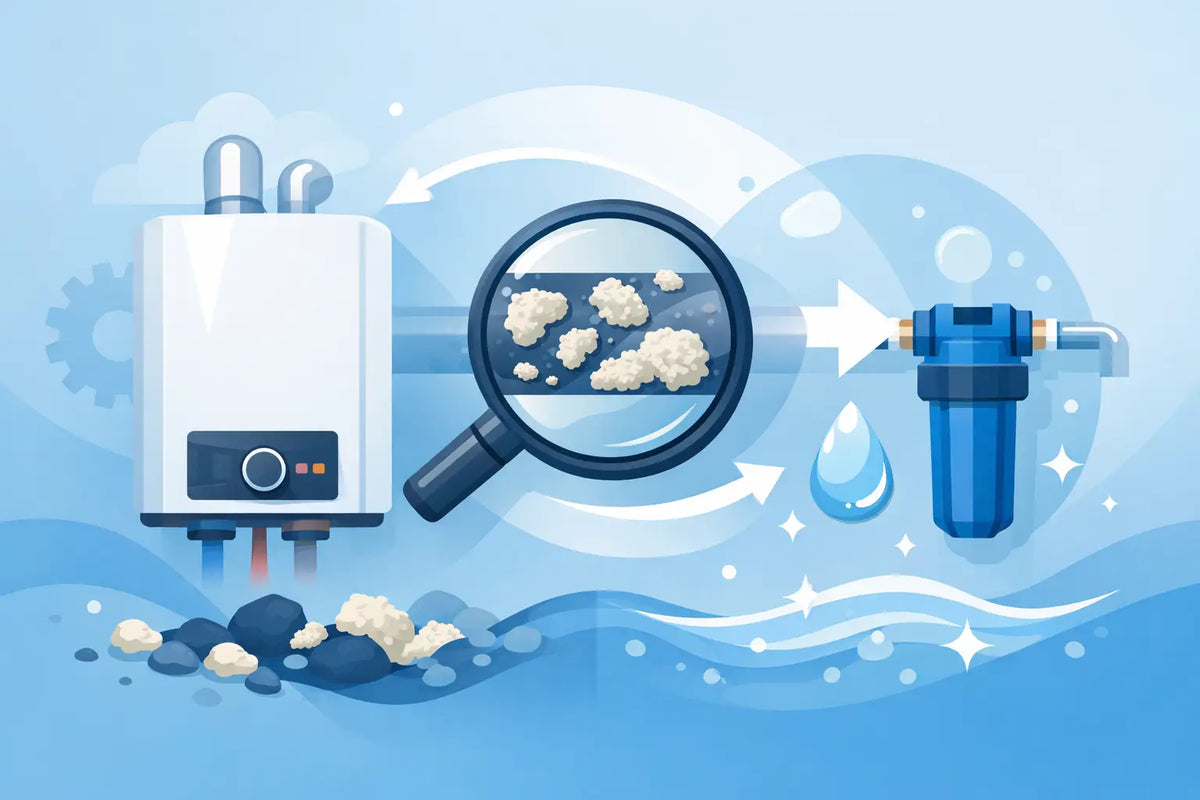
A tankless water heater can deliver hot water for years, but its compact heat exchanger has little tolerance for mineral buildup. Effective scale prevention for tankless heaters starts before the unit shows an error code, loses hot-water output, or begins cycling unexpectedly. The right approach protects a costly appliance while helping your household or facility get consistent performance from every gallon.
Why Tankless Heaters Scale Up Faster
Tankless heaters warm water as it passes through a narrow, high-temperature heat exchanger. That design is efficient, but it creates ideal conditions for dissolved calcium and magnesium to separate from the water and form hard mineral deposits. This is scale, often called limescale.
The hotter the exchanger runs and the harder the incoming water, the faster deposits can form. A storage water heater can also collect sediment, but its larger tank and lower average heat intensity can make the problem less immediate. In a tankless unit, even a thin layer of scale can restrict water flow and interfere with heat transfer.
Early symptoms are easy to overlook: longer waits for hot water, fluctuating temperature, reduced flow at fixtures, or a unit that sounds louder than usual. As buildup advances, the heater may overheat, shut down, or display a maintenance code. The result can be higher energy use, more frequent service calls, and avoidable stress on the heat exchanger.
Hardness is usually measured in grains per gallon or milligrams per liter. Water above about 7 grains per gallon is considered hard, but heater protection decisions should not rely on one number alone. Water use, inlet temperature, heater capacity, and the manufacturer’s maintenance guidance all matter.
Start With a Water Test, Not a Guess
A white crust around faucets is a useful clue, but it is not a complete water analysis. Before selecting treatment, identify what is actually entering the heater. At minimum, test for hardness. Depending on your water source, iron, manganese, sediment, pH, total dissolved solids, and chlorine may also affect system selection and performance.
This matters because not every water problem needs the same solution. A home with moderate hardness may benefit from a properly sized salt-free scale-control system and regular flushing. A household with very hard well water, iron staining, and multiple bathrooms may need pretreatment that addresses iron before a softening system. For a restaurant, rental property, or light commercial facility, daily demand can make a more engineered approach necessary.
Municipal water and private well water can both create scale. City water may have consistent hardness but seasonal variations in chemistry. Well water can change with rainfall, pumping patterns, or source conditions. Testing gives you a defensible starting point and helps prevent buying equipment that solves only part of the problem.
Softening and Salt-Free Scale Control Are Different
A conventional ion-exchange water softener removes hardness minerals from water by exchanging calcium and magnesium for sodium or potassium. Because the minerals are removed, softeners are generally the most reliable choice for heavy-hardness conditions and for homes seeking broad protection for plumbing, fixtures, dishwashers, washing machines, and tankless heaters.
Salt-free scale-control systems work differently. They do not remove hardness minerals or lower a hardness test result. Instead, many are designed to change how minerals crystallize so they are less likely to attach to hot surfaces. This can be a good fit for customers who want to reduce scale formation without salt, discharge water, or regeneration cycles.
The trade-off is straightforward: salt-free systems can help manage scale, but they do not provide the same total hardness reduction as a properly sized softener. In very hard water or in high-demand applications, a softener may offer more dependable protection for a tankless heater. The best option depends on water chemistry, local restrictions, maintenance preferences, and the level of protection your property requires.
Build Scale Prevention for Tankless Heaters Around the Whole System
The heater should not be treated as an isolated appliance. Water enters through a plumbing system that may carry sediment, chlorine, iron, or other contaminants along with hardness minerals. A whole-house treatment plan can protect the heater while improving water quality at every tap.
Sediment filtration is often the first line of defense, especially on well water or in older plumbing. Sediment does not cause limescale in the same way hardness minerals do, but it can clog screens, reduce flow, and complicate heater maintenance. If iron or manganese is present, address it before downstream treatment equipment whenever possible. These metals can foul media, leave stains, and contribute to service problems.
For many hard-water homes, the most practical arrangement is sediment filtration followed by a whole-house softener, with the tankless heater downstream. Where a salt-free approach is appropriate, use a scale-control system sized for the property’s actual flow rate and water use. Do not size only by the number of people in the home if the property has oversized showers, soaking tubs, multiple water heaters, or frequent guest use.
Commercial and multifamily settings require even more care. A single undersized conditioner can become a bottleneck during peak demand. Restaurants, salons, small lodging properties, and facilities with high-temperature equipment should evaluate peak flow, daily gallons, incoming hardness, and the consequences of downtime before choosing a system.
Do Not Skip the Heater Flush
Water treatment reduces the rate of mineral accumulation. It does not make maintenance optional. Most tankless heater manufacturers recommend periodic descaling or flushing, often annually, though hard water may require service every six months or more frequently.
A typical flush uses the heater’s service valves, an isolation pump, hoses, and a manufacturer-approved descaling solution. The solution circulates through the heat exchanger to dissolve accumulated deposits. The heater is then rinsed thoroughly before being returned to service.
Follow the manufacturer’s instructions for your specific model. Some manufacturers have strict requirements regarding approved solutions, service intervals, and documentation. If the unit is under warranty, keeping a maintenance record is a smart safeguard. If you are not comfortable isolating gas, electricity, and water connections, schedule qualified service rather than risking damage.
A scale-control system and routine flushing work best together. Think of treatment as prevention and flushing as verification. Treatment slows the problem down; scheduled maintenance makes sure hidden buildup does not gain ground.
Match Maintenance to Your Water and Usage
There is no single flush schedule that fits every tankless heater. A small household on moderately hard municipal water may do well with annual service. A large family on hard well water, or a business serving hot water all day, may need shorter intervals.
Watch for changes between scheduled services. Temperature swings, reduced pressure on the hot side only, unusual burner or fan operation, and recurring heater alerts deserve attention. Do not wait for a complete shutdown if the unit is signaling reduced flow or overheating.
It also helps to inspect the system around the heater. Check the inlet screen, filter housings, bypass valves, pressure, and any treatment equipment feeding the unit. Replace sediment cartridges on schedule. A clogged prefilter can look like a heater problem, while an improperly programmed softener can leave the heater exposed to hardness even though treatment equipment is installed.
Choose Protection That Fits the Property
The lowest-cost option is not always the lowest-cost ownership decision. A basic point-of-use scale device may be suitable for a single low-demand heater with manageable water hardness. A whole-house softener costs more upfront but can protect appliances, plumbing, shower doors, and fixtures across the property. Salt-free conditioning can be attractive where sodium or wastewater concerns rule out conventional softening, provided expectations are realistic.
System sizing is equally important. Treatment capacity, service flow rate, pressure loss, plumbing size, and peak demand all affect results. A system that looks adequate on paper can disappoint if it cannot keep up with two showers, laundry, and a dishwasher running at once.
Pure Water Guys helps homeowners and businesses match water treatment to the actual problem, rather than relying on a one-size-fits-all recommendation. A water test and a clear picture of your property’s demand can turn tankless heater protection from a recurring chore into a dependable long-term plan.
Your tankless heater was purchased for efficient, reliable hot water. Give it water treatment and maintenance that support that promise, and address scale before it becomes the repair call you did not plan for.