
August 03, 2026
Sediment Filter vs Carbon Filter Differences
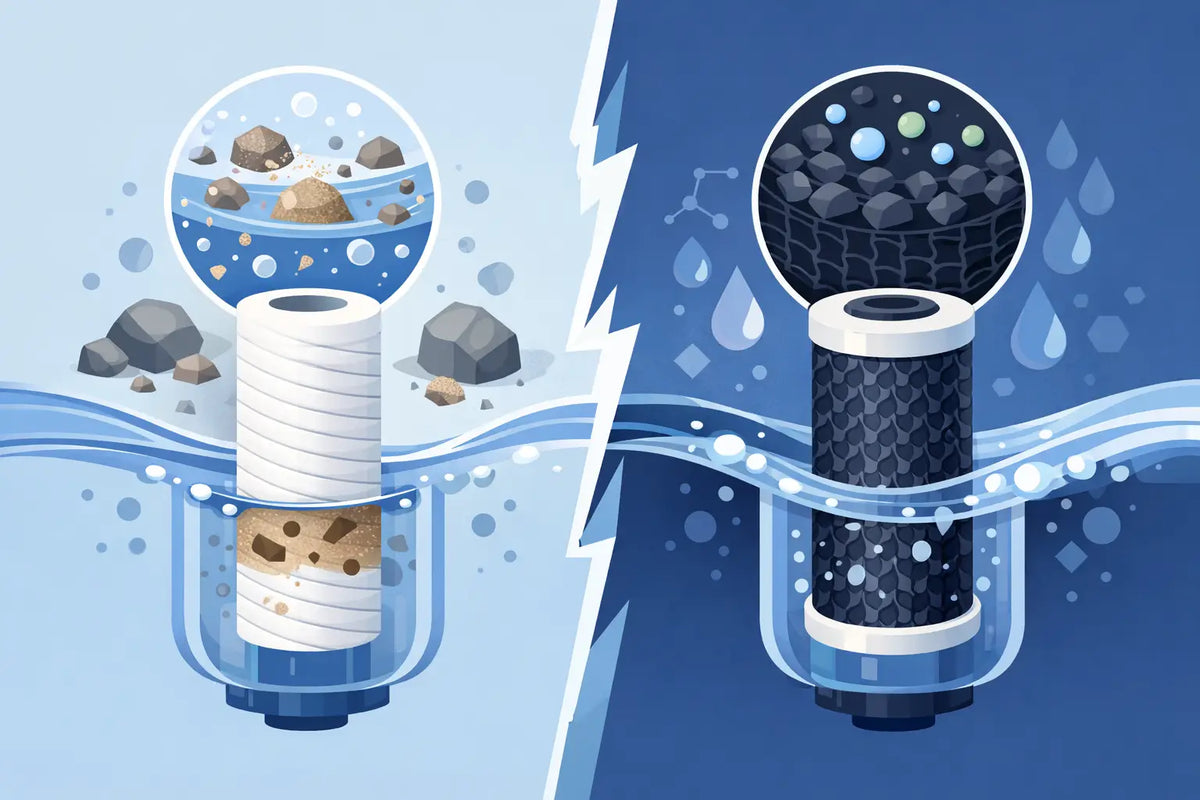
Cloudy water after a plumbing repair, grit collecting in faucet aerators, and chlorine odor in a glass of tap water may all point to filtration needs. But the right answer is rarely one cartridge for every problem. In the sediment filter vs carbon filter decision, each filter handles a different category of contaminants. Choosing the wrong one can leave the real issue untreated, reduce water flow, and shorten the life of your equipment.
For most homes and many businesses, the best setup is not sediment or carbon. It is a properly sized combination that protects water quality, appliances, and downstream treatment equipment.
What a Sediment Filter Removes
A sediment filter is designed to capture physical particles suspended in water. This includes sand, silt, rust flakes, dirt, scale, and other visible or microscopic debris. It does not chemically change the water or remove dissolved contaminants. Think of it as the protective first line for water that contains particles.
Sediment is especially common with private wells, older plumbing, municipal line work, and water supplies that become cloudy after heavy rain or service interruptions. Even when the particles are not obvious in a drinking glass, they can clog faucet screens, reduce shower pressure, damage valves, and foul other filter media.
Sediment filters are selected by micron rating. A lower micron number captures smaller particles. A 20-micron filter may be appropriate for larger sand and grit, while a 5-micron filter is a common choice for finer sediment protection. Going too fine too early can create unnecessary pressure loss and frequent cartridge changes, particularly on high-sediment well water.
Filter style also matters. Pleated cartridges typically offer more surface area and may be washable in certain applications. Spun polypropylene cartridges are economical and effective for general particle reduction. For heavy sediment loads, a larger-capacity housing or a reusable prefilter may be a better long-term fit than replacing small cartridges constantly.
What a Carbon Filter Removes
Carbon filtration works differently. Activated carbon has an extremely porous surface that adsorbs many dissolved chemicals as water passes through it. It is commonly used to reduce chlorine taste and odor, chemical-like flavors, and certain volatile organic compounds. Carbon can make municipal water noticeably more pleasant to drink, cook with, and shower in.
Carbon filters are available as granular activated carbon, often called GAC, and carbon block. GAC allows water to flow through loose carbon media and is frequently used in larger tanks and some cartridges. Carbon block filters compress fine carbon into a dense block, often providing more contact time and finer particulate filtration. The right format depends on flow rate, water use, and the contaminant reduction goal.
Standard activated carbon is highly effective for free chlorine. Water treated with chloramine may require catalytic carbon or a system specifically designed for chloramine reduction. Chloramine is more persistent than chlorine, so a basic carbon cartridge may not provide the performance or service life a household expects.
Carbon is not a universal contaminant solution. It does not reliably remove hardness minerals, dissolved iron, bacteria, or all dissolved salts. PFAS, lead, and other health-related contaminants require a filter specifically tested and certified for the relevant reduction claim, used within its stated capacity and flow conditions. For some drinking-water concerns, reverse osmosis or a targeted specialty filter may be the better choice.
Sediment Filter vs Carbon Filter: The Real Difference
The simplest distinction is that sediment filters catch particles, while carbon filters adsorb many dissolved chemicals and improve taste and odor. One protects against grit. The other addresses compounds you generally cannot see.
That difference affects where each filter belongs in a treatment system. Installing a carbon filter ahead of heavy sediment can clog the carbon’s pores and reduce water flow long before the carbon is exhausted. A sediment prefilter placed before carbon helps the carbon media focus on chlorine, odor, and chemical reduction instead of acting as a dirt trap.
A sediment filter also will not solve a chlorine smell. Clear water can still contain disinfectant residuals, chloramine, or dissolved contaminants. Likewise, a carbon filter may improve odor while doing little for muddy water, rust particles, or a faucet aerator packed with debris.
When You Need One Filter and When You Need Both
For a city-water home with no visible particles but a noticeable pool-like chlorine taste, a properly sized carbon filter may be enough. An under-sink carbon block system can improve drinking and cooking water, while a whole-house carbon system can treat water at every fixture.
For a well-water home with sand, sediment, or recurring cloudiness, start with particle control. A sediment filter, spin-down separator, or other pretreatment stage may be necessary before adding carbon or more specialized equipment. If the well also has sulfur odor, iron staining, manganese, or bacteria concerns, the treatment plan may need oxidation, dedicated media, disinfection, or a combination of technologies. Carbon alone is not the answer to every well-water problem.
Many households benefit from both stages in sequence: sediment first, carbon second. This approach is also common in commercial applications where restaurants, offices, and facilities need consistent water quality while protecting equipment such as ice machines, coffee brewers, boilers, and point-of-use drinking systems.
How to Choose the Right System Size
A filter’s technology matters, but capacity and flow rate matter just as much. A small cartridge may perform well at a kitchen sink yet cause a frustrating pressure drop if it is expected to serve an entire home. Whole-house systems should be selected around peak demand, plumbing size, household occupancy, and the number of fixtures likely to run at once.
For businesses, consider daily water volume, peak service periods, equipment requirements, and the cost of downtime. A filter that needs replacement during a lunch rush is not a practical solution, even if it performs well in a small residential setting. Larger housings, dual-stage systems, and commercial-grade tanks can provide longer service intervals and more stable flow when properly specified.
Water testing turns assumptions into a useful treatment plan. Municipal customers can begin with their local water report, but a point-of-use test can help identify conditions inside the building as well. Well owners should use laboratory testing, especially when water changes in color, odor, taste, or clarity.
Replacement and Maintenance Matter
Sediment filters should be changed when they are visibly loaded, water pressure declines, or the manufacturer’s recommended interval is reached. Their lifespan varies widely because it depends on the amount of debris in the incoming water. A cartridge lasting six months in one home may need replacement in a few weeks in another.
Carbon filters need replacement based on rated capacity, time in service, and changes in taste or odor. Do not wait for unpleasant water to return if the filter has already reached its recommended service interval. Once carbon sites are used up, the filter can no longer deliver the same reduction performance.
Keep an eye on pressure gauges if your system includes them. A growing pressure drop across a filter is a practical sign that the cartridge or media is becoming restricted. Replacing filters on schedule also helps prevent stagnant water, protects downstream equipment, and keeps treatment performance predictable.
Look Beyond the Label
Terms such as “whole-house filter” and “multi-stage” can describe very different systems. Review the micron rating for sediment stages, the type and volume of carbon media, the rated flow rate, replacement capacity, and any third-party certifications tied to the contaminants that concern you.
For example, a filter marketed for taste and odor may be a strong fit for chlorine reduction, but it should not be assumed to address PFAS or lead unless that specific claim is supported. The same principle applies to carbon filters that advertise sediment reduction: a carbon block can catch fine particles, but heavy sediment can quickly restrict it without a dedicated prefilter.
Pure Water Guys helps homeowners and businesses match filtration to the water problem, property demand, and budget. A little upfront guidance can prevent the common mistake of buying a filter that treats the symptom but misses the source.
Your water should not force a guess between clearer water and better-tasting water. Identify whether the issue is particles, dissolved chemicals, or both, then build the filtration stages around that answer. The right system protects the water you use every day and makes maintenance far easier to manage.