
July 20, 2026
Top Well Water Filters for Safer Home Water
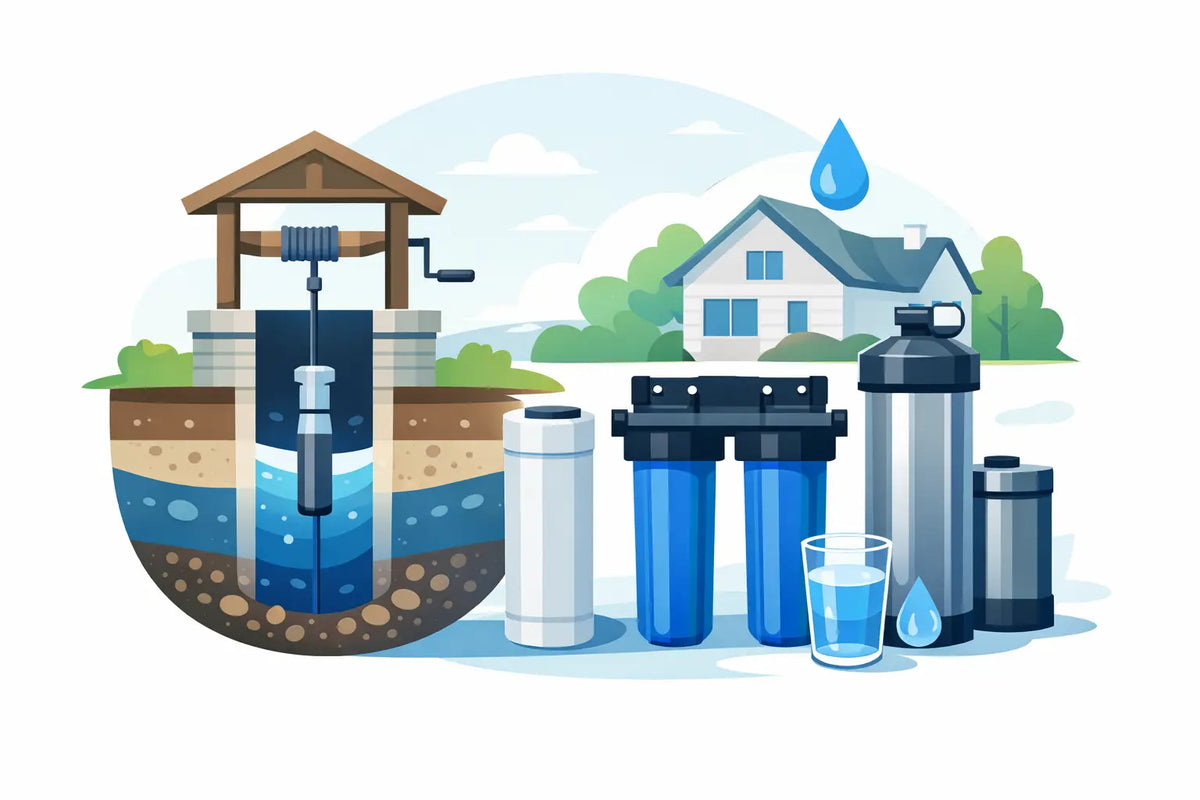
A glass of well water can look perfectly clear and still create real problems throughout a home. Orange staining, rotten-egg odor, scale on fixtures, cloudy water, or recurring bacteria concerns each call for a different solution. The top well water filters are not simply the biggest systems or the ones with the most stages. They are systems selected to treat the contaminants actually present in your water.
For homeowners, the goal is straightforward: clean water at every tap, protection for plumbing and appliances, and confidence in the water your family uses every day. Getting there starts with a water test, then matching the treatment equipment to your well, household demand, and maintenance expectations.
Why a Water Test Comes Before Choosing a Filter
Private wells are not regulated like municipal water supplies. Water quality can vary by region, aquifer depth, weather, nearby land use, and changes to the well itself. A neighbor’s treatment system may solve their iron problem while doing little for your sulfur odor, manganese staining, or bacterial contamination.
Before buying a whole-house system, test untreated water directly from the well supply. A comprehensive laboratory test is especially valuable if the property is newly purchased, the water has changed in taste or appearance, there has been flooding or well work, or someone in the household is vulnerable to contaminants. At a minimum, evaluate iron, manganese, hardness, pH, hydrogen sulfide, total dissolved solids, turbidity, and coliform bacteria. Depending on your location and concerns, testing for nitrate, arsenic, lead, PFAS, and other local risks may also make sense.
The results do more than identify a contaminant. They reveal conditions that affect treatment performance. For example, pH influences how effectively iron can be oxidized and filtered. High sediment can shorten the life of finer filters. A UV system needs sufficiently clear water to disinfect effectively. Good treatment design accounts for the entire water profile, not one line on a test report.
The Top Well Water Filters by Water Problem
Sediment filters for sand, silt, and cloudy water
A sediment filter is often the first line of defense for well water. It captures visible particles such as sand, silt, rust, and debris before they reach faucets, water heaters, softeners, UV units, or drinking water systems. This can prevent clogged aerators, worn valves, and premature failure of downstream equipment.
Sediment filtration is not a one-size-fits-all category. A spin-down or reusable prefilter may be appropriate where larger grit is common, while a cartridge filter can capture finer particles. The trade-off is pressure drop and replacement frequency. A very fine cartridge may polish water well, but it can clog quickly when sediment loads are heavy. In those cases, staged sediment filtration is often the better long-term approach.
Iron and manganese systems for staining and metallic taste
Iron is one of the most common well-water complaints. It can leave orange or brown stains in sinks, toilets, laundry, and dishwashers. Manganese can create dark brown or black staining and may be harder to remove at low concentrations. Both can affect taste, foul plumbing, and interfere with other treatment equipment.
The right iron filter depends on the form of iron in the water. Clear-water iron is dissolved and may need oxidation before filtration. Ferric iron is already oxidized and often behaves more like a particulate. Air injection, oxidation media, and other dedicated iron-reduction systems can be effective, but the proper choice depends on iron level, pH, manganese, sulfur, and flow rate.
A standard water softener may reduce modest levels of dissolved iron, but it is not always the best primary iron solution. When iron is substantial, a dedicated iron filter ahead of the softener can reduce maintenance and protect softening resin from fouling.
Sulfur filters for rotten-egg odor
That unmistakable rotten-egg smell is usually caused by hydrogen sulfide gas, although sulfur bacteria and water-heater conditions can also contribute. The odor may be strongest in hot water, at the first draw in the morning, or when water sits in plumbing.
Sulfur treatment commonly uses oxidation followed by filtration. Air injection systems are frequently used for hydrogen sulfide and can also address certain iron concerns. Catalytic carbon may be useful in some applications, particularly where odor reduction and polishing are needed. High sulfur levels, bacteria, iron, and low pH can change the equipment recommendation, which is why testing matters before selecting a system.
If odor appears only in hot water, investigate the water heater as well. Replacing or adjusting the anode rod may help in some situations, but it is not a substitute for whole-home treatment when hydrogen sulfide is present throughout the incoming water supply.
Water softeners for hard water and scale
Hard water is caused primarily by calcium and magnesium. It creates white scale on fixtures, reduces soap performance, leaves spots on glassware, and forces water-using appliances to work harder. A properly sized ion-exchange water softener removes hardness minerals and helps protect water heaters, dishwashers, washing machines, and plumbing fixtures.
Softening is highly effective for hardness, but it does not disinfect water or reliably remove every well-water contaminant. Traditional softeners also require salt and periodic regeneration. Salt-free conditioners can help reduce scale formation in certain applications, but they do not remove hardness minerals and should not be viewed as a direct replacement when truly soft water is required.
UV sterilizers for bacteria concerns
A UV water treatment system disinfects water by exposing it to ultraviolet light. It is a strong option for addressing bacteria and other microorganisms without adding chemicals to the water. For well owners who have had a positive coliform result, recurring microbial concerns, or a vulnerable household member, UV can provide valuable protection as part of a complete treatment plan.
UV is not a filter in the traditional sense. It does not remove sediment, iron, hardness, or chemicals. Water must be clear enough for the UV light to reach microorganisms, so sediment and iron treatment generally belong ahead of the UV chamber. The lamp also requires scheduled replacement, and the quartz sleeve needs cleaning to maintain performance.
Reverse osmosis for drinking water treatment
A whole-house well system handles the water used for bathing, cleaning, laundry, and appliances. For the water you drink and cook with, an under-sink reverse osmosis system can add another level of targeted treatment. Reverse osmosis is commonly used to reduce dissolved contaminants such as nitrate, arsenic, certain metals, and many other dissolved substances, depending on the system and certification.
RO is usually installed at a single point of use because it produces water more slowly than a whole-home system. It also needs suitable prefiltration. If the incoming water contains iron, sediment, sulfur, or very hard water, address those issues first to protect the RO membrane and maintain output.
How to Size a Well Water Filtration System
Performance depends on more than the treatment media. A system must be sized for household flow rate and water use. A filter that works well for two people in a small home may create pressure loss when several bathrooms, appliances, and outdoor fixtures are used at once.
Start with the number of bathrooms, occupants, peak simultaneous water use, well pump capacity, and incoming pressure. A typical home often needs treatment equipment capable of supporting several gallons per minute without a noticeable drop in shower or appliance performance. Larger homes, multi-family properties, and light commercial applications may require higher-flow tanks, multiple units, or custom specification.
Also consider regeneration or backwash requirements. Many iron filters and softeners need adequate flow and drain capacity to clean their media. A system that cannot backwash correctly may underperform even if the media itself is appropriate. This is one reason a treatment recommendation should include a review of the plumbing layout, available drain, electrical access, and well pump output.
A Practical Buying Checklist for Well Owners
When comparing systems, look beyond broad claims such as “removes iron” or “whole-house filtration.” Confirm these four details before making a decision:
- The system is designed for the contaminants and concentrations shown in your water test.
- Its service flow rate matches your household’s peak demand.
- It has the needed installation requirements, including drain, power, space, and plumbing connections.
- You understand ongoing costs for media, salt, cartridges, UV lamps, cleaning, and service.
Build a System That Treats the Whole Problem
Many well homes benefit from a treatment train rather than one all-purpose filter. A common layout might include sediment protection first, then iron or sulfur reduction, then softening, followed by UV disinfection. A reverse osmosis system can serve the kitchen drinking-water tap. The correct order varies with the water test and the equipment selected.
At Pure Water Guys, the focus is on matching treatment to the problem instead of asking homeowners to guess from a shelf of filters. Whether your concern is staining, odor, hard water, bacteria, or drinking-water contaminants, a well-planned system protects more than the taste of your water. It helps protect the plumbing, appliances, and people who rely on it every day.
Start with clear test results, choose equipment built for your actual water conditions, and keep up with maintenance. That is the most reliable path to well water that feels as dependable as the home it serves.