
July 24, 2026
Water Softener vs Descaler for Your Home
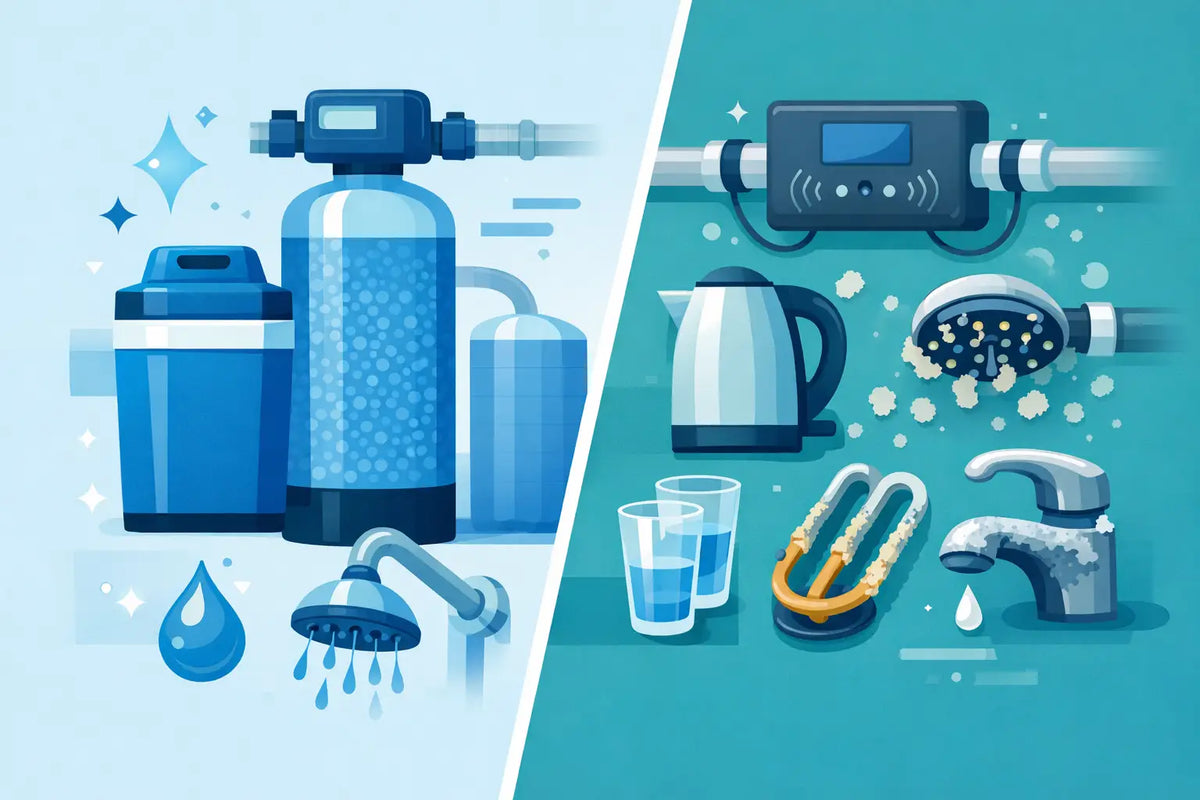
White crust around faucets, cloudy spots on glasses, stiff laundry, and a water heater that seems to work harder than it should are all common signs of hard water. When comparing a water softener vs descaler, the right choice comes down to what you need the system to do: remove hardness minerals from your water or reduce the scale those minerals leave behind.
Both options can help protect plumbing and equipment, but they do not produce the same water. A true water softener changes the mineral content of the water. A descaler generally leaves those minerals in place and aims to make them less likely to form stubborn deposits. Knowing that difference before you buy can prevent disappointment and help you protect your home, family, or facility with the right system.
Water Softener vs Descaler: The Core Difference
Hard water contains dissolved calcium and magnesium. Those minerals are not usually a health concern, but they can create costly maintenance problems. As water is heated or evaporates, minerals can settle out and form scale inside pipes, water heaters, dishwashers, coffee equipment, fixtures, and other water-using appliances.
A conventional water softener uses ion exchange to remove calcium and magnesium from the water. The system's resin beads capture hardness minerals and exchange them for sodium or potassium ions. After the resin reaches capacity, the unit regenerates with salt or potassium chloride and flushes the collected hardness minerals away.
A descaler, often called a salt-free conditioner, works differently. Many whole-home salt-free systems use a treatment process designed to alter how hardness minerals behave, helping reduce their ability to stick to surfaces and build dense scale. The minerals remain in the water, so a hardness test will still show hard water after treatment.
That distinction matters. If your primary goal is genuinely soft water, ion exchange is the proven solution. If your goal is scale reduction without salt, brine discharge, or a drain connection, a quality salt-free conditioner may be a practical fit.
What a Water Softener Does Best
A water softener is the stronger choice for homeowners who want the full experience of soft water. You will typically notice that soap lathers more easily, skin and hair feel less dry after bathing, laundry feels softer, and dishes have fewer mineral spots. Because hardness minerals are removed, a softener also provides dependable protection against new scale buildup in water-using equipment.
This can be especially valuable in areas with moderately hard to very hard water, or in homes with tankless water heaters, steam appliances, high-end fixtures, and frequent hot-water demand. Water heaters run more efficiently when scale is not insulating heating surfaces. Over time, that may help reduce service needs and protect the lifespan of expensive equipment.
There are trade-offs. Most conventional softeners need a nearby drain for regeneration and a power source for the control valve. They also require salt replenishment and periodic attention to settings, particularly if household size or water use changes. The regeneration cycle uses water, and the discharge contains brine, which may be restricted in certain communities or unsuitable for some septic and wastewater situations.
For households limiting sodium intake, the small amount of sodium added through softening can be a consideration. Potassium chloride is an available alternative, although it usually costs more. A reverse osmosis drinking water system can also remove sodium and many other dissolved contaminants at a dedicated kitchen faucet, giving families another layer of control over drinking water quality.
What a Descaler Does Best
A properly selected salt-free descaler is built for people who want low-maintenance scale control without a salt tank, regeneration cycle, or wastewater discharge. Most require no electricity, no drain, and very little routine service beyond replacing media according to the system's schedule.
For a homeowner with mild to moderately hard municipal water, a descaler can help reduce scale accumulation on heating elements, fixtures, and appliances. It is also a useful consideration where local rules limit conventional softener discharge or where installation space is tight. For second homes, rental properties, or businesses that want less day-to-day maintenance, the simplicity can be appealing.
However, a descaler does not make water feel soft. You may still see spotting on glassware, especially where water dries on a surface. Soap may not lather as freely, laundry will not have the same softened feel, and existing heavy scale still needs to be cleaned or professionally removed. If a seller promises that a descaler will duplicate every benefit of ion-exchange softening, that claim deserves a closer look.
The term descaler can also refer to several different technologies. Salt-free media-based conditioners are not the same as electronic or magnetic devices attached to a pipe. Performance claims for electronic and magnetic products can vary widely based on water chemistry, flow rate, pipe material, and installation conditions. For reliable whole-home treatment, focus on systems with clearly explained technology, sizing guidance, maintenance requirements, and realistic expectations.
Which System Fits Your Water Problem?
The better choice depends on your water test, your plumbing setup, and the results you expect. A water softener is generally the better fit when hardness is high and you want to eliminate the everyday effects of hard water. A descaler is often the better fit when salt-free operation, no drain line, and simpler upkeep matter more than changing the feel of the water.
Consider a conventional water softener if you are dealing with several of these issues:
- Heavy white scale on fixtures, shower doors, and dishes
- Reduced water heater efficiency or frequent appliance scale problems
- Dry-feeling skin, dull hair, rough laundry, or poor soap performance
- High hardness readings and a desire for truly softened water
Do Not Treat Hardness as the Only Water Issue
Hard water treatment is not the same as filtration. A softener does not remove chlorine, sediment, sulfur odor, PFAS, bacteria, or many other contaminants. Likewise, a descaler does not make unsafe water safe to drink.
Many homes need a layered approach. A sediment filter may protect downstream equipment from grit. Carbon filtration can improve chlorine taste and odor. A well water system may need treatment for iron, manganese, sulfur, or bacteria before or alongside hardness control. For drinking water, reverse osmosis can provide a separate point-of-use solution for dissolved contaminants and improved taste.
This is particularly important for well owners. Hardness may be only one part of the picture. Iron can foul softener resin, sediment can reduce flow, and unusual pH levels can affect how treatment equipment performs. Start with a current water analysis instead of choosing equipment based only on visible scale.
Sizing and Installation Matter More Than Most Buyers Expect
A softener that is too small may regenerate too often, use excess salt, and struggle during peak demand. One that is oversized for the household may cost more than necessary. Correct sizing considers hardness level, household occupancy, daily water use, peak flow needs, and whether iron is present.
Descalers also need appropriate sizing. Look at the system's rated service flow, not just the number of bathrooms in a home. A large soaking tub, multi-head shower, irrigation demand, or commercial kitchen can create flow conditions that exceed an undersized unit's capacity.
For business owners, scale control deserves special attention. Restaurants, coffee shops, laundries, multifamily properties, and light industrial facilities can lose money quickly when scale affects heaters, ice machines, boilers, dishwashers, or process equipment. A commercial system should be specified around actual water demand, source-water chemistry, equipment manufacturer requirements, and service access. An expert review before installation is usually far less expensive than correcting an undersized system later.
Cost, Maintenance, and Long-Term Value
The purchase price is only one part of the decision. Water softeners have ongoing costs for salt, regeneration water, and occasional service or resin replacement. In return, they offer the clearest reduction in hardness-related cleaning and appliance issues.
Descalers often have lower ongoing operating demands because they do not need salt or regeneration. Their media may still require replacement after a stated service life. The long-term value depends on whether scale control meets your expectations. If you still spend heavily on spot removers, appliance repairs, or cleaning time, the upfront savings may not be the savings that matter most.
PureWaterGuys helps homeowners and businesses match water treatment to the actual problem, not just the label on a box. A water test and a few details about your property can clarify whether you need soft water, salt-free scale control, filtration, or a combination of systems.
The best next step is simple: identify your hardness level, confirm what else is in your water, and choose treatment based on the outcome you want to live with every day. Clean fixtures and protected equipment are valuable, but confidence in the water running through your property is even better.