
August 01, 2026
Well Water Filtration Guide for Cleaner Water
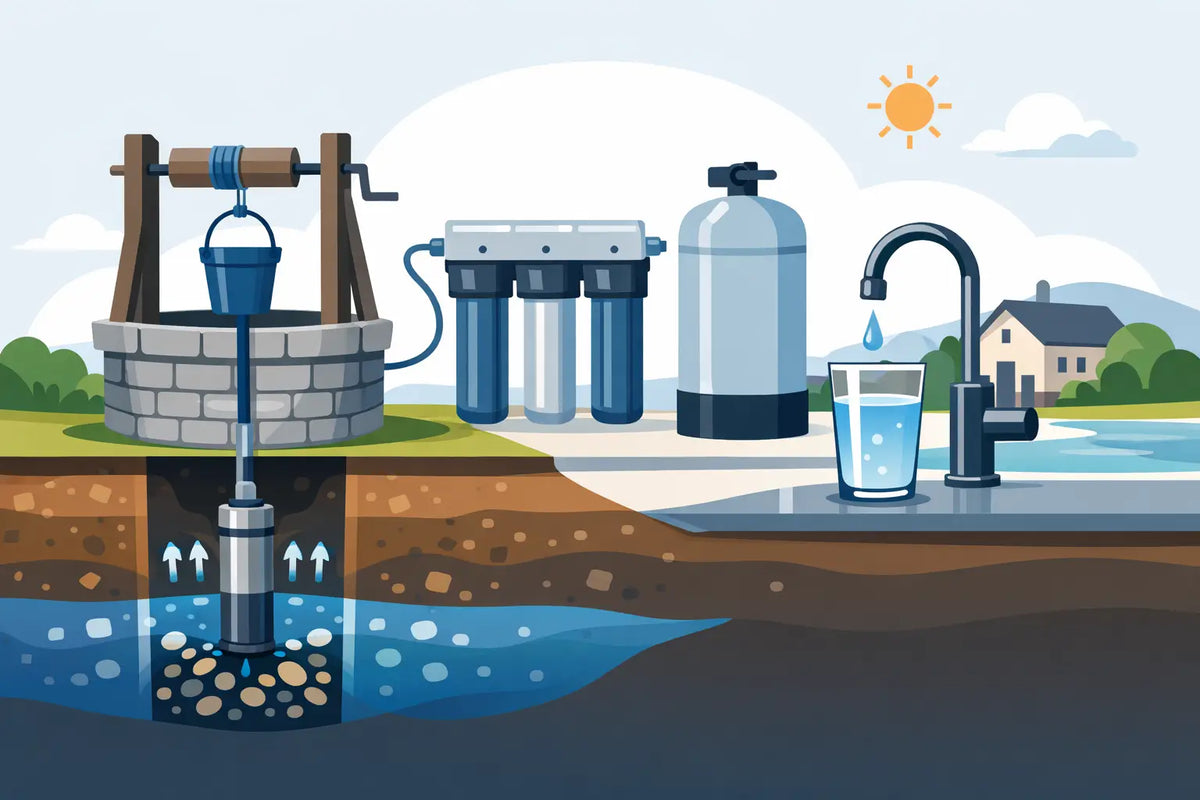
A well can provide dependable water for decades, but it does not receive the treatment and monitoring built into a municipal supply. If orange stains are appearing in sinks, the shower smells like rotten eggs, laundry feels stiff, or your water test raises a concern, this well water filtration guide can help you choose a solution based on the problem rather than guesswork.
The right system protects more than drinking water. It can help preserve plumbing fixtures, water heaters, appliances, laundry, and the everyday comfort of your home. The key is identifying what is actually in the water before deciding whether you need a simple sediment filter, a complete iron and sulfur system, a softener, UV disinfection, reverse osmosis, or a combination.
Start Your Well Water Filtration Guide With Testing
Water treatment should begin with a current, comprehensive water test. Well water quality can change with seasonal rainfall, flooding, nearby construction, a new agricultural activity, or changes in the well itself. A system that solved a problem five years ago may no longer be sized or configured for the water coming into the home today.
At a minimum, homeowners commonly test for pH, hardness, iron, manganese, sulfur, total dissolved solids, nitrates, and coliform bacteria. Depending on your location and property history, testing for arsenic, lead, PFAS, uranium, pesticides, and other local concerns may also be appropriate. A local certified laboratory can help identify health-related contaminants, while a water treatment specialist can translate the results into practical equipment recommendations.
Do not select equipment only because a neighbor has the same system. Two homes on the same road can have very different water chemistry, well depths, flow rates, and household demand. Testing turns a broad category like “bad well water” into a specific treatment plan.
Test for Flow Rate and Household Demand Too
Water chemistry is only part of the decision. A whole-house system must also supply enough treated water when people shower, laundry runs, and appliances are filling at the same time. A system sized for a one-bathroom home may cause pressure loss in a larger household.
Know your well pump flow rate, plumbing size, number of bathrooms, and the number of people regularly using water. These details determine tank size, valve selection, media volume, and whether a storage tank or booster pump should be considered. Proper sizing is where treatment performance and daily convenience meet.
Match the System to the Water Problem
Well water often needs more than one treatment stage. That is normal. Each component has a distinct job, and arranging them in the right order helps protect the equipment that follows.
Sediment, Sand, and Cloudy Water
Sediment filtration removes visible particles such as sand, silt, rust, and dirt. It is often the first stage in a well water system because particles can clog faucets, damage valves, reduce water pressure, and shorten the life of finer filters.
A spin-down sediment filter can be useful where larger debris is frequent and needs easy flushing. Cartridge filters provide finer filtration but require regular replacement. For heavy or persistent sediment, a backwashing media filter may offer less maintenance than replacing cartridges often. The best choice depends on particle size and loading, not just how cloudy the water looks.
Iron and Manganese Stains
Orange, red, brown, or black staining is commonly linked to iron or manganese. These minerals can discolor toilets, sinks, and laundry, while also building up in plumbing and water-using appliances. Iron can appear dissolved and clear when drawn from the tap, then turn orange after exposure to air.
Treatment may involve oxidation and filtration, an air injection system, specialized media, or a softener when levels are low and water chemistry is favorable. Higher iron levels usually need dedicated iron removal before a softener. This prevents the resin from becoming fouled and maintains better long-term performance.
Rotten-Egg Odor and Sulfur
The unmistakable rotten-egg smell is typically hydrogen sulfide gas. It may be present in the well water, form through bacterial activity, or sometimes originate in the water heater. If the odor occurs only with hot water, inspect the heater first. If it appears at every fixture, whole-house sulfur treatment is usually the more appropriate path.
Aeration, oxidation, and catalytic filtration are common solutions. Chlorine injection followed by filtration may be considered for more severe sulfur or bacterial conditions. The right approach depends on sulfur concentration, iron and manganese levels, pH, and whether bacteria are present.
Hard Water and Scale
Hard water contains calcium and magnesium that create scale on fixtures, shower doors, water heaters, dishwashers, and coffee makers. It can also make soap less effective, leaving skin, hair, dishes, and laundry with a dull residue.
A traditional ion-exchange water softener is the most reliable choice when the goal is meaningful hardness reduction and appliance protection. Salt-free conditioners can help reduce the tendency of minerals to form hard scale in some applications, but they do not remove hardness minerals. That distinction matters for homeowners who expect the feel and cleaning benefits associated with softened water.
Bacteria and Microbiological Safety
A positive coliform or E. coli result requires prompt attention. Do not treat bacterial contamination as only a taste or odor issue. Start by following the guidance from your testing authority, then investigate possible causes such as a damaged well cap, surface runoff, flooding, or a compromised casing.
UV water treatment can disinfect bacteria, viruses, and other microorganisms without adding chemicals, but water must be clear enough for the UV light to work effectively. Sediment and iron removal generally come before UV. In some cases, shock chlorination and well repair are also necessary. UV is a powerful barrier, not a substitute for correcting a failing well.
A Typical Whole-House Treatment Order
There is no universal system layout, but many well water installations follow a logical sequence: sediment protection first, then iron, sulfur, or manganese reduction, followed by softening if needed, and UV disinfection near the end when microbiological protection is required.
Drinking water treatment can be added separately at the kitchen sink. A reverse osmosis system is especially useful for reducing many dissolved contaminants that whole-house equipment may not target, including certain metals, nitrates, salts, and PFAS when the system is designed and maintained for that purpose. Whole-house filtration improves water throughout the home; reverse osmosis provides a final polishing step for water you drink and cook with.
Maintenance Is Part of the Purchase Decision
Every water treatment system needs maintenance, but the work and cost vary widely. Cartridge filters require replacement. Backwashing filters need water and a drain connection. Softeners use salt and require periodic servicing. UV lamps need annual replacement, and the quartz sleeve needs cleaning. Reverse osmosis systems require filter changes and periodic membrane replacement.
Before buying, ask what consumables the system uses, how often service is expected, whether a drain is required, and how much water is used during regeneration or backwashing. A lower upfront price can become less attractive if the system is undersized, difficult to service, or dependent on frequent cartridge changes.
For rental homes, vacation properties, restaurants, or light commercial facilities, maintenance planning is even more important. Water demand, operating hours, and downtime risks may justify larger tanks, automatic controls, redundant filtration, or a custom-designed commercial system.
When a Standard System Is Not Enough
Some water problems require a more tailored design. Low pH can corrode plumbing and may need neutralization before other treatment. Very high iron can demand multiple stages. Arsenic, uranium, nitrates, and PFAS require contaminant-specific solutions and careful verification of performance claims. If your well has both heavy sediment and bacteria, installing UV alone will not deliver dependable protection.
This is also where expert support saves time. Share your water report, household size, well flow rate, plumbing details, and top concerns. A properly specified system should address the water you have now while leaving room for reasonable changes in demand.
Pure Water. Protected Family. Start with your test results, choose treatment that solves the measured problem, and maintain the system on schedule. Clean, reliable well water is not a one-size-fits-all purchase, but it is a problem with clear, practical solutions when the system is built around your home.