
October 19, 2026
Well Water Restaurant Filtration: What Rural Operators Need Before Buying Anything Else
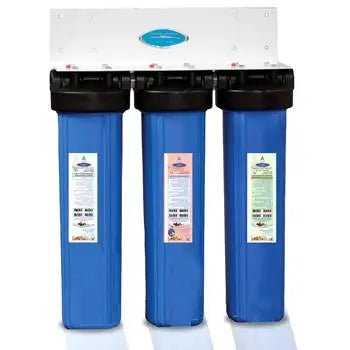
If your restaurant, cafe, or bar runs on well water instead of a municipal line, most of the generic "best filtration system for restaurants" advice doesn't apply to you. That advice assumes you're starting with water that's already been treated for sediment and biological safety. Well water isn't. Before you spend money on an ice machine filter or a drinking water system, you need to deal with what's actually coming out of the ground.
Municipal Advice Assumes a Starting Point You Don't Have
Most buyer's guides, including our own F&B filtration buyer's guide, are written around operators connected to a treated city supply. That's a fair assumption for most urban and suburban restaurants, but it skips a step for anyone on a private well. Well water can carry sediment, dissolved iron and manganese, hardness minerals, and seasonal variability that a city supply simply doesn't have. If you install a point-of-use filter or an RO system without addressing that first, you're putting unfiltered well water directly in front of equipment that wasn't built to handle it.
Pretreatment Comes First, Everything Else Second
For a well-fed location, the order of operations matters more than the brand of any single filter. Sediment and iron need to be knocked down at the point where water enters the building, before it ever reaches a softener, an RO system, or a coffee machine. A whole-location pre-filtration unit, like the Crystal Quest Whole House Compact Big Blue Triple Smart Series, is built to sit at that entry point and handle the load before it's distributed to the rest of your equipment.
If a water test shows hardness in addition to sediment and iron (common with well water), that's a separate problem that needs a separate piece of equipment. A light commercial softener sized for 30,000-60,000 grains protects ice machines, steam equipment, and espresso machines from scale buildup that shortens their service life.
Bacteria Is the Part You Can't Skip
Sediment, iron, and hardness damage equipment. Bacteria is a food safety problem. Unlike a city supply, well water arrives with no disinfectant in it, so coliform bacteria can show up after heavy rain, flooding, or a well repair.
In most states, a restaurant on its own well that serves 25 or more people a day for at least 60 days a year is regulated as a public water system (a "transient non-community" system under the Safe Drinking Water Act). That usually means scheduled bacteria and nitrate testing reported to your state drinking water program. Check with your state program or county health department for the exact requirements in your area.
For disinfection, a UV sterilizer installed after pretreatment is the most common approach. UV only works on clear water, because sediment, iron, and hardness shield bacteria from the light and foul the lamp sleeve. That is one more reason pretreatment has to come first.
Why This Order Actually Matters
Skip pretreatment and you're sending sediment and iron straight into downstream equipment. That means RO membranes clog faster, inline filters load up sooner than they should, and valves and boilers take on mineral buildup they wouldn't see on a municipal line. None of that shows up as a dramatic failure on day one. It shows up as more frequent service calls and shorter equipment life over the following year.
Size for a Full Service Day, Not One Water Test
Well output and water quality aren't static. Flow can drop in dry months, and sediment can spike after heavy rain. Sizing your system off a single test sample is a common mistake. For anything involving reverse osmosis, use our commercial RO pricing and sizing guide to size for peak service demand, not a snapshot. A commercial mid-flow RO system (500-7,000 GPD) is the right category for most well-fed restaurants once sediment and iron have already been pulled out upstream.
What a Typical Well Water Stack Looks Like
- Whole-location pretreatment for sediment and iron at the point of entry
- A softener, if your water test shows hardness that would affect ice machines or steam equipment
- UV disinfection after pretreatment, for bacteria
- An RO system for drinking water and ice, sized for your actual peak flow
- Point-of-use inline filters at specific stations like the bar gun or coffee machine, such as a commercial single inline filter or commercial triple inline filter depending on what that station needs
You can see how these pieces fit together by application on our food and beverage filtration hub page.
Start With a Water Test, Not a Product
Every well is different, and the right stack depends on what's actually in your water, not a generic recommendation. If you're on a well and haven't had your water tested recently, that's the real first step, not the filter purchase itself.
If you're ready to figure out what your location actually needs, request a quote and tell us about your well, your water test results, and your service volume. We'll help you build the right order of equipment instead of guessing.