
October 29, 2026
What Is Spot-Free Water? A Plain-English Guide to TDS and Spotting
"Spot-free" gets thrown around a lot in the car wash business, but most operators have never had someone explain what it actually means in measurable terms. It's not a marketing phrase. It's a number you can check with a $15 meter in about ten seconds.
What "Spot Free" Actually Means
Water spots aren't water. Pure water evaporates clean and leaves nothing behind. The spots you see on a hood or a mirror are mineral deposits — calcium, magnesium, silica, and other dissolved solids that were riding along in the water. When the water evaporates, those minerals don't evaporate with it. They stay put, dry, and show up as the white or gray residue customers associate with a bad wash.
"Spot-free water" means water with low enough dissolved mineral content that when it evaporates off a panel, there's nothing left to see. It's a relative term, not an absolute one — the lower the mineral content, the cleaner the dry-down.
TDS: The Number Behind the Spots
TDS stands for Total Dissolved Solids, measured in parts per million (ppm). It's a snapshot of how much dissolved mineral material is in a sample of water. Municipal tap water commonly runs anywhere from 100 to 400+ ppm depending on your local source. Every one of those ppm is a tiny amount of mineral that stays behind when the water dries.
There's no single industry-wide number that magically guarantees zero spotting — panel temperature, airflow, and drying speed all play a role too. But as a practical rule, the lower your final rinse TDS, the less mineral load is available to leave residue, and the better your dry-down looks. Many tunnel and self-serve operators aim for rinse water in the low double digits or below.
Why Minerals Left Behind Cause Spots
Think of it like boiling a pot dry. The water disappears, but anything that was dissolved in it doesn't — it concentrates on the surface as the water volume shrinks, then crystallizes once the last of the moisture is gone. On a car panel, that happens fast, especially in sun or wind. The higher the starting TDS, the more material is available to concentrate and crystallize before the surface fully dries.
This is also why a "clean" rinse can still spot. The water can be clear, odor-free, and perfectly safe to touch, and still carry enough dissolved hardness minerals to leave a visible film once it dries. Clarity and TDS are two different things.
How to Check Your Rinse With a TDS Meter
A handheld TDS meter is the cheapest diagnostic tool in this business. Dip the probe in a sample of your final rinse water, read the ppm number, and you know exactly what you're dealing with — no guessing based on how the car looks after it sits in the sun for twenty minutes.
Operators running final-rinse treatment (RO, DI, or a blend) should check the output TDS on a regular schedule, not just when customers start complaining. A number that's been climbing week over week is usually the first sign that a filter or membrane is nearing the end of its service life, before the spotting becomes visible on cars.
What to Do When TDS Reads High
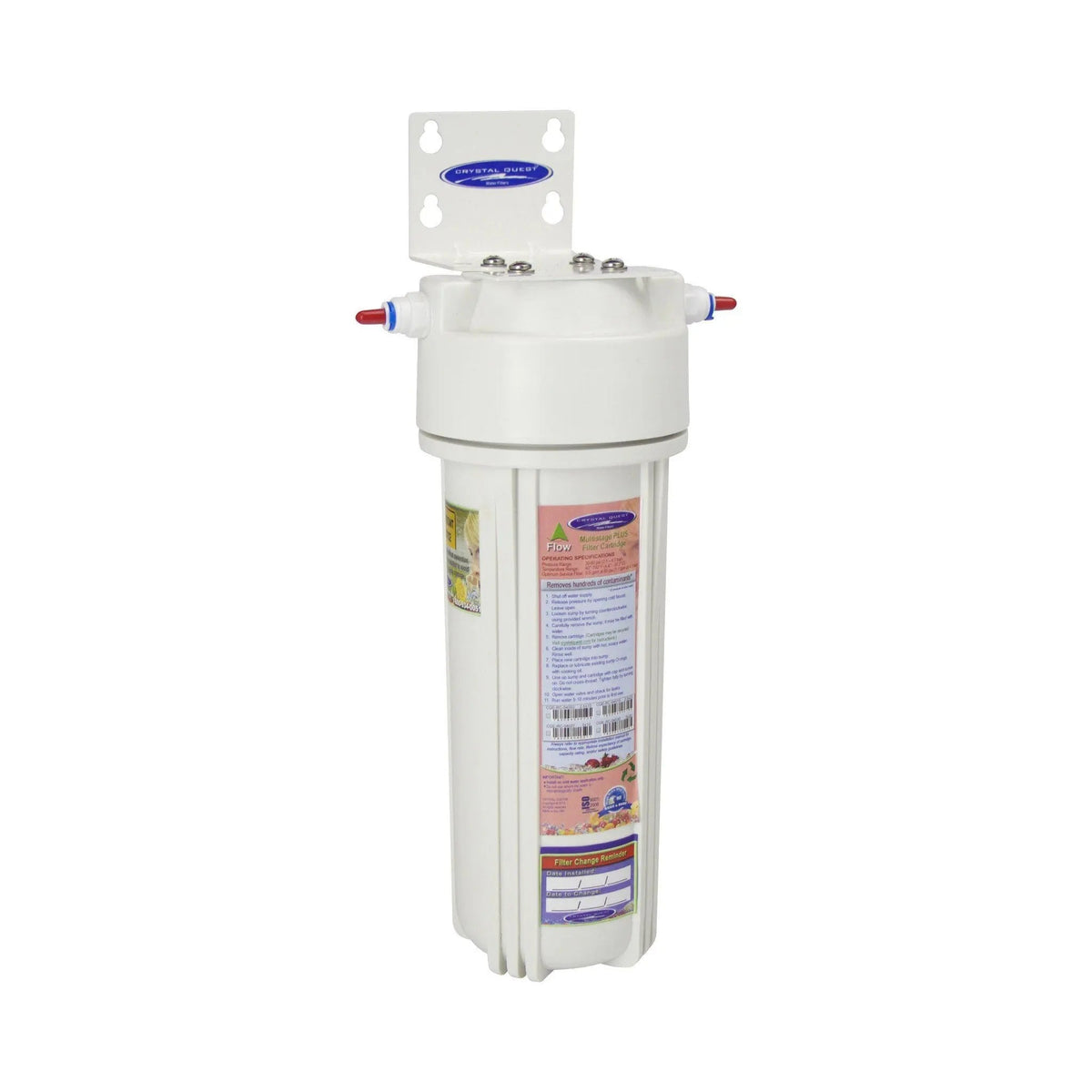
If your meter shows rinse water TDS higher than it should be, the fix depends on what's upstream. A single worn cartridge in a commercial single inline water filter can be enough to let more dissolved solids pass through than your system was designed to allow. For mobile setups or single-line installs, the same logic applies on a smaller scale with a point-of-use inline filter.
Choosing the right combination of pre-filtration, softening, RO, or DI for your specific water and flow rate is a sizing question, not a concept question — that's covered in detail in our car wash water treatment buyer's guide. This article is here to explain the "why," not sell you a configuration.
What's Outside Our Lane
TDS and final-rinse quality are water treatment questions, and that's what we sell and advise on. Reclaim tank design, plumbing layout, and discharge permitting are separate disciplines handled by your plumber or site engineer — we don't sell or advise on those, and nothing here should be read as guidance on wastewater compliance.
If you want a straight answer on what treatment stages would actually bring your site's TDS down to spot-free levels, start with our car wash water filtration systems page or request a quote directly at our quote form and tell us your current TDS reading and flow rate.