
November 09, 2026
When to Replace a Reverse Osmosis Membrane
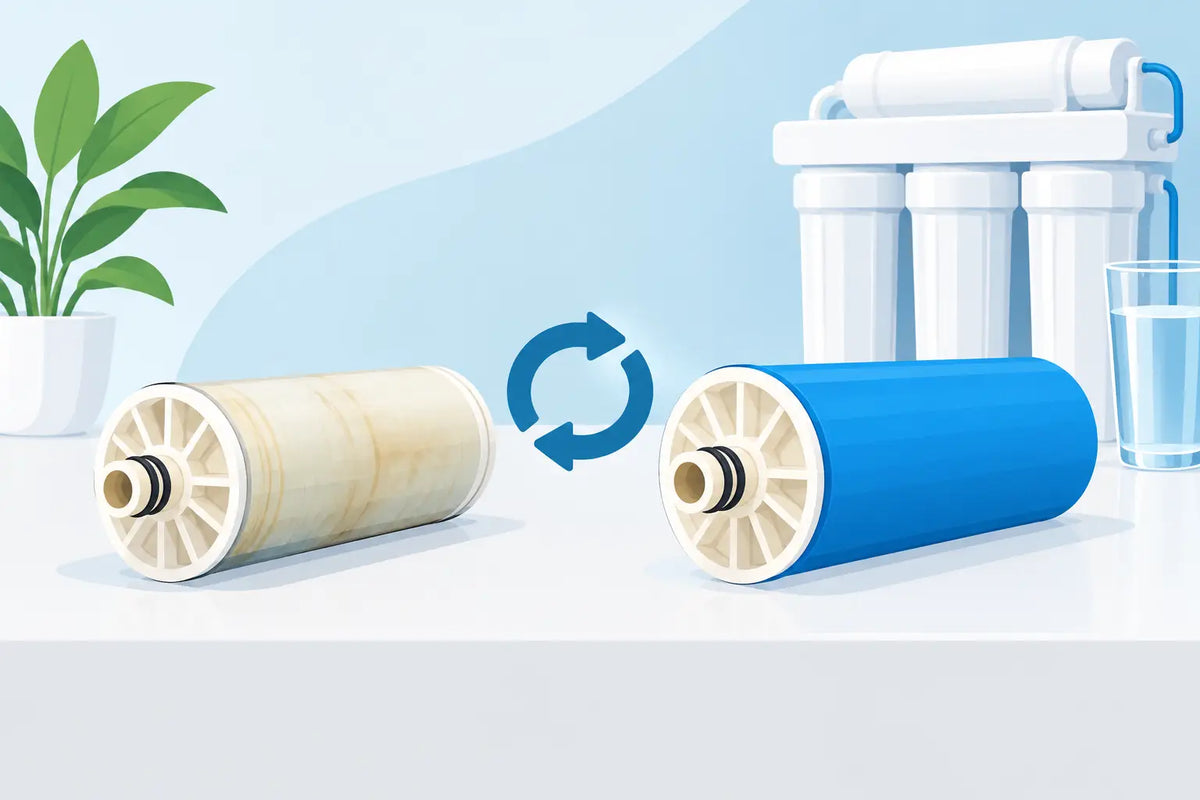
A reverse osmosis membrane is the working heart of an RO drinking water system. Filters before and after it matter, but this thin barrier is what separates many dissolved contaminants from the water your family drinks, cooks with, and adds to coffee. When it is performing well, the result is cleaner-tasting water with lower total dissolved solids. When it is worn out or damaged, the system may still produce water, but it may no longer deliver the quality you expect.
For homeowners, property managers, and business operators, the goal is not simply to replace parts on a schedule. It is to protect water quality, avoid unnecessary expense, and make sure the system matches the water problem at hand.
How a Reverse Osmosis Membrane Works
Most residential and light commercial RO systems use a thin-film composite membrane. Water is pushed across its surface under pressure. Very small water molecules pass through, while a large share of dissolved salts, metals, and other contaminants are sent away in the reject water stream.
This process is different from a standard sediment or carbon filter. Sediment filtration catches physical particles such as sand, rust, and silt. Carbon filtration improves taste and odor and can reduce chlorine and certain organic compounds. The membrane addresses a different challenge: dissolved material that is too small to see and too small for ordinary filters to trap effectively.
A properly designed RO system can reduce total dissolved solids, sodium, fluoride, nitrate, lead, arsenic, and many other dissolved contaminants. Actual reduction depends on the specific contaminant, membrane rating, feed-water pressure, temperature, system design, and condition of the filters. If you are targeting a concern such as PFAS, arsenic, or nitrate, choose a system with performance claims that match that concern rather than assuming every RO system provides the same result.
The membrane does not work alone. A sediment prefilter protects it from particles that can clog its surface. A carbon prefilter is especially critical because chlorine can damage many thin-film RO membranes. A postfilter is commonly installed after the storage tank to polish taste before water reaches the faucet.
What Shortens Membrane Life
A reverse osmosis membrane commonly lasts two to five years, but water quality and maintenance habits can move that timeline significantly. In a home with relatively low dissolved solids and timely prefilter changes, the membrane may last longer. With hard water, high iron, heavy sediment, chlorine exposure, or poor feed pressure, it may need replacement sooner.
Hardness is a frequent issue. Calcium and magnesium can form scale on the membrane surface, reducing water production and contaminant rejection. A water softener or properly selected scale-control treatment ahead of the RO system may be worthwhile where hardness is high. This is especially true for commercial equipment, where downtime and inconsistent water quality can affect operations.
Iron, manganese, sulfur, and sediment can also foul a membrane. Well water often needs pretreatment before reverse osmosis. Sending untreated well water directly to an RO system can lead to rapid filter clogging, poor flow, and premature membrane failure. A water test helps identify whether sediment filtration, iron removal, softening, or other pretreatment should come first.
Low water pressure is another overlooked problem. RO membranes need adequate pressure to separate dissolved material effectively. If production is slow, the issue may be a clogged prefilter, a failing tank, a restricted drain line, cold incoming water, or insufficient pressure rather than a bad membrane.
Signs It Is Time for Replacement
The clearest way to evaluate membrane health is with a total dissolved solids, or TDS, meter. Compare the TDS of the water entering the RO system with the TDS after the membrane. A new or well-performing membrane typically rejects a high percentage of dissolved solids, although the expected rate depends on the membrane and feed water.
A decline in rejection performance suggests the membrane is becoming exhausted, scaled, or damaged. For example, if the incoming water reads 300 ppm and the RO water once read 15 ppm but now reads 75 ppm, the membrane deserves attention. Test water after the membrane when possible, not only from the faucet, because a postfilter or remineralization stage can affect the final reading.
Other warning signs include:
- Water production has slowed even after prefilters are replaced.
- The storage tank takes much longer than usual to fill.
- Drinking water has developed a noticeably salty, mineral-like, or off taste.
- TDS rejection has fallen well below the membrane's expected performance range.
Replace Prefilters on Time
The least expensive way to protect an RO membrane is routine prefilter service. Many residential systems need sediment and carbon filter changes every six to 12 months, depending on water conditions and household use. Follow the schedule for your specific system, then adjust if you have known sediment, chlorine, or high-use conditions.
Do not wait for bad-tasting water. By the time taste changes are obvious, a prefilter may already be restricted or a membrane may have been exposed to damaging contaminants. Keeping service dates on the cabinet door or in a maintenance calendar makes this simple.
When changing filters, sanitize the system if the manufacturer recommends it. Clean housings, use compatible replacement cartridges, and make sure O-rings are properly seated and lubricated with food-grade silicone grease where applicable. Small installation details help prevent leaks and avoid introducing bacteria during service.
Choosing the Right Membrane
Membranes are not interchangeable just because they look similar. Residential systems often use standard 1812-style membranes, while larger homes and commercial systems may use higher-output 2012, 3012, or 4040 configurations. The membrane must fit the housing, match the system's flow and pressure requirements, and work with the existing flow restrictor.
Capacity is only one part of the decision. A higher-gallons-per-day membrane may sound like an upgrade, but it can perform poorly if the system cannot supply enough pressure or if the drain configuration is not matched to it. For a family with normal drinking and cooking needs, a properly maintained standard-capacity system is often sufficient. For a busy office, restaurant, laboratory, or facility, storage volume, peak demand, pretreatment, and recovery rate should be evaluated together.
Water temperature also matters. Cold incoming water reduces RO production, which is common in winter. Replacing a membrane because output slows seasonally can be an unnecessary expense. Check the system specifications and rule out pressure or temperature effects first.
When Water Testing Should Lead the Decision
A membrane replacement can restore RO performance, but it cannot correct every water problem. If your water has sulfur odor, visible sediment, bacteria concerns, severe hardness, or high iron, a whole-home or point-of-entry treatment solution may be needed before water reaches the RO unit. For private wells, periodic testing is the best starting point. For municipal water, testing can still reveal what is entering your home after local distribution and plumbing.
For businesses, testing and system specification are even more critical. A restaurant may need dependable water for ice, coffee, dishwashing, and equipment protection. A lab or facility may have tighter water-quality requirements. The correct solution may include pretreatment, multiple membranes, storage tanks, booster pumps, monitoring, and scheduled service rather than a single replacement part.
PureWaterGuys can help match a replacement membrane or complete treatment approach to your water quality, daily demand, and existing equipment. That guidance can prevent compatibility mistakes and help protect the investment you have already made in cleaner water.
A membrane is a consumable part, but it should not be treated as a guess. Check performance, maintain the filters that protect it, and let your actual water conditions guide the next step. Clean, dependable drinking water begins with a system that is working as designed.