
June 14, 2026
Under Sink Water Filter Replacement Cartridge
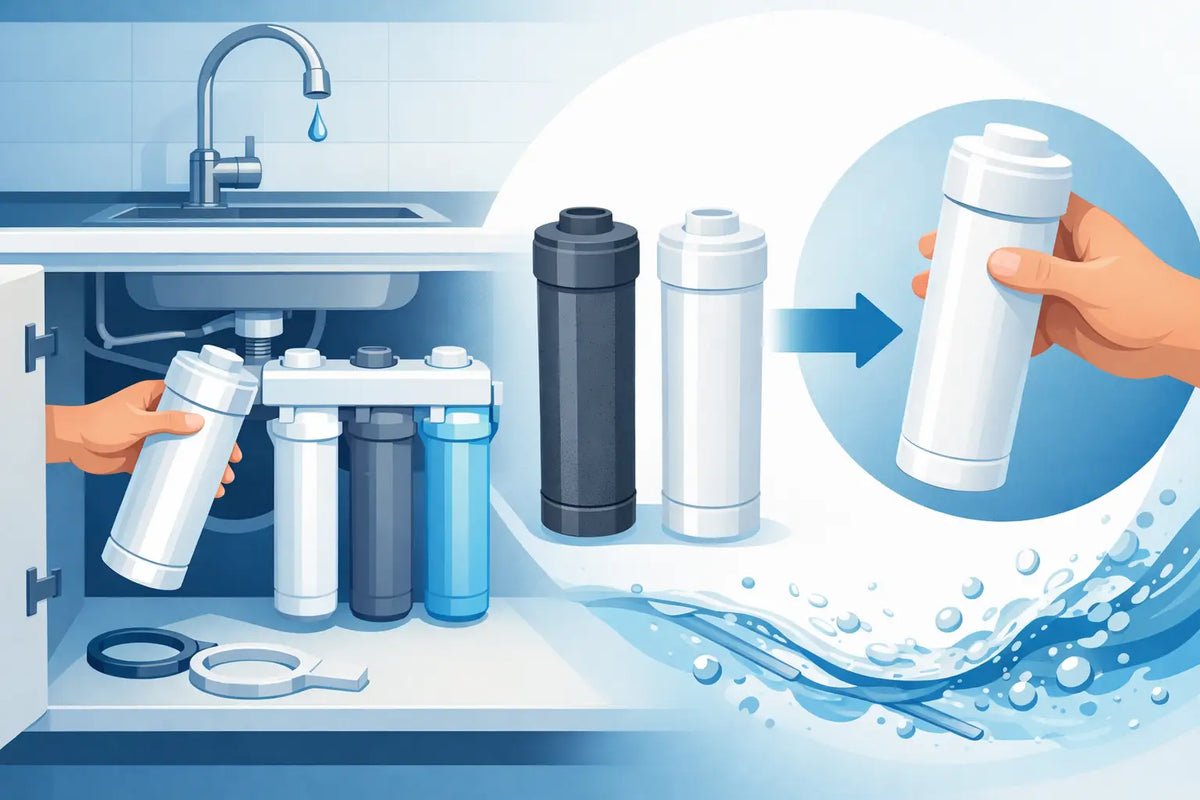
You usually notice a failing under sink water filter replacement cartridge before you see it. Water starts tasting flat, chlorine slips back in, flow slows down, or that clean, crisp glass from the kitchen tap just does not seem as reliable. When that happens, the cartridge is not a small accessory - it is the working core of your filtration system.
For homeowners and facility managers alike, replacement is where water treatment either stays effective or quietly drops off. A high-quality under-sink system can do an excellent job reducing sediment, chlorine, taste and odor, lead, cysts, or even PFAS depending on the setup. But every one of those results depends on keeping the right cartridge in place, on schedule, and matched to the actual water problem.
Why the right under sink water filter replacement cartridge matters
A replacement cartridge is not just about fitting inside the housing. It has to match the filtration media, micron rating, contaminant reduction goals, flow demands, and system design. Two cartridges may look similar on the outside and perform very differently once water starts moving through them.
That distinction matters in real homes. If your main issue is chlorine taste and odor, a carbon block cartridge may be exactly what you need. If you are dealing with heavy sediment, that same cartridge may clog too quickly unless there is prefiltration upstream. If your system was built to reduce specific contaminants such as lead or PFAS, switching to a general-purpose cartridge can leave a major gap in protection.
This is where many replacement problems begin. People often shop by size first and performance second. Size matters, but cartridge dimensions alone do not tell you what the filter is actually designed to remove.
Signs it is time to replace the cartridge
Most cartridges do not fail all at once. Performance usually fades in ways that are easy to miss if you are not paying attention. A drop in flow rate is one of the most common clues, especially with sediment-loaded filters or carbon cartridges that have reached capacity.
Taste and odor changes are another clear signal. If chlorine returns, if the water smells musty, or if coffee and ice start tasting off, your filter media may be spent. In some systems, visible sediment or cloudiness can also point to a cartridge that is overloaded or bypassing due to poor fit or age.
Manufacturer replacement intervals are still the best baseline. Many under-sink cartridges are changed every 6 to 12 months, but that is only a starting point. Water quality, water usage, and filter type all affect actual service life. A large family on chlorinated city water may go through cartridges faster than a one-person household. A restaurant prep sink or office breakroom may have a much shorter replacement cycle than a residential kitchen tap.
How to choose the correct under sink water filter replacement cartridge
The safest approach is to match the replacement to the original system specifications, not just the housing. Start with the model number, cartridge part number, and the contaminant reduction claims the system was designed to deliver.
Match the filtration goal
If your system was installed to improve taste and odor, a carbon filter is often the right fit. If the goal is finer particulate reduction, lead reduction, cyst reduction, or PFAS treatment, the cartridge needs to be rated for that job. This is especially important with specialty media and multi-stage systems.
Reverse osmosis systems add another layer. In those setups, the replacement schedule may include sediment prefilters, carbon blocks, postfilters, and eventually the membrane itself. Replacing only one component while ignoring the others can reduce the performance of the entire system.
Check size and connection style
Many under-sink cartridges come in common form factors, but not all housings are interchangeable. Length, diameter, gasket style, and twist-in versus drop-in designs all matter. A cartridge that almost fits is not good enough. Improper sealing can cause leaks, bypass, or pressure loss.
Confirm contaminant claims
This is where confident buying matters. If you chose your original system to address chlorine, lead, VOCs, PFAS, sediment, or another water issue, your replacement needs to support the same outcome. General filtration language can sound reassuring, but the real question is simple: what is this cartridge actually made to reduce?
Different cartridge types and what they do best
Not every under-sink cartridge works the same way, and understanding the basic categories helps avoid expensive guesswork.
Sediment cartridges are built to capture dirt, rust, and suspended particles. They protect downstream filters and improve clarity, but they usually do not address taste, odor, or dissolved contaminants.
Carbon block cartridges are a common choice for chlorine reduction and better taste. They can also reduce a broader range of contaminants depending on design and certification. These are often the workhorse filters in under-sink drinking water systems.
Granular activated carbon cartridges can improve taste and odor as well, though flow characteristics and contaminant contact time vary by design. Some systems use them effectively, but carbon block often provides tighter filtration in a compact format.
Specialty cartridges target specific concerns such as lead, cysts, chloramines, scale, or PFAS. These are not the place to substitute casually. If the system was selected for a defined water risk, the replacement should preserve that level of treatment.
What affects cartridge life more than people expect
The printed replacement interval on the label is useful, but real-world conditions often tell a more complete story. Incoming water quality is the biggest variable. Heavy sediment loads can plug filters early. High chlorine can exhaust carbon sooner. Hard water, iron, sulfur, and organics can all influence performance depending on the media involved.
Usage volume matters just as much. A kitchen sink used for drinking water only is one thing. A sink that also fills pots, pet bowls, reusable bottles, and coffee makers will push more gallons through the cartridge every week.
Then there is water pressure. Some homeowners assume low pressure means plumbing trouble when the real issue is a loaded filter. On the other hand, very high pressure can stress housings and seals if the system is not properly matched.
Installation mistakes to avoid
Replacing an under-sink cartridge is usually straightforward, but a few common errors can create trouble fast. One is failing to shut off the feed water fully before opening the housing. Another is reusing damaged O-rings or forgetting to lubricate them if the manufacturer recommends it.
It is also common to install a cartridge correctly and still get poor results because the system was not flushed after replacement. New carbon cartridges often need a proper rinse cycle to clear fines and activate normal performance. Skipping that step can mean cloudy water, air sputtering, or temporary taste issues.
A more expensive mistake is using an off-spec aftermarket cartridge simply because it is cheaper. Sometimes third-party replacements work fine, but sometimes they reduce flow, miss contaminant targets, or fit poorly. If water safety or certified reduction claims are the priority, the cartridge should be chosen with the same care as the original system.
When replacement is not enough
Sometimes a new under sink water filter replacement cartridge does not fix the problem. If bad taste, odor, low flow, or contaminant concerns remain after replacement, the issue may be elsewhere in the system.
In a reverse osmosis setup, the membrane may be overdue. In a multi-stage filter, an upstream sediment cartridge may be overloading the next stage. In older systems, housings, valves, tubing, or faucet components can also contribute to poor performance. And if your water conditions have changed since the system was installed, the original cartridge type may no longer be the right match.
That is especially true for homes and businesses responding to newer concerns such as PFAS, chloramine-treated municipal water, or changing well water conditions. Replacement should keep a good system running well, but it cannot turn the wrong system into the right one.
Buying with confidence
The best replacement decision starts with a simple question: what problem is this cartridge supposed to solve? Once that is clear, the right filter is much easier to identify by system model, media type, size, and contaminant claim.
For some buyers, that means reordering the exact cartridge that came with the system. For others, especially those with mixed water issues or commercial demand, it may be worth confirming whether the current setup still fits the application. That is where expert support matters. PureWaterGuys helps customers match replacement cartridges to actual water treatment goals, not just shelf dimensions.
Clean water at the tap should feel routine. If your cartridge is due, treat replacement as protection, not maintenance, and your system will keep doing the job you bought it to do.