
October 24, 2026
Best Filters for Limescale Reduction at Home
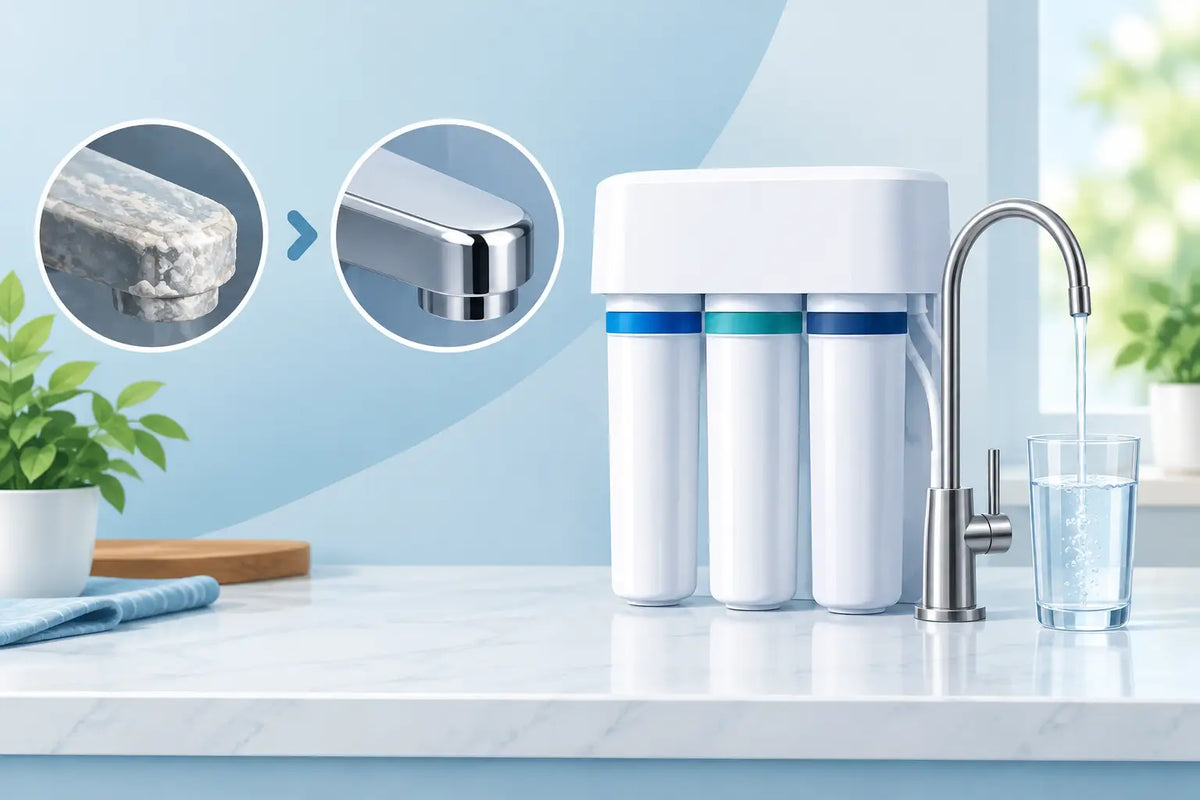
White crust around faucet aerators, cloudy spots on glassware, stiff laundry, and a water heater that seems to work harder than it should all point to the same issue: mineral-rich water. The best filters for limescale reduction are not always conventional filters. The right solution depends on whether you need to remove hardness minerals, prevent scale from sticking, protect one appliance, or improve water throughout the property.
For most homes, calcium and magnesium are the source of limescale. These minerals are not usually a health concern, but they can create costly maintenance problems. Scale can narrow plumbing passages, reduce water-heater efficiency, shorten appliance life, and leave bathrooms looking dirty shortly after cleaning.
What Actually Reduces Limescale?
Water treatment terms can be confusing because several products are marketed for hard water. A sediment filter catches particles such as sand, rust, and debris, but it does not remove dissolved calcium and magnesium. A carbon filter can improve chlorine taste and odor, but it does not solve hardness either.
For true hardness reduction, an ion exchange water softener is the most proven whole-home option. Salt-free conditioners are a practical alternative when the goal is scale control rather than mineral removal. Reverse osmosis can reduce dissolved minerals at a drinking-water faucet, but it is not designed to protect showers, dishwashers, water heaters, or the rest of the home.
That distinction matters. Before choosing a system, decide whether you want softer water or less visible, less damaging scale.
Best Filters for Limescale Reduction by Need
Whole-house ion exchange water softeners
A whole-house water softener is the best choice for homeowners dealing with moderate to very hard water and wanting the most complete result. It uses resin beads to exchange hardness minerals for sodium or potassium ions. The treated water has substantially lower hardness, which means less scale buildup in pipes and appliances.
This system is especially valuable if you notice soap that will not lather, frequent water-heater issues, heavy spotting on dishes, or recurring scale around fixtures. It can also make laundry feel softer and reduce the amount of soap and detergent your household uses.
The trade-off is maintenance. Conventional softeners require salt or potassium chloride, periodic brine regeneration, a drain connection, and enough space for a resin tank and brine tank. They also need to be sized correctly based on hardness, household water use, and peak flow rate. An undersized softener may run out of capacity during busy periods, while an oversized unit can cost more than necessary.
For homes with very high hardness, iron, manganese, or well water concerns, pretreatment may be needed before the softener. Iron can foul softening resin, so a water test should guide the equipment design.
Salt-free water conditioners
Salt-free conditioners, often using template-assisted crystallization media, are designed to change how hardness minerals behave. Rather than removing calcium and magnesium, they help form microscopic crystals that are less likely to attach to plumbing surfaces and heating elements.
These systems are a strong fit for customers who want scale protection without salt bags, regeneration cycles, or a brine discharge. They are also useful in locations where homeowners prefer a low-maintenance approach or where local rules limit certain salt-based softener installations.
There is an important expectation to set: salt-free systems do not create soft water in the traditional sense. Hardness test strips may show the same reading after treatment. You may still see some mineral residue, particularly where water evaporates, but buildup is often easier to wipe away and less likely to form hard, bonded scale inside equipment.
Salt-free conditioning works best when incoming water is reasonably clear and within the media’s operating limits. Sediment, high iron, oil, and certain water chemistry conditions can reduce performance. A sediment prefilter is often a wise addition, particularly for private well water.
Point-of-use reverse osmosis systems
If your concern is scale in coffee makers, ice makers, kettles, or drinking water, reverse osmosis is often the better answer. A properly designed reverse osmosis system uses a membrane to reduce a broad range of dissolved contaminants, including many hardness minerals, at a single faucet or appliance connection.
Because it treats a smaller volume of water, reverse osmosis is not a replacement for a whole-house softener or conditioner. It will not stop scale in showers or protect the main water heater. However, it can deliver lower-mineral water for cooking and drinking, and it is especially helpful for families addressing both taste concerns and dissolved contaminants.
Homes with very hard water may benefit from a softener or conditioner ahead of an RO system. Reducing the scale load can help protect the RO membrane and support more consistent performance over time.
Cartridge filters with polyphosphate media
Polyphosphate scale-control cartridges are commonly used for a specific appliance or limited application, such as a tankless water heater, boiler, ice machine, or small commercial food-service setup. The media releases a measured amount of phosphate that helps keep minerals suspended and can slow the formation of hard scale.
This approach is compact and affordable upfront, but it is not a full-home hardness solution. Cartridges need scheduled replacement, and the system must be selected carefully for the appliance’s flow rate and water chemistry. For businesses, failure to maintain cartridges on schedule can leave expensive equipment unprotected.
How to Choose the Right System Size
The best system is not simply the one with the largest tank or the highest advertised flow rate. It should match your water conditions and household demand.
Start with a water test. At minimum, test for hardness, iron, manganese, pH, total dissolved solids, and sediment where applicable. Municipal water customers can use a local water report as a starting point, but a direct test is more useful for sizing a treatment system. Well water should be tested regularly because conditions can change.
Next, consider the number of people in the home, bathrooms, fixtures used at the same time, and high-demand appliances. A large household with multiple showers running in the morning needs more flow capacity than a one-bathroom home. For commercial properties, daily water volume, peak demand, equipment type, and service requirements all affect the specification.
Do not overlook installation requirements. A salt-based softener needs power, a drain, and a location protected from freezing. Salt-free conditioners have fewer installation demands but still require proper plumbing access and, often, pretreatment. If the home uses well water, place sediment and iron treatment ahead of any scale-control media when testing indicates a need.
Common Buying Mistakes to Avoid
The first mistake is expecting a standard refrigerator filter, shower filter, or carbon cartridge to remove hardness. These products can serve useful purposes, but they are not designed to eliminate dissolved calcium and magnesium.
The second is choosing a salt-free conditioner while expecting the slippery feel and detergent savings associated with softened water. A conditioner helps manage scale. A softener removes hardness. Both can be excellent choices when matched to the right goal.
The third is buying based on price alone. An inexpensive system that cannot handle the home’s peak flow may create pressure loss, inconsistent treatment, or avoidable replacement costs. Quality media, correct sizing, and available support matter more than a low initial price.
Finally, do not skip replacement schedules. Filters, resin cleaners, RO membranes, and scale-control cartridges all have service intervals. Delaying maintenance can reduce treatment performance and expose appliances to the very scale the system was meant to prevent.
Protect the Fixtures You Use Every Day
Limescale control pays off most when treatment begins before minerals reach the equipment you rely on. A whole-house softener offers the strongest answer for true hardness removal. A salt-free conditioner provides practical scale protection with minimal upkeep. Reverse osmosis and appliance-specific filters fill important roles where targeted treatment makes more sense.
If you are unsure which path fits your water, household, or business, PureWaterGuys can help match the system to the problem before you invest. The right water test and system specification can protect your plumbing, appliances, and peace of mind for years to come.