
June 30, 2026
Best Under Sink Water Filters for Clean Water
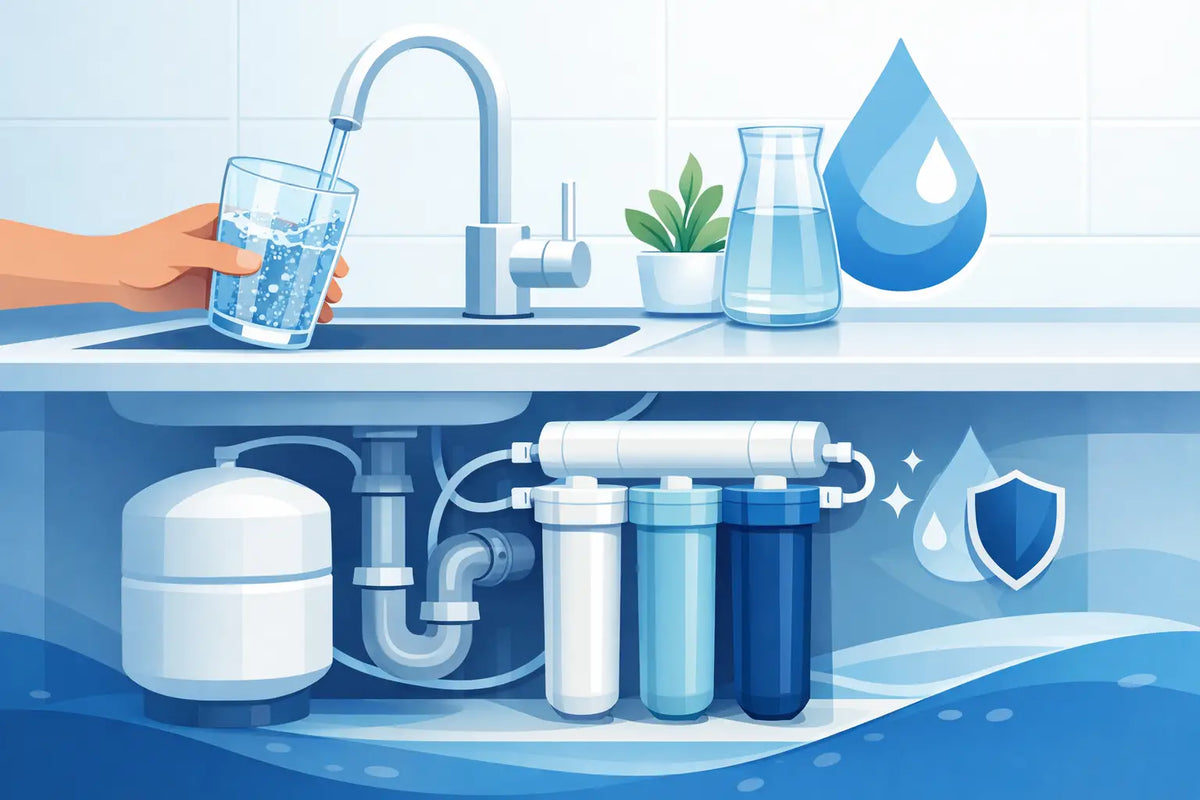
If your tap water smells like chlorine, leaves an odd taste in coffee, or has you second-guessing what your family is drinking, the best under sink water filters can solve the problem without taking over your kitchen. The key is not finding the most expensive system or the one with the biggest claims. It is finding the right filter for your water, your household, and the contaminants you actually need to address.
Under sink systems are popular because they treat water at the point where you use it most for drinking and cooking. They stay out of sight, they free up counter space, and they usually deliver better performance than pitcher filters or basic faucet attachments. For many homeowners, that makes them the most practical upgrade for cleaner, better-tasting water.
What makes the best under sink water filters worth buying?
A good under sink filter does more than improve taste. It should target the contaminants you are concerned about, provide enough flow for everyday use, and fit your maintenance comfort level. That sounds simple, but this is where many buyers get tripped up.
For example, a filter designed mainly for chlorine and sediment can do an excellent job for city water with bad taste and odor. That same system may not be the right answer if your concern is lead, PFAS, arsenic, nitrates, or total dissolved solids. In those cases, a reverse osmosis system or a more specialized filtration setup is often the better fit.
The best system is the one matched to the actual problem. That is why water source matters so much. Municipal water and well water present very different treatment needs, and an under sink filter that performs well in one home may be a poor choice in another.
Best under sink water filters by water problem
If your main complaint is chlorine taste, chemical odor, or generally flat-tasting tap water, a carbon-based under sink filter is often the smart starting point. These systems are usually affordable, compact, and easy to maintain. They are a strong fit for households that already have municipally treated water and want better drinking water without the wastewater and mineral reduction that come with reverse osmosis.
If you are trying to reduce lead, PFAS, VOCs, or a wider range of chemical contaminants, you need to look more closely at performance claims and certifications. Not all carbon systems are built the same. Some are designed for broad taste and odor improvement, while others are engineered for specific contaminant reduction. This is where product details matter, because two filters can look nearly identical but deliver very different results.
If your water has elevated total dissolved solids, or if you want a more comprehensive drinking water solution, reverse osmosis is often the top choice. RO systems force water through a semipermeable membrane to reduce many dissolved contaminants that standard carbon filters cannot handle as effectively. That makes them especially appealing for households concerned about PFAS, arsenic, fluoride, nitrates, and other hard-to-treat issues.
There is a trade-off. Reverse osmosis systems usually take up more cabinet space, involve more stages, and produce some reject water during operation. They also tend to remove beneficial minerals along with unwanted contaminants, which some homeowners address by choosing a remineralization stage. For many families, that trade-off is well worth it. For others, especially those happy with their mineral content and mainly focused on taste, a simpler under sink carbon system is the better answer.
Carbon filter or reverse osmosis?
This is the decision point for most buyers.
A carbon under sink filter is often best if you want strong chlorine reduction, better taste, improved odor, and straightforward maintenance. It is usually less expensive up front and simpler to install. In homes with decent municipal water where the goal is better flavor and basic contaminant reduction, carbon filtration can be exactly enough.
Reverse osmosis is usually best if your water test shows more complex contamination or if you want a broader level of reduction for drinking water. It is especially useful when you are dealing with dissolved solids, PFAS concerns, lead, or contaminants that require more than basic carbon treatment.
Neither option is automatically better. It depends on what is in your water and how much treatment you actually need. Buying more system than necessary can mean higher maintenance and cost. Buying too little can leave the real problem untouched.
How to choose the best under sink water filters for your home
Start with your water, not the product page. If you are on city water, review your local water quality report and compare it with your own concerns about taste, odor, and health-related contaminants. If you are on well water, testing is even more important, because private wells are not treated the same way municipal supplies are.
Next, think about daily use. A small household with one main drinking faucet may be well served by a compact single-faucet system. A larger family that fills water bottles, cooks frequently, and wants fast flow may need a higher-capacity setup. If cabinet space is tight, dimensions matter more than most people expect.
Maintenance should be part of the decision, too. Some under sink filters use quick-change cartridges that are easy for homeowners to replace. Others require more steps, more frequent service, or annual membrane replacement schedules. There is nothing wrong with a more advanced system, but it should match your comfort level.
Finally, pay attention to replacement filter availability and long-term ownership cost. A system with a low purchase price can become expensive if cartridges need frequent replacement or are hard to source. Good water treatment should feel dependable, not like an ongoing scavenger hunt.
Features that matter more than marketing claims
Certifications matter. So do stated contaminant reduction claims, filter life, flow rate, and materials quality. Stainless braided lines, well-built housings, and clearly documented performance usually tell you more than broad phrases like pure or premium.
Tankless systems are appealing because they save space and often provide a cleaner under-cabinet layout. Traditional tank-based RO systems, however, can still be an excellent choice when proven performance and steady delivery are the priority. Newer is not always better. Better matched is better.
Some households also prefer systems that include a dedicated drinking water faucet, while others want a filter that connects directly to the existing cold-water line. That is partly a style decision, but it is also about convenience and installation flexibility.
When an under sink filter is not enough
Under sink systems are designed for drinking and cooking water at a specific faucet. They are not whole-house solutions. If your problem extends beyond the kitchen, like hard water, scale buildup, sulfur smell in showers, staining, or sediment throughout the home, you may need treatment at the point of entry instead.
This matters because some homeowners expect an under sink filter to solve every water issue in the house. It will not protect plumbing, appliances, or all fixtures. It will improve water where it is installed. That is valuable, but it is a different job from a whole house filtration system or water softener.
For businesses, breakroom and prep sink filtration can make a lot of sense under the sink, but higher-demand applications often call for commercial-grade specification. Restaurants, labs, and facilities usually need more than a standard residential setup, especially when flow rate and water quality consistency are critical.
A smart buying approach
The safest way to shop is to work backward from the problem. If the issue is taste and chlorine, keep it simple. If the issue is PFAS, lead, or broad contaminant reduction, be more selective and expect a more advanced system. If you are unsure what is in your water, testing or expert guidance can save you from buying the wrong unit the first time.
This is where a specialist can help narrow the field quickly. PureWaterGuys.com is built around that kind of problem-solution approach, which is useful in a category where technical details can look similar but perform very differently once installed.
The best under sink water filters are not the ones with the loudest promises. They are the ones that give your household reliable, better-tasting, safer water day after day, with maintenance and cost you can live with. Start with what needs fixing, choose the system designed for that job, and your kitchen faucet becomes one less thing to worry about.