
September 06, 2026
Can UV Kill Bacteria in Water? What It Does
A private well can look clear, taste fine, and still carry microorganisms that do not belong in your drinking water. If you are asking, “can UV kill bacteria in water?” the practical answer is yes - when the system is correctly sized, the water is properly pretreated, and the equipment is maintained. UV is one of the most effective ways to disinfect water without adding chemicals, but it is not a cure-all for every water quality problem.
For homeowners, property managers, and business operators, the right question is not simply whether a UV light works. It is whether UV is the right final protection step for the water entering your home, facility, or drinking-water system.
Can UV Kill Bacteria in Water?
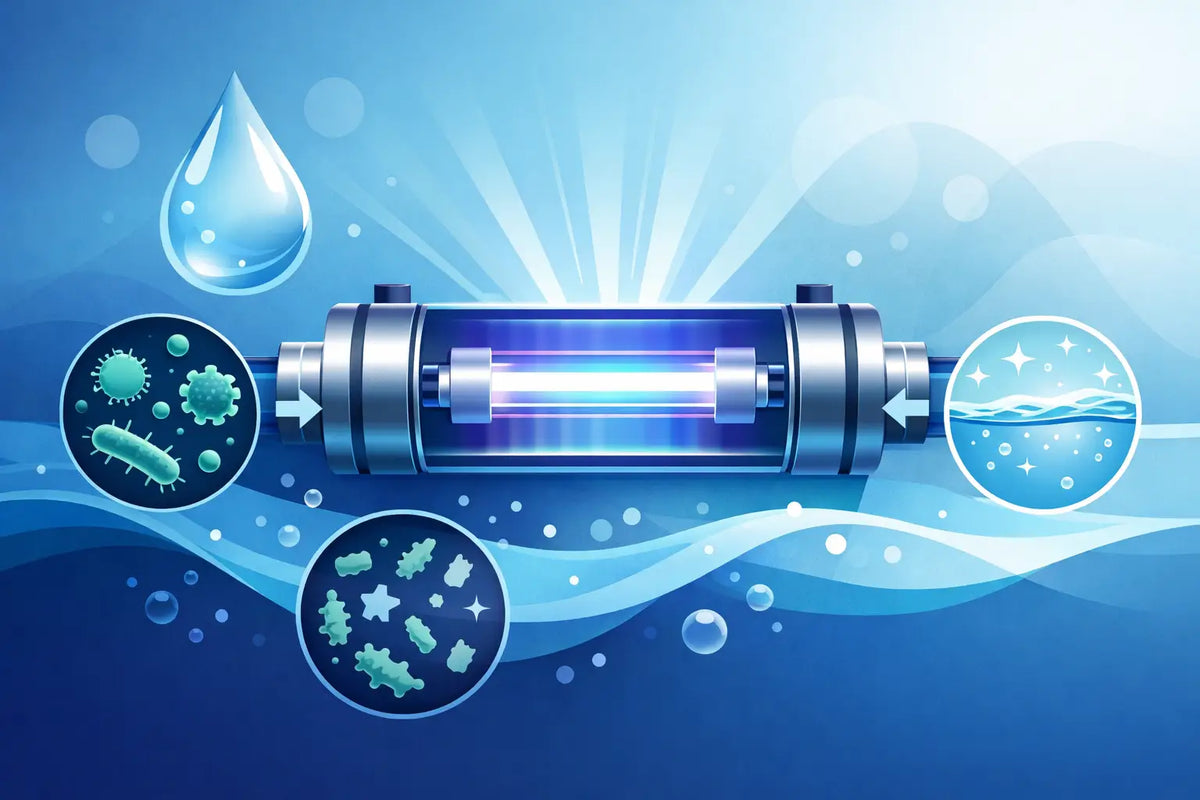
Ultraviolet water treatment uses UV-C light to damage the genetic material inside microorganisms. When bacteria, viruses, and certain parasites pass through the treatment chamber, the UV energy prevents them from reproducing. A microorganism that cannot reproduce cannot spread infection, which is why UV is widely described as disinfection or sterilization.
In everyday terms, yes, UV can kill bacteria in water. More precisely, UV inactivates bacteria. That distinction matters in laboratory language, but for water treatment customers, the outcome is what matters: properly treated water is far less likely to expose people to living, disease-causing organisms.
A properly designed UV system can address common microbial concerns, including coliform bacteria and E. coli. It can also be effective against organisms that may be more resistant to traditional chlorine treatment, such as Cryptosporidium and Giardia, when the correct UV dose is delivered.
UV works quickly. Water is disinfected as it flows through the chamber, with no chemical taste, no chemical storage, and no extended contact tank required. That makes it especially valuable for well water, homes with intermittent bacterial issues, restaurants, rental properties, and facilities that need dependable on-demand treatment.
UV Disinfection Depends on Water Quality
A UV lamp alone does not guarantee safe water. The light has to reach the microorganisms. If the water contains sediment, iron, hardness scale, tannins, or cloudy particles, those materials can block or scatter UV light. Bacteria may be shielded inside particles and pass through the chamber without receiving an adequate dose.
This is why pretreatment is often the difference between a UV system that performs as intended and one that only looks good on paper. Water entering a UV chamber should generally be clear and filtered. Many installations benefit from a sediment filter ahead of the UV unit, while well water with iron, manganese, sulfur, or hardness may need additional treatment first.
Water clarity is measured in part by UV transmittance, or UVT. Higher UVT means more ultraviolet light can travel through the water. Municipal water is often clear enough for standard UV treatment, while untreated well water can vary substantially from one property to another. A water test gives you a much more reliable starting point than choosing a system based on home size alone.
Flow rate matters just as much. Every UV system is rated for a maximum flow at a specified disinfection dose. If water moves through the chamber too quickly, it may not receive enough exposure. A system should be selected for the actual peak demand of the property, not the average daily water use. A large home with several bathrooms, a busy restaurant, or a light commercial facility may require a higher-capacity unit than a small household.
What UV Does Not Remove From Water
UV treatment is powerful, but it is designed for one job: microbial disinfection. It does not physically filter contaminants from water or change its mineral content.
A UV system will not remove sediment, lead, PFAS, arsenic, nitrate, chlorine, salt, hardness minerals, iron, manganese, or unpleasant tastes and odors. It also does not remove dead bacteria or particles that were already present in the water. If those issues are part of your water profile, UV should be paired with the appropriate filtration, softening, reverse osmosis, or specialty media treatment.
For example, a household with a private well may need sediment filtration to protect the UV chamber, iron removal to prevent staining and fouling, a water softener to reduce scale, and UV as the final disinfection barrier. A home using city water may already have municipal disinfection but choose UV as an added safeguard, especially for sensitive occupants or a property with aging plumbing.
The order of treatment matters. Filtration and other corrective equipment generally go before UV. The UV unit is commonly installed near the point where treated water enters the home distribution system, so microorganisms are addressed after the water has been cleaned up and before it reaches faucets and appliances.
Choosing the Right UV System
Start with the problem you are trying to solve. If a water test shows total coliform or E. coli, UV can be an excellent long-term disinfection solution after the source issue and any plumbing contamination are addressed. If you have recurring boil-water concerns, a shallow well, flooding risk, or surface water influence, professional system sizing becomes even more valuable.
Look for a UV system rated for the flow you need and designed to provide an appropriate germicidal dose. Residential systems are often installed as whole-home units, while point-of-use UV systems can protect a single drinking-water line. Commercial applications need a closer look at peak flow, operating schedule, source-water quality, plumbing layout, and required monitoring.
A useful UV system should include practical safeguards. A visual lamp indicator confirms operation, but an audible alarm or controller alert is better because it tells you when the lamp needs attention. Higher-end systems may include a UV intensity sensor that monitors delivered light rather than simply confirming that the lamp is on. For critical applications, that added visibility can be worth the investment.
Do not assume a larger chamber is automatically better. Oversizing can be reasonable for future demand, but the right choice is a system matched to your flow rate, water chemistry, installation space, and maintenance expectations. This is where a water treatment specialist can prevent expensive guesswork.
Maintenance Keeps UV Protection Working
UV treatment is low-maintenance, not no-maintenance. The UV lamp gradually loses output over time, even when it still appears to glow. Most UV lamps should be replaced about once a year, following the manufacturer’s guidance. Waiting until the lamp burns out can leave your water unprotected.
The quartz sleeve surrounding the lamp also needs attention. Mineral scale, iron deposits, and film on the sleeve reduce how much UV light reaches the water. During annual service, the sleeve should be inspected and cleaned or replaced as needed. Homes with hard water or untreated iron may need more frequent checks.
Replace prefilters on schedule as well. A clogged sediment cartridge can restrict flow, while an overdue filter may allow water quality problems to reach the UV chamber. After a power outage or maintenance event, verify that the controller has restarted and that no alarm is active.
For a well with a history of bacterial contamination, retesting after installation is a smart final check. Testing confirms that the treatment plan is working at your tap, not just that the equipment is powered on.
When UV Is the Right Next Step
UV is a strong fit when microbial safety is the concern and you want chemical-free disinfection at the point water enters your property. It is especially practical for clear, prefiltered well water and for properties that need an added protective barrier without changing water taste.
But if the water is cloudy, rusty, hard, or affected by chemical contaminants, treat those issues first or alongside the UV system. PureWaterGuys can help match a UV unit and pretreatment approach to your water test, household demand, or facility requirements.
Safe water treatment is rarely about buying one device in isolation. It is about building the right path from your water source to the tap, so every member of your household or operation can use water with greater confidence.