
July 10, 2026
Car Wash Wastewater Treatment: How Upstream Filtration Reduces Discharge Load
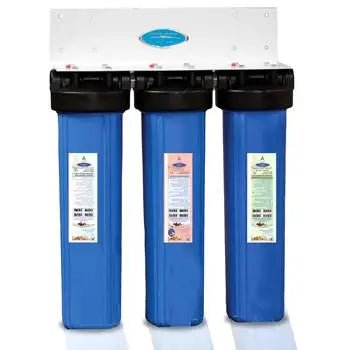
Car wash wastewater treatment is usually framed as a discharge-permit problem — oil/grease separation, pH, TSS limits before water leaves the site. That's a real engineering scope, and it's outside what we sell. But there's a water-quality lever most sites overlook: what you treat before water ever becomes wastewater changes how much load hits your discharge system in the first place.
What Drives Discharge Load Besides Oil & Grease
Hardness minerals and dissolved solids don't disappear in the wash process — they end up in your effluent alongside whatever soap, oil, and sediment your discharge system is already built to handle. A site running hard, untreated source water is pushing more dissolved mineral load through its wastewater system than a site that softens or treats water upstream.
Where Upstream Treatment Helps
This isn't a replacement for your oil/grease separator or discharge permit compliance — those are a separate, required system. But softening or anti-scale treatment ahead of your wash process reduces the hardness/mineral load your equipment handles and your wastewater system processes, and it's the same equipment that protects your boilers, pumps, and nozzles from scale in the first place. It's a case where the equipment that helps your spot-free rinse also reduces what's flowing downstream.
- Pre-filtration — Crystal Quest Big Blue Triple SMART Series, from $868.55
- Softener or salt-free anti-scale system — Light Commercial Softener, 30,000–60,000 grains, or Commercial Anti-Scale System, 20–100 GPM, from $4,585
For actual discharge-permit design (oil/grease separation, pH, TSS limits), work with a wastewater engineer or your local jurisdiction — we can't advise on permit compliance. What we can size is the upstream treatment that reduces your mineral load and protects your equipment. See our full Car Wash Water Filtration Systems page, or get a quote directly.