
October 26, 2026
Coffee Shop Water Filtration: A Full-System Buyer's Guide by Drink Volume
Coffee shop water filtration isn't a single product. It's a combination of stages chosen to match your water source, your equipment, and how many drinks you're actually pouring. Shops get this wrong in both directions — some spend money on reverse osmosis they don't need, others run $40,000 in espresso equipment through a single carbon cartridge and wonder why the group head is scaling up every eight weeks.
This guide walks through the stages in order, and where each one fits based on volume.
Start With What's Actually in Your Water
Before picking equipment, know what you're filtering for. Most municipal water supplies carry some combination of sediment, chlorine or chloramine, and dissolved minerals that cause scale. Each of these needs a different filtration approach — sediment filtration catches particulate, carbon filtration handles chlorine taste and odor, and scale requires either a softener or an RO system depending on your hardness level and equipment type.
If you're unsure where to start, the Food & Beverage Water Filtration Systems hub breaks down filtration needs by use case, and our F&B Buyer's Guide covers the broader restaurant picture if you're also running a kitchen.
Low-Volume Shops: One Machine, One Line
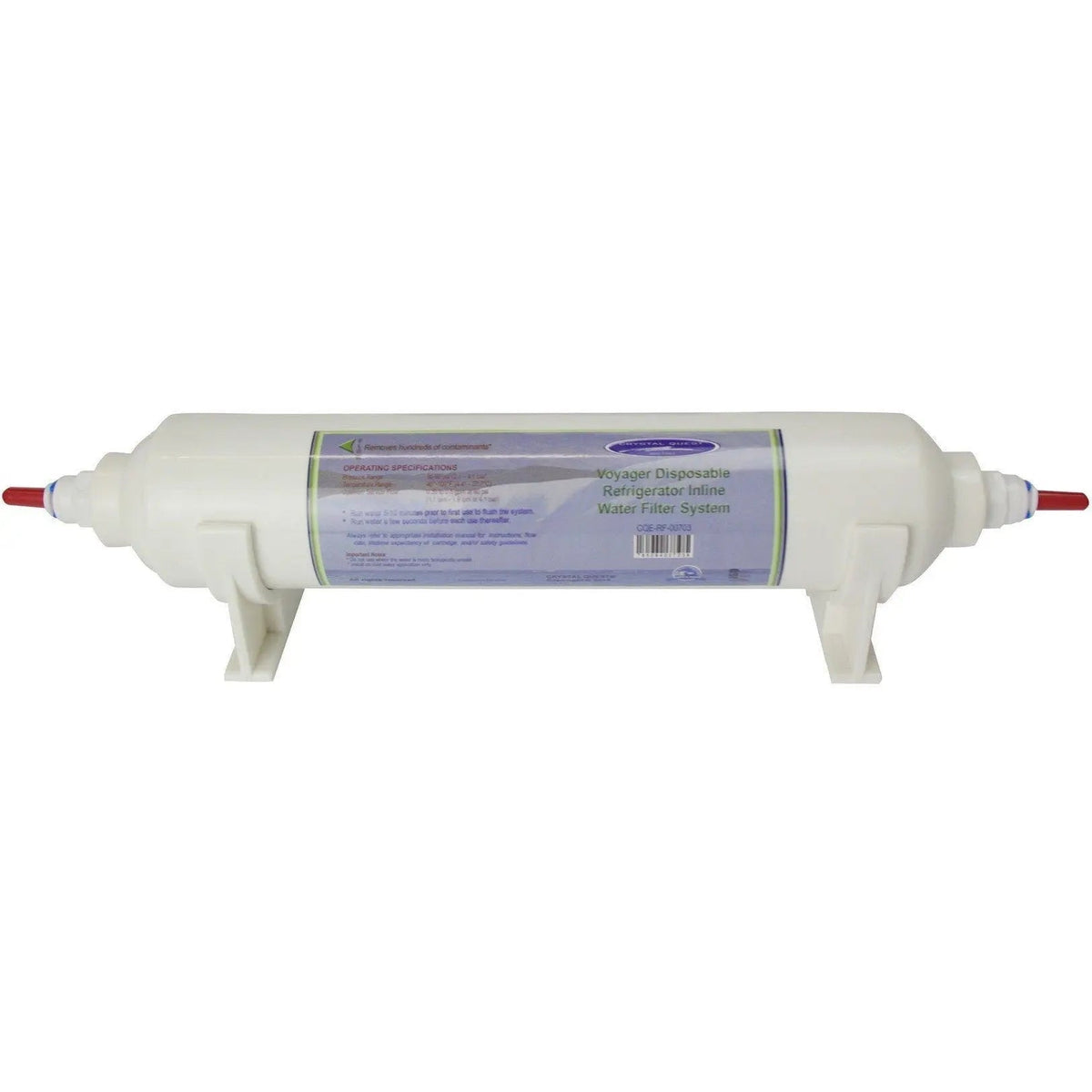
If you're running a single espresso machine and a drip brewer and pulling under a couple hundred drinks a day, you usually don't need a whole-location system. A point-of-use inline filter at $44.95 handles basic sediment and chlorine reduction for one machine. It's the lowest-cost entry point and a reasonable starting place if you're testing whether filtration solves a taste or scale complaint before committing to more.
For a shop that wants more capacity and longer filter life without jumping to a multi-stage system, the Commercial Single Inline Water Filter ($89-$129) is the next step up — still one line, but built for steadier daily volume.
Mid-Volume Shops: Multiple Machines, More Draw
Once you're running an espresso machine, a batch brewer, and maybe an ice machine or steamer off the same supply line, a single inline filter gets taxed fast. The Commercial Triple Inline Water Filter ($149-$189) gives you staged sediment and carbon filtration with more capacity before replacement, which matters when multiple pieces of equipment are drawing from the same filtered line throughout the day.
If you're filtering for more than just drink equipment — ice machines, dish stations, prep sinks — a whole-location pre-filtration unit like the Big Blue Triple Smart Series (from $868) sits ahead of everything and protects downstream equipment, including any softener or RO system you add later.
Hard Water: Add a Softener Before You Add RO
If your water is hard, scale will damage boilers and group heads regardless of how good your carbon filtration is. A light commercial softener (30,000-60,000 grains), priced $1,150-$1,650, is the correct fix for hardness — not a reason to skip straight to reverse osmosis.
High-Volume Shops: Where RO Makes Sense
If you're running multiple espresso machines, high-volume batch brewing, or a roastery-adjacent café with consistent output demands, a dedicated RO system gives you consistent water chemistry across every machine. The Commercial Mid-Flow RO System (500-7,000 GPD, from $3,884) is sized for this tier. Sizing depends on daily output and peak draw — our Commercial RO Pricing & Sizing Guide walks through how to match GPD to your actual volume.
Remineralizing for Taste
Straight RO water is flat for espresso — you generally want some mineral content back in before it hits the group head. The Eagle RM-1000 Alkalize/Ionize/Remineralizer ($1,229-$1,599) or the Big Blue Whole House Alkalizing Filter ($549.69) add minerals back into filtered or RO water depending on your setup and flow needs.
Match the System to the Volume You Actually Run
The mistake is picking equipment based on budget first instead of drink volume and water source. A single point-of-use filter won't protect a four-group espresso machine. A full RO system is overkill for a 100-cup-a-day counter shop. Start with what's in your water, count your equipment, and size up from there.
Not sure which combination fits your shop? Request a quote and we'll size a system to your actual volume and water source: get a custom quote.