
July 10, 2026
How to Test Well Water and Read the Results
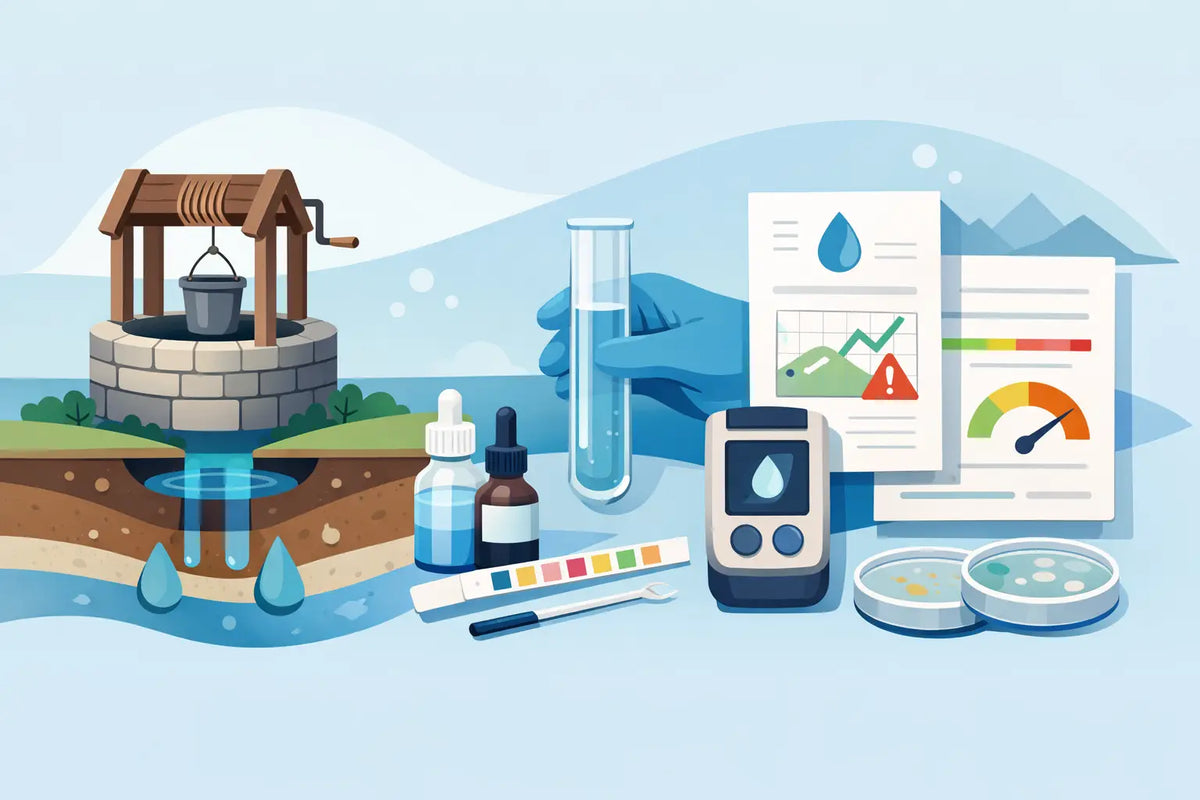
A clear glass of water can still contain contaminants you cannot see, smell, or taste. Learning how to test well water gives you the facts needed to protect your family, your plumbing, and the equipment that depends on your water supply. The goal is not simply to pass a test. It is to identify the specific conditions in your well so you can choose treatment that solves the actual problem.
Private wells are not regulated like municipal water systems. The responsibility for monitoring water quality falls to the property owner. That can feel like a lot, but a properly selected lab test and clean sample collection make the process straightforward.
When to Test Well Water
Test a private well at least once each year for total coliform bacteria and nitrate. These are common health-related concerns, particularly where septic systems, livestock, fertilizer use, or changing groundwater conditions may affect the well.
You should also test immediately after a flood, a nearby construction project, a well repair, or a change in water taste, odor, color, or pressure. A new baby in the household is another reason to check nitrate levels promptly. Infants are especially vulnerable to elevated nitrate in drinking water.
A yearly bacteria-and-nitrate screen is a baseline, not a complete water profile. Many homeowners benefit from a broader test every three to five years, or before purchasing a filtration, softening, or reverse osmosis system. If your water leaves orange stains, smells like rotten eggs, feels slippery, or damages appliances, test sooner. Those symptoms often point to iron, manganese, sulfur, hardness, pH, or related concerns.
Choose the Right Well Water Test
The best test depends on your location, property history, and water symptoms. Start with a certified drinking water laboratory rather than relying solely on a basic strip test. At-home kits can be useful for an early indication of pH, hardness, or iron, but they do not replace laboratory analysis for bacteria, nitrate, lead, arsenic, or other health-related contaminants.
For most homes with a private well, request a baseline panel that includes total coliform and E. coli bacteria, nitrate and nitrite, pH, hardness, total dissolved solids, iron, manganese, and sulfate. This combination gives a useful view of both safety and treatment needs.
Consider adding specific analytes when conditions call for them:
- Arsenic is worth testing in areas with known natural occurrence or where neighboring wells have reported it.
- Lead and copper should be tested if the home has older plumbing, brass components, or corrosion concerns.
- PFAS testing may be appropriate near airports, military facilities, industrial sites, landfills, or areas with documented contamination.
- Volatile organic compounds and pesticides may be needed near fuel storage, agricultural activity, dry-cleaning operations, or chemical spills.
- Radon, uranium, or other naturally occurring minerals can be regional concerns that a local certified lab can help identify.
How to Collect a Well Water Sample Correctly
A laboratory result is only as reliable as the sample. Follow the collection instructions that come with the lab kit exactly, especially for bacteria testing. The lab may provide separate bottles, preservatives, collection times, and delivery deadlines for different analyses.
For a general household sample, collect water from a cold-water tap that is not connected to a filter, softener bypass, reverse osmosis faucet, or treatment device. An untreated sample shows what the well and incoming plumbing are contributing. If you are evaluating whether existing treatment works, collect a second sample after the system as well.
Remove aerators or screens from the faucet if the lab instructs you to do so. Do not use a swinging faucet, a hose bib, or a tap with a damaged or dirty spout for a bacteria sample. Avoid touching the inside of the bottle or cap. Let the cold water run for the period specified by the lab, then fill the container to the indicated line without rinsing it first.
Bacteria samples are particularly time-sensitive. Keep them cool if instructed, complete the paperwork, and return them within the lab's stated holding time. A sample that sits on the counter too long can produce misleading results and force you to test again.
Understanding Your Well Water Results
Your report will usually show a result, a unit of measurement, and either a benchmark or reference level. Read the report in categories instead of focusing on one number at a time.
Bacteria results deserve immediate attention. E. coli generally indicates fecal contamination and should not be ignored. Total coliform does not always mean the water will make someone sick, but it signals that the well, cap, casing, plumbing, or nearby surface water pathways need investigation. Until you understand the source and receive guidance, use a safe alternative for drinking and food preparation if the lab or local health authority recommends it.
Nitrate is colorless and odorless, so testing is the only way to identify it. High levels may be linked to fertilizer, septic systems, or natural conditions. Boiling does not remove nitrate and can concentrate it. Reverse osmosis, ion exchange, and distillation can address nitrate when properly designed, but the source should also be investigated.
pH, hardness, iron, manganese, and total dissolved solids often affect how water feels and how your home performs. Low pH can contribute to corrosive water and metal leaching. Hardness creates scale on fixtures, water heaters, and appliances. Iron and manganese can stain laundry, fixtures, and dishware. Sulfur-related issues may create a rotten-egg odor, especially when hot water runs.
Not every result requires treatment. Some results are primarily aesthetic, while others have health implications. The right response depends on the concentration, household needs, plumbing materials, local conditions, and whether you are treating drinking water only or the entire home.
Match Treatment to the Actual Water Problem
Avoid buying a system based on a symptom alone. A sulfur odor could involve hydrogen sulfide, bacteria, a water heater issue, or a combination of conditions. Orange staining may be caused by iron, but pH, manganese, and bacteria can influence the best treatment design. A water test turns guesswork into a specification.
For whole-home concerns, a properly sized well water filtration system may combine sediment filtration, oxidation, specialty media, and sometimes UV disinfection. Water softeners are effective for hardness and can help with some dissolved iron, but they are not a universal answer for heavy iron, sulfur, bacteria, or arsenic.
For drinking-water contaminants such as nitrate, arsenic, lead, or certain PFAS compounds, an under-sink reverse osmosis system can be a practical point-of-use option when the system is certified or designed for the contaminant in question. Whole-home treatment may be preferable when the issue affects bathing, laundry, fixtures, appliances, or all water use. The trade-off is cost, maintenance, installation space, and flow-rate requirements.
UV systems are powerful tools for disinfection, but they work best with clear water. If sediment, iron, or turbidity blocks the UV light, microorganisms may not receive the proper dose. Pre-filtration and regular lamp service are part of the solution, not optional extras.
Keep a Testing Record for Your Well
Save every lab report, even when the results look normal. Water quality can shift after heavy rain, drought, seasonal groundwater changes, a new septic system, nearby land development, or well servicing. A record helps you see whether iron is increasing, pH is drifting, or bacteria is recurring.
Write down the sample location and whether the water was tested before or after treatment. If you install a new system, test afterward to verify performance and repeat testing on the schedule recommended for the contaminant. Filters, media tanks, UV lamps, and reverse osmosis membranes need maintenance to keep delivering the protection you expect.
Your well is a valuable part of your home, but it should never be a mystery. Start with a reliable lab test, use the results to guide your next step, and choose water treatment that is built around your water, not a generic promise.