
June 05, 2026
Is a Whole House Water Filtration System Worth It?
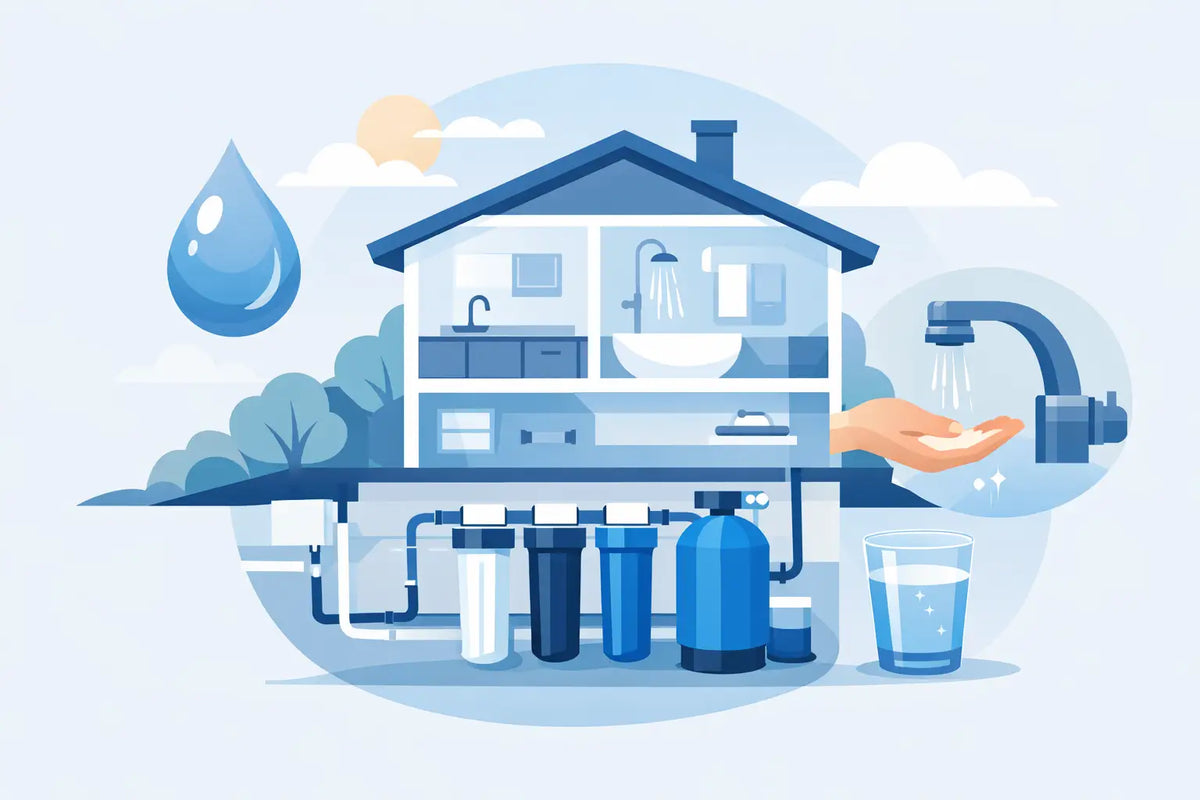
That question usually comes up right after a homeowner notices the same problem showing up everywhere at once - chlorine smell in the shower, spots on dishes, dry skin, stained fixtures, odd-tasting water, or growing concern about contaminants like PFAS. If you're asking is a whole house water filtration system worth it, the honest answer is yes for many homes, but only when the system matches your actual water conditions.
A whole house system treats water at the point it enters your home, which means every tap, shower, appliance, and plumbing line benefits. That broad coverage is what makes the investment attractive. It is also what makes buying the wrong system expensive.
When is a whole house water filtration system worth it?
A whole house water filtration system is usually worth it when the issue affects more than just drinking water. If the problem is limited to taste at one kitchen faucet, an under-sink filter may be the smarter buy. But if chlorine is strong in every shower, sediment is clogging fixtures, or well water is causing odor and staining throughout the house, point-of-entry treatment starts to make more financial and practical sense.
City water homeowners often see value when they want to reduce chlorine, sediment, and certain chemical contaminants across the home. The benefit is not just better tasting water. It can also mean less exposure while bathing, cleaner laundry, reduced wear on plumbing fixtures, and better performance from downstream systems.
For well water users, the value can be even clearer. Private well water often brings a combination of sediment, iron, sulfur, manganese, hardness, or bacteria concerns. In those cases, treating only one faucet does very little to protect the rest of the home.
What you are really paying for
The price of a whole house filtration system is not just for a tank and a filter. You are paying for coverage, consistency, and protection.
Coverage means the water quality issue is addressed at the source before it reaches showers, bathroom sinks, washing machines, water heaters, and kitchen taps. Consistency matters because every gallon entering the property is treated the same way. Protection matters because untreated water can shorten the life of appliances, create cleaning headaches, and keep forcing you into smaller workarounds that never solve the whole problem.
That said, value depends on the problem. A carbon-based whole house filter may be excellent for chlorine, taste, odor, and some organic chemicals. It will not act like a softener if your real issue is scale from hard water. A sediment filter may protect fixtures from grit but will do little for dissolved contaminants. A UV system can disinfect microbiological threats, but it does not remove hardness or chlorine.
This is where many homeowners overpay or underbuy. They hear "whole house filtration" and assume one system handles everything. Water treatment does not work that way.
The biggest factors that decide whether it is worth it
Water source is the first variable. Municipal water and private well water usually require different strategies. City water homes often focus on chlorine, chloramine, sediment, taste, odor, and emerging contaminant concerns. Well water systems are more likely to require layered treatment for sediment, iron, sulfur, hardness, and microbial protection.
The second factor is your specific water quality. A lab test or at least a reliable water analysis matters because symptoms can be misleading. Rotten egg smell may point to sulfur, bacteria, or water heater issues. White scale usually signals hardness, not something a basic filter will fix. If PFAS is the concern, you need media designed for that problem rather than a generic whole house unit.
The third factor is home size and water demand. A system that works well in a small home can create pressure loss in a larger household if it is undersized. When that happens, people blame filtration when the real issue is improper sizing.
The fourth factor is budget, including maintenance. A system that looks affordable upfront may require frequent media changes, replacement cartridges, or added prefiltration. A better-built system with the right capacity can cost more at the start and less over time.
Is a whole house water filtration system worth it for health concerns?
Sometimes yes, but this is where precision matters most.
Homeowners often start with a health concern such as chlorine exposure, PFAS, lead, VOCs, or microorganisms. A whole house system can absolutely play an important role, especially when contaminants are present throughout the home's water supply. But not every contaminant is best handled by the same technology, and not every whole house setup should be expected to deliver drinking-water-level treatment on its own.
For example, a whole house carbon system can be a strong solution for reducing chlorine and improving water quality for bathing and general household use. If drinking water contaminants are the top concern, some homes benefit from pairing whole house treatment with a reverse osmosis system at the kitchen sink. That combination gives broader home protection plus high-level drinking water purification where it matters most.
So if your question is strictly about health value, the system is worth it when it is selected based on tested contaminants and built as part of the right treatment approach.
The comfort and home protection side is often underestimated
A lot of homeowners start shopping because of safety concerns, then realize the daily comfort gains are just as meaningful.
Filtered whole-home water can improve how showers feel, reduce chlorine odor in bathrooms, help laundry smell cleaner, and cut down on sediment buildup in fixtures. If hard water is part of the issue and you add the appropriate softening solution, you can also reduce scale on glass, extend appliance life, and lower maintenance on water heaters and plumbing.
Those benefits may sound less urgent than contaminant reduction, but they affect daily life in a very visible way. Families notice them quickly. Property owners notice them in maintenance calls and replacement costs.
When it may not be worth it
There are cases where a whole house system is not the best use of your money.
If your only complaint is drinking water taste from one faucet, a point-of-use filter may be enough. If you rent, major installation may not make sense unless the owner is involved. If your water problem has not been identified, buying a system before testing can turn into trial-and-error spending.
It also may not be worth it if the system you are considering is too generic for a known issue. Homes with well water, PFAS concerns, severe hardness, or bacteria problems often need more than a one-size-fits-all tank. In those cases, the wrong system does not save money. It delays the right fix.
How to judge value before you buy
Start with the problem, not the product category. Ask what you are trying to solve across the home. Is it chlorine, sediment, hardness, sulfur, staining, PFAS, bacteria, taste, odor, or a combination?
Then look at water test results, water source, family size, peak flow rate, and space for installation. That gives you a much clearer picture of whether whole house treatment is the right path and what type of system belongs in that role.
You should also think beyond purchase price. Consider media life, replacement schedule, pressure impact, installation requirements, and whether you may need a combination setup such as sediment plus carbon, or filtration plus softening, or whole house treatment plus reverse osmosis at the sink.
This is exactly why expert guidance matters. A good recommendation should feel specific to your water, not copied from a generic chart. At PureWaterGuys, that problem-solution approach is what helps homeowners avoid buying too much system for a minor issue or too little system for a serious one.
So, is a whole house water filtration system worth it?
For many households, yes - especially when water quality problems show up in more than one room, affect comfort and maintenance, or raise broader contamination concerns. The value gets even stronger when the system protects appliances, improves daily water use, and reduces the need for multiple smaller filters around the house.
But the strongest return comes from getting the match right. The right whole house system can protect your water, your plumbing, and your peace of mind. The wrong one is just an expensive guess.
If your water has become a daily concern, that is usually the sign to stop patching the symptoms and start treating the source. Pure water at every tap is not always necessary for every home, but when the problem is truly whole-house, the solution usually needs to be whole-house too.