
May 15, 2026
Reverse Osmosis vs. Whole House Filters: Which One Do You Actually Need?
Reverse osmosis and whole house filtration are both legitimate, effective water treatment solutions — but they solve fundamentally different problems. Buying the wrong one, or assuming one replaces the other, is one of the most common and expensive mistakes homeowners make.
The Fundamental Difference
The core distinction comes down to where in your home the filtration happens and what it's protecting.
A whole house filter — also called a point-of-entry (POE) system — treats all water as it enters your home, before it reaches any faucet, shower, toilet, appliance, or water heater. Every drop of water in your house passes through it.
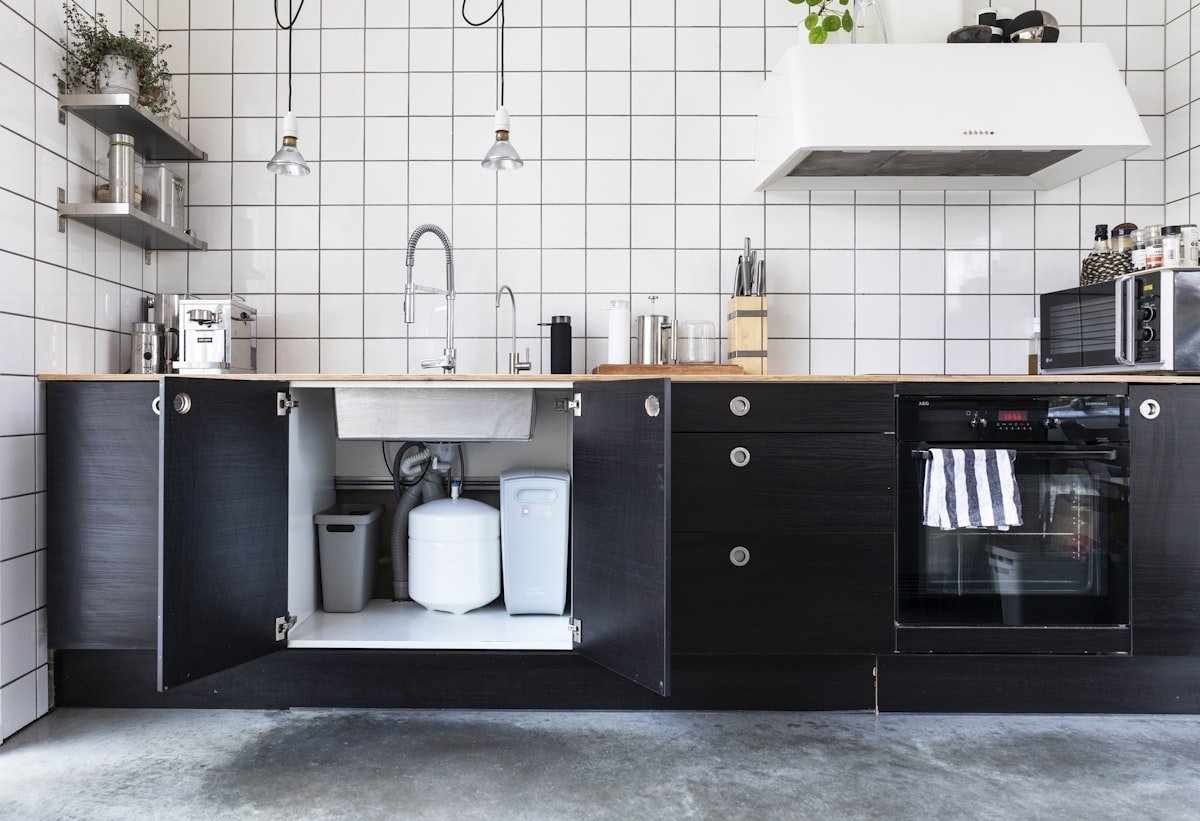
A reverse osmosis system — typically a point-of-use (POU) system — treats water at a single location, almost always under the kitchen sink, for drinking and cooking. It produces highly purified water from one dedicated faucet.
This distinction matters enormously. RO produces cleaner drinking water than any whole house system can. But it does nothing for your shower, your dishwasher, your laundry, or the water your skin absorbs while bathing.
When Reverse Osmosis Is the Right Choice
RO is the highest-performance option for drinking and cooking water. Its semi-permeable membrane removes contaminants that no carbon filter can touch — including PFAS, arsenic, lead, fluoride, nitrates, and hundreds of dissolved solids. Properly certified RO systems remove 90–99% of most dissolved contaminants.
RO is the right primary investment when your main concern is what you're drinking. If your water test shows elevated PFAS, lead, arsenic, nitrates, or you simply want the cleanest possible drinking water, an under-sink RO system is your best move.
Choose RO If:
Your concern is drinking water quality — PFAS, lead, arsenic, fluoride, nitrates, or total dissolved solids. You want the highest contaminant removal rate available for residential use.
When a Whole House Filter Is the Right Choice
Whole house systems shine when contamination affects more than drinking water. The most common scenario is chlorine and chloramines — added by virtually every municipal water system as disinfectants. They affect taste and odor at every tap, dry out skin and hair in the shower, and can damage rubber seals in appliances over time.
Whole house systems are also essential for well water with sediment, iron, manganese, or hydrogen sulfide. These contaminants affect plumbing, appliances, and fixtures — not just drinking water — and need to be addressed at entry.
Choose Whole House If:
You have chlorine/chloramine issues affecting showers and appliances. Your well water has sediment, iron, or sulfur. You want consistent water quality from every tap and fixture — not just the kitchen sink.
The Case for Both: Layered Protection
Many homeowners use both — and for good reason. They serve complementary purposes. A whole house carbon system removes chlorine, sediment, and taste/odor issues from all water entering the home. Then an under-sink RO system takes the already-improved water and further purifies it to near-pure drinking quality.
Side-by-Side Comparison
| Feature | Reverse Osmosis | Whole House Filter |
|---|---|---|
| Coverage | Kitchen sink only | Every tap, shower, appliance |
| Contaminant removal | Highest (PFAS, lead, arsenic, fluoride, nitrates) | Chlorine, sediment, iron, odor |
| Drinking water quality | Excellent | Good (not comprehensive) |
| Shower/skin benefits | None | Yes (chlorine removal) |
| Protects appliances | No | Yes |
| Best for | Drinking and cooking | Whole-home water quality |