
June 16, 2026
Choosing a Water Filtration System for Restaurant
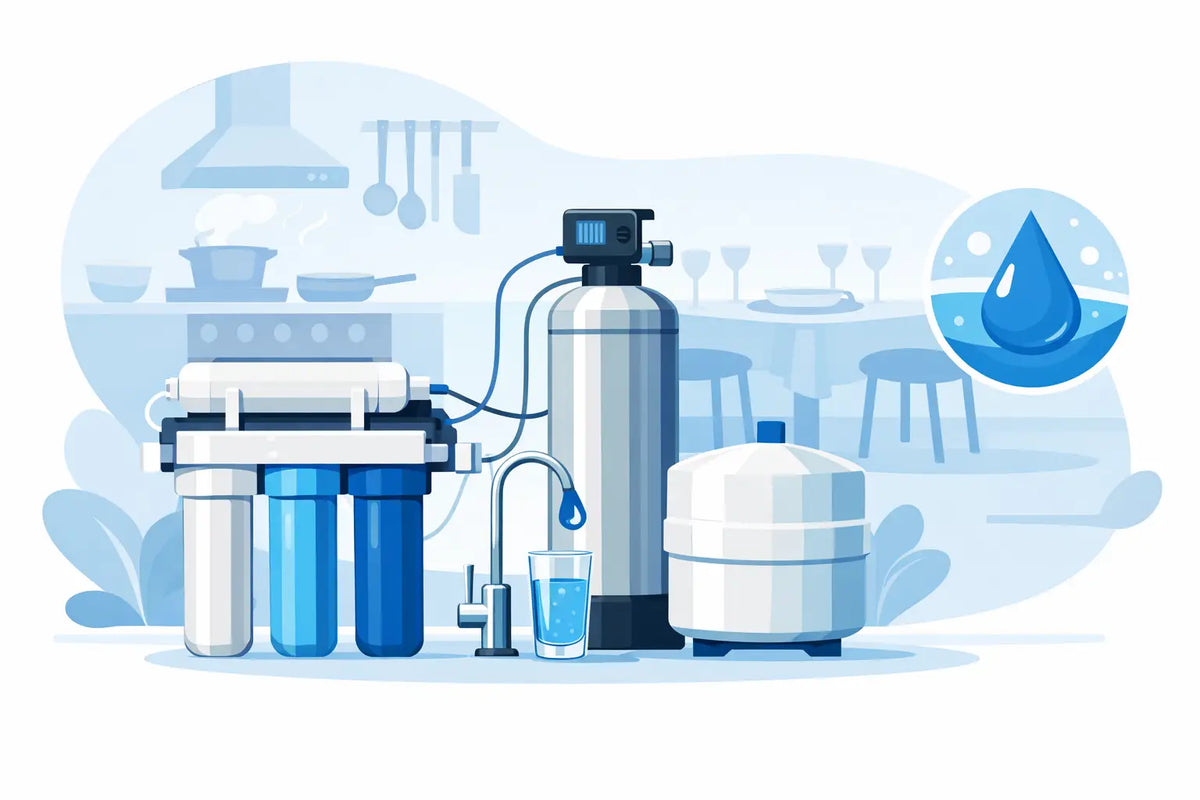
A customer may never comment on your water, but they will notice the coffee that tastes flat, the ice that smells off, or the steam oven that keeps going down. A water filtration system for restaurant operations is not just a back-of-house utility decision. It affects beverage quality, kitchen uptime, equipment life, and the consistency your guests expect every day.
For most restaurants, the right system starts with one simple fact - not every water problem is the same. Some locations battle chlorine taste and odor from municipal water. Others deal with scale that clogs espresso machines, combi ovens, and dishwashers. In some cases, sediment is the main issue. In others, total dissolved solids are high enough to justify reverse osmosis for specific applications. The best choice depends on what your water is doing, which equipment is most exposed, and how much water your operation actually uses during peak service.
What a water filtration system for restaurant use needs to solve
Restaurant water treatment is rarely about one fixture. It usually involves several points of use, each with different priorities. Ice machines need clean, clear water that will not produce cloudy cubes or foul-smelling ice. Coffee and tea stations need stable mineral content and reduced chlorine so flavor is not masked. Hot-side equipment such as steamers and combi ovens needs scale control to avoid service calls and loss of efficiency.
That is why a single "one-size-fits-all" filter often falls short. A basic carbon filter may improve taste and odor, but it will not solve hard water scale. A softener may reduce scale, but it is not the same thing as high-purity water for specialty beverages. Reverse osmosis can deliver excellent water quality, but it is not necessary for every application and can be oversized or misapplied if you are trying to treat an entire restaurant without a clear reason.
A good commercial setup is designed around the problems that cost you the most. Sometimes that means protecting one expensive piece of equipment. Sometimes it means creating a layered treatment plan across the full kitchen.
Start with your actual water, not the product catalog
The fastest way to waste money is to shop by buzzwords instead of water conditions. Before choosing a system, you need to know whether your incoming water is hard, chlorinated, high in sediment, high in TDS, or carrying contaminants that require more specialized treatment.
Municipal water and well water create very different planning needs. City water often brings disinfectants, taste and odor concerns, and seasonal variability. Well water can introduce iron, manganese, sulfur, bacteria, or higher sediment loads. Even two restaurants in the same metro area can need different equipment if they are on different supplies or in older buildings with plumbing issues.
That is also where trade-offs become real. If your main pain point is scale, softening or scale inhibition may be enough. If your beverage program depends on consistent flavor, targeted filtration with careful mineral management may be the better path. If your ice machine keeps failing because of sediment and chlorine, a cartridge-based pre-treatment system could solve the issue without redesigning your whole water line.
The main system types restaurants use
Carbon filtration is one of the most common starting points. It reduces chlorine, chloramine in some configurations, and unpleasant taste and odor. For restaurants serving fountain drinks, coffee, tea, and ice, carbon filtration can make an immediate difference in finished product quality. It is practical, familiar, and usually cost-effective, but it does not address hardness in any meaningful way.
Sediment filtration protects downstream equipment from dirt, rust, and particulates. In older buildings or areas with unstable water quality, sediment prefiltration can prevent premature cartridge clogging and reduce wear on valves and internal components. On its own, though, sediment filtration is only one layer.
Water softeners are widely used where hardness is damaging equipment. If your dishwasher, boiler, or steamer is building scale, hardness reduction is often the most financially important fix. Softening can extend equipment life, improve efficiency, and reduce descaling labor. The trade-off is that softening is application-driven. It is not automatically the best answer for every beverage line.
Reverse osmosis is often used for high-performance beverage applications, specialty coffee, drinking water stations, and some foodservice equipment that benefits from very low mineral content. It can dramatically improve consistency when source water has high TDS or problematic dissolved minerals. But RO needs to be sized correctly, and restaurants should think carefully about storage, recovery rate, maintenance, and whether blending is needed for taste.
UV disinfection and other specialty solutions come into play when microbial control is part of the concern, especially in certain well water or facility-specific situations. These are not universal restaurant requirements, but in the right setting they can be essential.
Match the system to the equipment that matters most
If you are trying to prioritize budget, start with the equipment that is expensive to repair and central to service. Ice machines are often at the top of the list because guests directly experience the result, and maintenance issues show up fast. Coffee brewers and espresso machines are close behind. If your beverage program drives ticket value, water quality is part of the product.
Steam equipment, dishwashers, and combi ovens deserve equal attention on the operational side. Scale inside heating elements and internal passages does not just shorten equipment life. It lowers efficiency, increases energy use, and creates avoidable downtime during busy periods.
This is where system design matters more than product hype. A restaurant may need one filtration train for ice and beverages, another for hot-side equipment, and a separate strategy for general kitchen water. Trying to force every application through one oversized system can create unnecessary cost and complicated maintenance.
Capacity, flow rate, and peak demand matter more than many buyers expect
A restaurant can have excellent treatment on paper and still get poor performance if the system is undersized. Commercial filtration should be selected around flow rate, daily usage, and peak-hour demand. If your lunch rush drains storage or your ice production cannot keep up because of restricted flow, the system is not doing its job.
Cartridge change intervals also need realistic planning. In foodservice, maintenance windows are tight, and neglected filters can become their own problem. A lower-cost system with frequent service needs may not be cheaper over time than a better-sized setup with longer cartridge life and clearer maintenance schedules.
Restaurant operators should also think about expansion. If you expect to add a second ice machine, more beverage volume, or additional kitchen equipment, it can make sense to plan for that now rather than rebuild the water treatment layout later.
Installation and service are part of the buying decision
The best system is one your staff can live with. That includes footprint, cartridge access, replacement intervals, and whether the equipment can be serviced without shutting down a critical station for too long. Tight back-of-house spaces often shape the answer just as much as water chemistry does.
It is also smart to ask who is responsible for ongoing upkeep. Some restaurants want a straightforward cartridge-based approach that in-house staff can manage. Others prefer a more engineered commercial setup with scheduled professional service. Neither is wrong. The right choice depends on labor, budget, and how critical uptime is for that location.
For operators comparing options, clarity beats complexity. You want to know what the system is solving, what it will not solve, how often it needs service, and what happens if demand increases. That is the difference between buying a filter and building a reliable water treatment plan.
When a custom recommendation makes more sense
If your restaurant has recurring scale damage, poor beverage consistency, multiple water-using stations, or unusual source water, a standard off-the-shelf answer may not be enough. In those cases, expert sizing and application matching can prevent costly mistakes. A supplier with commercial water treatment experience can help separate real needs from overbuying.
That is especially valuable when you are balancing several goals at once - better taste, lower maintenance, equipment protection, and manageable operating cost. The most effective solution is usually the one that is specific to your water and your menu, not the one with the longest feature list.
Pure water supports more than flavor. It protects the machines that keep service moving and gives your team one less problem to fight during a busy shift. If your restaurant depends on consistency, your water should be built to match.