
June 28, 2026
What Removes PFAS From Water Best?
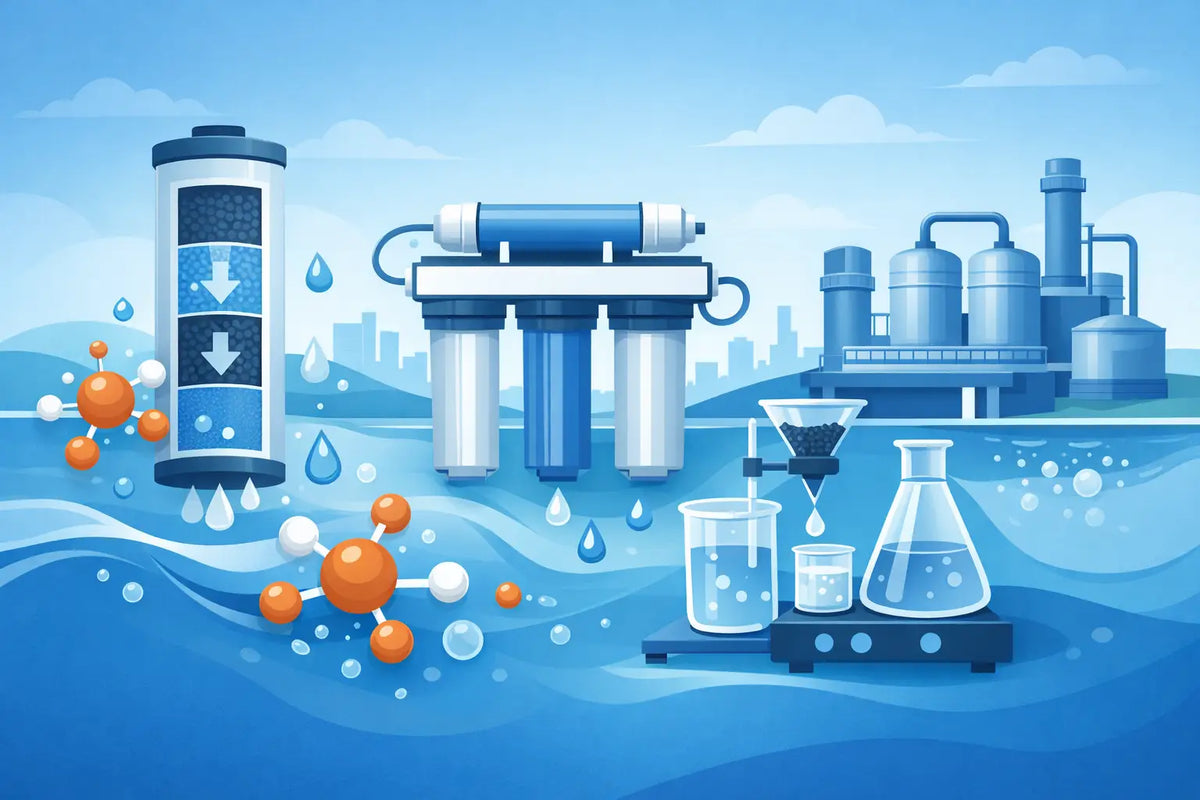
If you have been asking what removes PFAS from water, the short answer is this: only certain filtration technologies are proven to reduce them effectively, and not every water filter on the market is built for that job. That matters because PFAS are persistent chemicals, often called forever chemicals, and they can pass through basic filters that are perfectly fine for chlorine, taste, or sediment.
For homeowners, property managers, and business operators, the real challenge is not just finding a filter. It is making sure you choose one designed for your water, your usage, and the specific level of protection you need. PFAS treatment is one of those areas where the details matter.
What removes PFAS from water reliably?
The most established options for PFAS reduction are reverse osmosis, activated carbon, and in some applications ion exchange resin. These are the technologies most often used in residential and commercial treatment when PFAS is the concern.
Reverse osmosis is widely considered one of the strongest point-of-use options for PFAS reduction. It works by forcing water through a semi-permeable membrane that screens out many contaminants at a very fine level. For drinking water at a kitchen sink, that makes reverse osmosis a strong choice when the goal is broad contaminant reduction along with PFAS treatment.
Activated carbon can also reduce PFAS, especially granular activated carbon and high-quality carbon block media designed for this purpose. The catch is that performance depends heavily on water chemistry, contact time, flow rate, and the specific PFAS compounds present. A basic carbon pitcher is not in the same class as a properly engineered under-sink or whole-house carbon system.
Ion exchange resin is another option, particularly in larger or more specialized systems. In some cases, it can be very effective for certain PFAS compounds. It is more common in commercial or custom applications where treatment goals, flow demands, and maintenance schedules are being closely managed.
What does not remove PFAS from water well?
This is where many buyers get tripped up. Water softeners are not designed to remove PFAS. UV sterilizers do not remove PFAS. Basic sediment filters do not remove PFAS. Standard chlorine-focused refrigerator filters may not remove meaningful amounts either.
That does not make those products bad. It just means they solve different water problems. A softener helps with hardness. UV targets microorganisms. Sediment filters catch particulate matter. If PFAS is the issue, the system needs to be selected for PFAS specifically, not just general water improvement.
Boiling water also does not solve the problem. In fact, boiling can concentrate some contaminants as water evaporates. If someone is dealing with a PFAS advisory, boiling is not the fix.
Reverse osmosis vs carbon for PFAS
For many households, the practical decision comes down to reverse osmosis versus activated carbon. Both can play an important role, but they are not interchangeable in every setting.
Reverse osmosis is often the best fit when you want high-performance drinking water treatment at a single tap. It is especially useful if you also want to reduce a broader range of contaminants beyond PFAS, such as dissolved solids, certain heavy metals, and other difficult-to-treat compounds. The trade-off is that reverse osmosis systems are usually installed at the point of use, produce water more slowly than a simple carbon filter, and require membrane and prefilter maintenance.
Activated carbon can be a very good fit when the treatment goal is broader household use or when taste, odor, chlorine, and PFAS are all concerns. A properly sized carbon system can treat larger volumes of water than a small under-sink unit. The trade-off is that not all carbon systems are equal, and PFAS reduction depends on the media quality and design. If the system is undersized or cartridges are not changed on time, performance can drop.
In some homes, the right answer is both. A whole-house carbon system may reduce PFAS exposure across showers and fixtures, while a reverse osmosis system at the kitchen sink provides an extra layer for drinking and cooking water.
How to choose the right PFAS filter for your property
The right system starts with the right question: where do you need protection most?
If your top priority is drinking water, an under-sink reverse osmosis system is often the most direct and cost-effective solution. It treats the water you consume most and gives you high-quality water for drinking, cooking, coffee, baby formula, and ice.
If you want broader household coverage, a whole-house PFAS filtration system may be the better fit. This is more common when there is confirmed contamination in the incoming water supply and the goal is to reduce exposure at multiple fixtures. Whole-house systems are also relevant for larger homes, properties with higher water demand, and buyers who want a more comprehensive strategy.
For commercial and light industrial settings, system design gets more site-specific. Flow rate, peak demand, contaminant concentration, plumbing layout, and maintenance planning all need to be considered together. A restaurant, office, lab, or facility may need a very different solution than a single-family home.
Why testing and certifications matter
When people search for what removes PFAS from water, they often focus on technology names. That is a good start, but it is not enough. The real question is whether a specific system has been tested or certified for PFAS reduction.
PFAS is not one single chemical. It refers to a family of compounds. A filter may perform well against some and less effectively against others. That is why product testing data, certification claims, and clear performance specifications matter.
You also need to know your source water. Municipal water and private well water can present different challenges. Even among city water supplies, PFAS concentration levels and competing contaminants vary. High sediment, chlorine, organics, or hardness can affect how well a PFAS treatment system performs over time. Good system selection accounts for those conditions instead of assuming one filter fits every installation.
Maintenance is part of PFAS protection
A well-chosen filter is only as good as its upkeep. Carbon media becomes exhausted. Reverse osmosis membranes and prefilters need replacement on schedule. If maintenance gets delayed, the system may continue producing water, but not at the same level of protection.
That is one reason expert guidance matters. Buyers often compare systems based on upfront cost alone, but ownership cost and maintenance discipline are just as important. A cheaper filter that is undersized or hard to maintain can become the more expensive mistake.
For families, that can mean false confidence. For businesses, it can mean inconsistent water quality or service interruptions. A system should match both your contamination concern and your ability to maintain it properly.
When whole-house PFAS treatment makes sense
Not every PFAS situation requires full-home treatment, but there are cases where it makes a lot of sense. If PFAS levels are elevated in the incoming supply and occupants want to reduce exposure beyond just drinking and cooking, a whole-house system may be worth serious consideration.
This approach is also useful in homes with multiple residents, high daily usage, or concerns about long-term contact through bathing and washing. It can be a strong choice for property owners who want one centralized treatment solution rather than relying on multiple point-of-use devices.
The trade-off is cost and scale. Whole-house PFAS systems are larger, more specialized, and should be sized correctly for flow rate and service life. If you undersize the system, performance and convenience both suffer.
The safest buying approach
If you are comparing options right now, the safest path is to start with your water report or contamination concern, then match that data to a proven treatment method and a properly sized system. Do not rely on vague marketing terms like clean, pure, or advanced if the product does not clearly address PFAS.
Look for systems built around reverse osmosis, activated carbon, or specialized resin where appropriate. Confirm whether the unit is meant for drinking water only or whole-house use. Check replacement schedules. And if your property has unusual flow demands or multiple water issues at once, get guidance before you buy.
That is where a service-minded supplier can make the difference. PureWaterGuys helps customers match filtration systems to the actual problem, which is exactly what PFAS treatment requires.
A good PFAS solution should do more than sound reassuring. It should fit your water, your home or facility, and your long-term maintenance plan so you can move forward with confidence and protected water where it matters most.