
June 06, 2026
Whole House Water Filtration Systems for Well Water
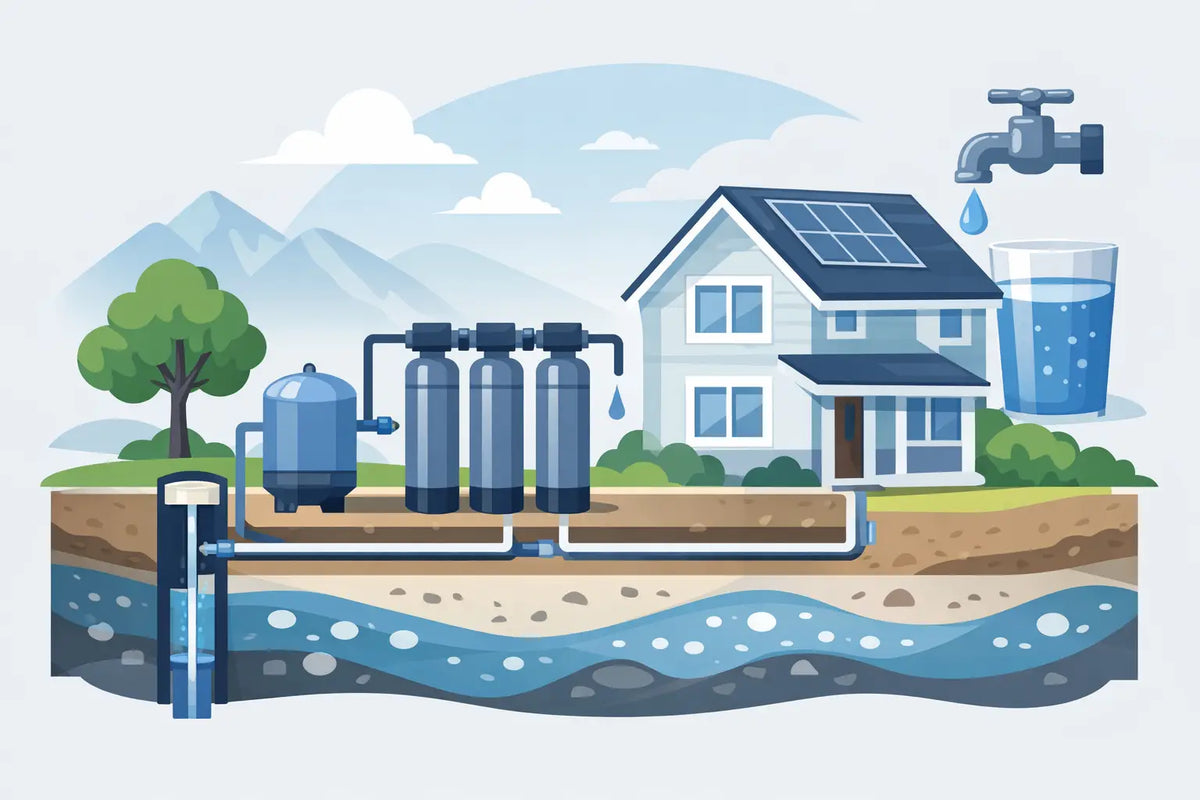
A glass of well water can look clear and still carry the problems that ruin plumbing, stain fixtures, or raise health concerns. That is why whole house water filtration systems for well water need to be chosen based on actual water conditions, not guesses. The right setup protects your family, your pipes, and the equipment that depends on clean water every day.
City water treatment is centralized. Well water treatment is your responsibility. That can feel like a burden, but it also gives you control. When a well water system is matched to the contaminants in your water, the results are often excellent. The key is understanding that well water is rarely a one-filter problem.
Why well water needs a different approach
Well water changes from one property to the next, even within the same county. One home may struggle with heavy sediment and iron staining, while another has sulfur odor, hardness, and bacteria concerns. A basic carbon filter that works well on municipal chlorine is usually not enough for a private well.
That is where many homeowners get frustrated. They shop for a single whole house filter and expect it to solve cloudy water, orange stains, rotten egg smell, and scale buildup at the same time. Sometimes one unit can address part of the problem, but most effective whole house water filtration systems for well water are built in stages.
A staged approach gives each treatment method a specific job. Sediment filtration catches dirt and grit. Iron or sulfur treatment targets nuisance contaminants that affect taste, smell, and staining. A softener handles hardness. UV sterilization can address microbiological risk when water testing supports that need. Each piece matters, and the order matters too.
Start with a water test, not a product guess
If you only take one step before buying a system, make it this one. A current water test tells you what is actually in your well water and how severe the issue is. That includes common well water concerns like sediment, iron, manganese, hardness, sulfur, low pH, tannins, bacteria, and sometimes nitrates or arsenic depending on your location.
Without testing, it is easy to underbuy or overbuy. Underbuying means the system never solves the issue. Overbuying means paying for technology you do not need. Neither is a good result.
A useful test should look at more than taste and odor complaints. Flow rate, plumbing size, household water use, and the number of bathrooms also shape system sizing. A family with a large home and high peak demand needs different equipment than a small cabin with one bathroom. Good system design balances water chemistry with real household usage.
The core components in whole house water filtration systems for well water
Most well water systems are built from a few proven treatment categories. The best combination depends on what your testing shows.
Sediment filtration
Sediment is the first line item for many well owners because sand, silt, and rust particles can damage valves, clog fixtures, and shorten the life of downstream equipment. A sediment prefilter is often the starting point in a whole house setup.
The trade-off is that finer filters catch smaller particles but can reduce pressure faster if sediment load is heavy. In homes with significant grit, a larger-capacity sediment filter or spin-down separator may make more sense ahead of finer filtration. This is one of those details that affects everyday performance more than many shoppers realize.
Iron and manganese treatment
If your sinks, toilets, or laundry show orange, brown, or black staining, iron or manganese is a likely cause. These contaminants are especially common in well water and can be stubborn. Activated carbon alone usually will not fix them.
Treatment can involve air injection, oxidizing media, catalytic carbon, or backwashing filters designed specifically for iron and manganese reduction. The right media depends on the type of iron present and its concentration. Ferrous iron, ferric iron, and iron bacteria do not behave the same way, so this is a category where proper matching matters.
Sulfur and odor reduction
That rotten egg smell in hot or cold water is often linked to hydrogen sulfide. It is unpleasant, and it can make otherwise clear water feel unusable. Sulfur treatment is typically handled with oxidizing filtration, air injection systems, or catalytic media designed for odor reduction.
Some homes only notice sulfur on the hot water side, which may point to a water heater issue rather than a whole-house contamination problem. That is a good example of why diagnosis matters before purchase. If the smell is present throughout the home, a whole house solution is usually the better path.
Water softening
Hardness is one of the most common and expensive water issues in private wells. It causes scale on fixtures, spots on dishes, soap inefficiency, and added wear on water heaters and appliances. A softener does not replace a filtration system, but in many homes it is a necessary part of the full treatment train.
If iron is also present, the softener may need protection upstream. Some softeners can handle small amounts of iron, but high iron levels can foul resin and reduce performance. This is why a dedicated iron filter before the softener is often the smarter long-term setup.
Carbon filtration
Carbon has an important role, but it is not a cure-all. It is often used for taste, odor, and certain organic compounds, and it can be very effective when paired with the right pretreatment. In well water systems, carbon is usually best as part of a broader design, not the entire design.
For example, catalytic carbon may help with sulfur-related odor in some applications, while standard carbon is more commonly chosen for polishing water after other issues are addressed. If your main problems are iron, hardness, and sediment, carbon alone will not carry the load.
UV sterilization
For homes with bacteria concerns, UV can be a strong final barrier. UV systems disinfect water by disrupting microorganisms as water passes through the chamber. They are commonly used for well water when microbiological protection is part of the treatment goal.
UV is effective when the water is already clear enough for the light to penetrate properly. That means sediment and other interfering contaminants need to be handled first. UV does not remove dirt, iron, or hardness, so it should be viewed as one stage in a complete system rather than a standalone answer.
Matching the system to the problem
The biggest mistake in this category is buying by product name instead of water condition. A "whole house filter" sounds comprehensive, but that label alone tells you very little. What matters is whether the system is designed for your contamination profile and your household demand.
A home with heavy sediment and moderate iron may need a sediment prefilter followed by an iron reduction backwashing system. A home with hardness, sulfur odor, and bacteria concerns may need oxidizing filtration, a softener, and UV. Another property may need pH correction if acidic water is eating away at plumbing.
There is no single best system for every well. There is only the best fit for your water.
Sizing and maintenance matter as much as the media
Even a high-quality system can disappoint if it is undersized. If flow rate is too low for the home, you will feel it in the shower and see it during peak demand. If backwashing equipment is not sized correctly, treatment media may not clean properly, which shortens media life and hurts performance.
Maintenance also needs to be realistic. Cartridge systems require replacements. Backwashing filters need proper drain access and programming. UV lamps need periodic replacement. Water softeners need salt unless you are using another treatment method for scale management. The best system is not just the one that can treat the water on paper. It is the one the homeowner can operate and maintain with confidence.
For many buyers, expert guidance is what closes the gap between a good product and a good outcome. That is especially true with well water, where multiple issues often overlap. PureWaterGuys helps simplify that decision by matching treatment options to actual water problems instead of pushing a one-size-fits-all answer.
What homeowners should expect from a good well water system
A properly designed system should improve water quality in ways you notice right away and in ways that protect your home over time. Water should smell better, fixtures should stay cleaner, laundry should look brighter, and scale or staining should ease up based on the contaminants being treated. Just as important, the system should support reliable pressure, manageable maintenance, and replacement schedules that make sense.
Price matters, of course, but cheap equipment that misses the problem is expensive in the long run. So is overcomplicating a system that does not need to be complicated. The goal is clean, dependable water with a treatment setup that fits your well, your home, and your daily use.
If your well water has been leaving stains, odors, grit, or doubt behind, the next smart move is not guessing harder. It is getting clear on what is in the water and choosing a system built to solve that exact problem.