
June 07, 2026
Whole House Water Filtration Systems With Softener
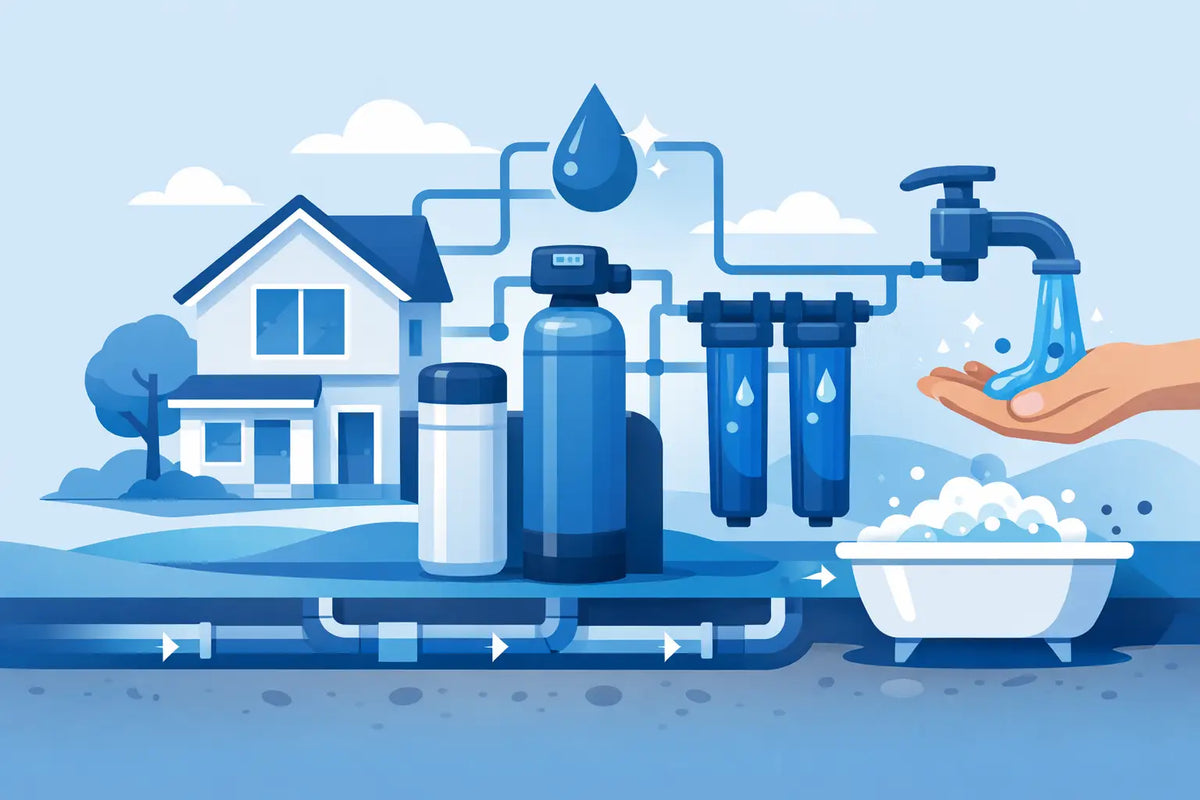
A shower door covered in white scale, stiff laundry, dry skin, and water that smells like a pool usually point to the same issue - your home water needs more than a basic filter. Whole house water filtration systems with softener are designed for exactly that problem, treating water at the point it enters the home so you are not managing separate issues fixture by fixture.
For many households, the appeal is simple: one system addresses hard water while also reducing unwanted contaminants that affect taste, odor, cleaning, and appliance life. But not every home needs the same setup. The right system depends on whether your biggest concern is hardness, chlorine, iron, sulfur, sediment, PFAS, or a combination of issues.
What whole house water filtration systems with softener actually do
A combined system usually has two jobs. The filtration side targets contaminants such as sediment, chlorine, chloramine, bad taste, odor, and in some cases specialty contaminants depending on the media used. The softener side removes hardness minerals, typically calcium and magnesium, that cause scale buildup on plumbing fixtures, water heaters, dishwashers, and glassware.
That distinction matters because a water filter and a water softener do not do the same thing. A carbon filter may improve taste and reduce chlorine, but it will not stop hard water scale. A softener may protect plumbing and help soap work better, but it will not automatically remove chlorine, sulfur odor, or every health-related contaminant. Households that need both performance and comfort often end up looking at a system that combines both functions.
Why homeowners choose a whole-house setup instead of separate fixes
Point-of-use products can help in specific spots, but they rarely solve an entire home water problem. If hard water is moving through every pipe in the house, a shower filter on one bathroom line will not protect your water heater. If chlorine is present throughout the home, a drinking water filter at the kitchen sink will not help with skin exposure in the shower or with odor from other fixtures.
A whole-house approach treats the water before it reaches bathrooms, kitchen taps, appliances, and utility connections. That means more consistent water quality across the property and fewer piecemeal purchases. For homeowners, that usually translates into less maintenance frustration and better long-term protection for plumbing and equipment.
What problems these systems are best at solving
If your water leaves spots on dishes, crusts up fixtures, shortens the life of water-using appliances, or makes soap hard to rinse, a softener is often the key piece. If the water smells or tastes bad, or if chlorine is the issue, filtration becomes just as important. Many families are dealing with both at the same time.
The most common use case is city water with hardness and chlorine. In that situation, a backwashing carbon filter paired with a softener is often a strong fit. The carbon reduces chlorine and odor, while the softener handles scale and hardness. The result is water that feels better, cleans better, and is easier on the home.
Well water is different. A softener alone is not enough if the water also has iron, manganese, sulfur, or heavy sediment. In those cases, the filtration side may need to be more specialized, sometimes with multiple treatment stages. That is where system matching matters most, because the wrong media or wrong sequence can lead to poor performance and unnecessary service calls.
How to choose whole house water filtration systems with softener
Start with your water source and a recent water test. City water and well water require different thinking, and guessing can get expensive. A homeowner focused on chlorine taste is shopping for something very different from a homeowner dealing with 15 grains of hardness, iron staining, and sulfur odor.
Next, look at flow rate and home size. A system that is undersized may cause pressure drop during busy parts of the day, especially in larger homes with multiple bathrooms. A properly sized system should match both your water conditions and the peak demand of the property.
You also need to decide whether you want a traditional salt-based softener or a salt-free conditioner. A salt-based unit is the standard choice when true hardness removal is the goal. Salt-free systems can reduce scale formation in some applications, but they do not remove hardness minerals the same way and may not be the right answer for households with significant hard water problems.
Maintenance should be part of the decision as well. Some systems need salt refills, occasional media replacement, or periodic sanitizing. Others are lower touch but may deliver a different level of treatment. The best buying decision is not just about what works on day one. It is about what you are realistically willing to maintain over the next five to ten years.
For city water homes
Most municipal water users are trying to solve a handful of recurring issues: chlorine taste and odor, hard water scale, and general water quality improvement throughout the home. In that case, a whole-house carbon filter plus a softener is often the cleanest solution.
Some municipalities use chloramine instead of chlorine, and that requires the correct filtration media. If that is missed, customers can end up with a system that technically installs fine but does not deliver the expected odor or taste improvement. That is why city water treatment still benefits from water-specific guidance rather than a generic one-size-fits-all package.
For well water homes
Well water treatment needs more care up front. Sediment, iron, manganese, sulfur, tannins, low pH, and hardness can all show up together, and the treatment order matters. A softener may help with hardness and some ferrous iron, but it is not a substitute for a properly designed iron or sulfur filter when those contaminants are elevated.
In many well applications, the right answer is a system train rather than a single tank. Sediment prefiltration, specialized oxidation or catalytic media, and then softening may all be needed depending on the test results. This is where expert specification saves homeowners time, money, and repeat troubleshooting.
Trade-offs to understand before you buy
There is no perfect system for every property. Salt-based softeners are highly effective, but they require salt and a drain connection, and some homeowners prefer to avoid that maintenance. Salt-free systems are lower maintenance, but expectations need to stay realistic if the home has heavy hardness.
Whole-house carbon filtration improves chlorine, taste, and odor, but it does not make all water contaminants disappear. If PFAS, nitrates, arsenic, or microbiological concerns are part of the picture, additional treatment may be needed. Sometimes the best setup is a whole-house system for broad protection plus a dedicated drinking water system at the kitchen sink for the highest-priority contaminants.
Budget is another real factor. A combined whole-house solution usually costs more upfront than a basic single-purpose unit, but the value often shows up in broader protection, better water consistency, and fewer appliance and fixture problems over time. For many families, paying once for the right system is more cost-effective than replacing heaters, fixtures, and cartridges while still living with water problems.
Installation and sizing mistakes that cause disappointment
The most common issue is buying based on price alone. Lower-cost systems can look similar online, but media quality, tank sizing, valve performance, and service support all affect results. If the system is too small, uses the wrong media, or is not configured for your water chemistry, the savings disappear quickly.
Another mistake is ignoring plumbing layout and flow demand. Larger homes, homes with body sprays or soaking tubs, and light commercial properties need systems that can keep up. If the valve and media bed cannot support your peak usage, the system may still function, but not at the level you expected.
It also helps to think beyond installation day. Replacement media schedules, softener programming, salt storage, and available service access all matter. A good system should fit your home and your routine, not just your shopping cart.
When a combined system makes the most sense
Whole house water filtration systems with softener make the most sense when your home has both nuisance contaminants and hard water. That could mean city water with chlorine and scale, or well water with hardness and additional treatment needs. The value is strongest when the system is matched to actual water conditions, sized correctly, and selected with the long-term use of the home in mind.
For homeowners who want better water at every tap, cleaner fixtures, longer appliance life, and more confidence in what is coming through the plumbing, this type of system is often the practical next step. If the water problems are clear but the right configuration is not, expert guidance can narrow the field quickly and keep you from buying a setup that only solves half the problem.
Pure water is not just about taste. It is about protecting your family, your plumbing, and the investment you have made in your home - with a system built for the water you actually have.