
October 30, 2026
Why Does Filtered Water Smell? Causes and Fixes
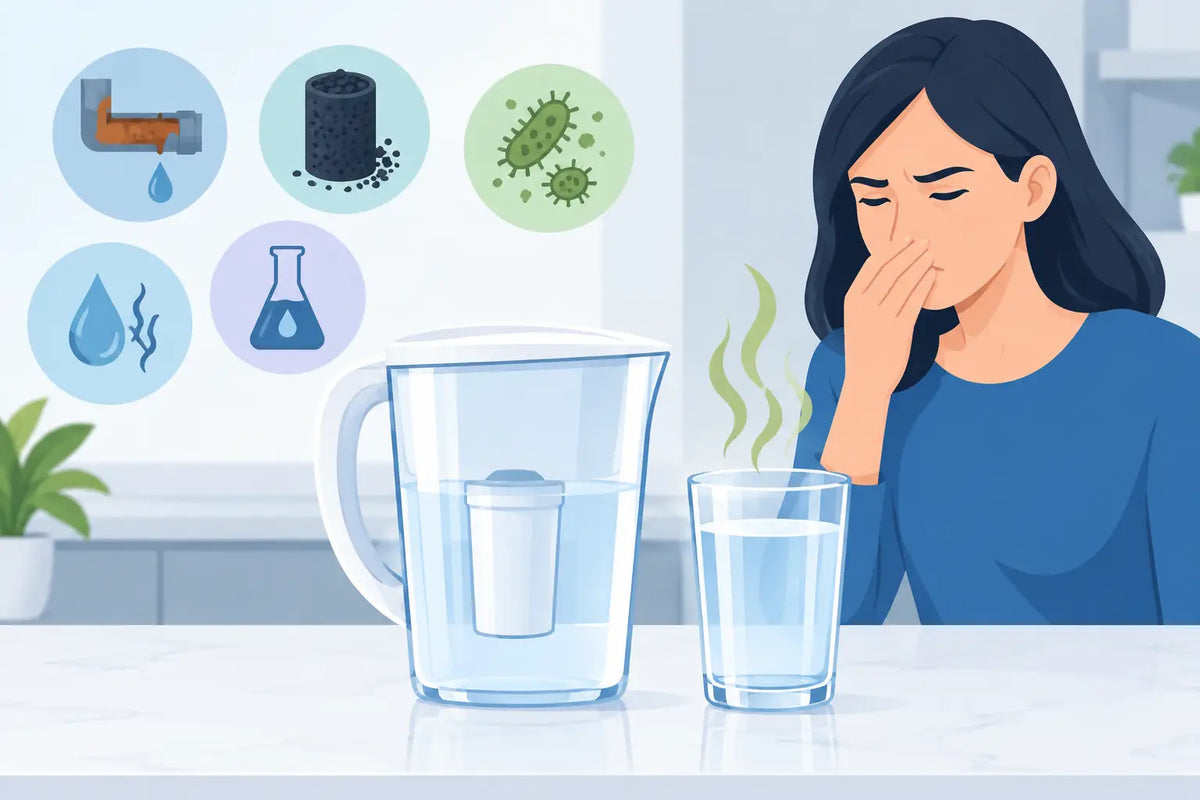
A fresh filter should make drinking water more pleasant, not leave you holding a glass at arm's length. So, why does filtered water smell? In most cases, the filter is not creating a new problem. It is either overdue for replacement, installed in a system with another odor source, or not designed to treat the specific contaminant in your water.
The smell itself is a useful clue. A chlorine-like odor points in one direction. Rotten egg odor points in another. Musty, fishy, metallic, or sewage-like smells each call for a different response. The right fix protects more than the taste of your water - it helps ensure your family, customers, equipment, and plumbing receive the treatment they need.
Why Does Filtered Water Smell After Installation?
A new filter can have a temporary odor or taste, especially when it contains activated carbon. Carbon media is highly effective at reducing chlorine, many unpleasant tastes, and certain organic compounds. But it must be thoroughly flushed before use. Fine carbon particles, trapped air, and manufacturing residue can create an earthy or slightly chemical smell during the first few gallons.
Follow the flushing instructions provided for your filter. For a pitcher, refrigerator cartridge, under-sink system, or reverse osmosis unit, that may mean running and discarding a specified amount of water before drinking it. If the odor fades after proper flushing, the system is likely working normally.
If a strong smell remains after flushing, do not assume a new cartridge will solve it. Compare filtered and unfiltered cold water from the same source. If both smell the same, the issue may be in the incoming water or household plumbing rather than the filter.
The Smell Can Help Identify the Cause
Chlorine or swimming pool smell
Municipal water suppliers commonly use chlorine or chloramine for disinfection. A standard activated carbon filter usually reduces chlorine very well. Chloramine is more persistent and may require catalytic carbon, longer contact time, or a system specifically rated for chloramine reduction.
If chlorine odor returns after your filter previously worked well, the cartridge may be exhausted. Water utilities can also temporarily increase disinfectant levels after maintenance or seasonal changes. A small refrigerator filter may not have enough media or flow capacity to handle a strong chlorine taste throughout a busy household.
Rotten egg or sulfur smell
A rotten egg smell is typically caused by hydrogen sulfide gas. It is common in some private wells, though it can also occur in plumbing where bacteria interact with sulfur compounds. Carbon filtration may reduce low levels of hydrogen sulfide, but it is not always a complete or lasting solution.
The source matters. If the odor is present in both hot and cold water, it may be coming from the well or water supply. If it appears only in hot water, the water heater is a likely suspect. A failing anode rod or bacterial activity inside the tank can produce a sulfur odor that no drinking water filter can fully correct.
Well water with recurring sulfur odor may need a properly sized treatment approach, such as oxidation, aeration, specialty media, or disinfection, often paired with sediment filtration. Testing the water first prevents buying a filter that only masks the symptom.
Musty, earthy, or stale smell
Musty water can indicate an old carbon cartridge, a filter housing that needs sanitizing, or stagnant water in a line that is used infrequently. Activated carbon works by adsorbing contaminants, but once its capacity is used, it can no longer deliver the same odor reduction. In some conditions, an expired filter can also provide a surface where bacteria grow.
Replace cartridges on schedule, not only when the water starts tasting bad. The correct interval depends on the system, water quality, household use, and cartridge size. A high-use family may exhaust a small filter much sooner than the date printed on the package suggests.
Fishy, swampy, or sewage-like smell
These odors deserve closer attention. They can be caused by organic material, bacterial growth in a filter or drain, or plumbing issues rather than the water itself. For example, a sink drain can produce an odor that seems to come from the faucet when water splashes into the basin.
Try filling a clean glass away from the sink and smelling it in another room. If the smell disappears, clean the drain, garbage disposal, and overflow opening. If the odor remains in the glass, inspect the filter service history and consider testing the water, particularly for private wells.
Metallic or chemical smell
Metallic odors may be associated with iron, manganese, copper plumbing, or corrosion. A sharp chemical or solvent-like smell is less typical and should not be ignored. Stop using the water for drinking until you identify the source, especially if the odor appears suddenly or is accompanied by unusual color, cloudiness, or a change in household water pressure.
A certified laboratory test provides better answers than guessing from odor alone. This is particularly valuable for well owners, properties with older plumbing, and businesses where water quality affects customers or operations.
Your Filter May Be the Wrong Type for the Job
Not every filter treats every water problem. A sediment filter catches particles such as sand, silt, and rust, but it does little for dissolved sulfur gas or chlorine odor. A basic carbon filter can improve taste and odor, but it may not address bacteria, heavy mineral content, or certain dissolved contaminants. Reverse osmosis provides broad reduction for many dissolved substances at the drinking-water tap, yet it is not a substitute for whole-home treatment when the odor is present in every shower, toilet, and appliance.
This is where system selection matters. If only drinking water smells, an under-sink carbon filter or reverse osmosis system may be the practical answer. If every fixture has an odor, a whole-house system is usually the better starting point. For well water, the treatment design should reflect actual test results, flow rate, and the combination of sulfur, iron, manganese, hardness, and bacteria present.
Check These Practical Causes Before Replacing Equipment
Start with the simplest checks. Confirm that the cartridge is installed in the correct direction and that all protective caps were removed. Flush it according to its instructions. Check its replacement date and capacity. If the filter housing has been opened, inspect the O-ring and housing for grime, standing water, or signs that sanitizing is overdue.
Then compare cold and hot water. Compare filtered and unfiltered water. Check more than one faucet if you have a whole-house system. These small comparisons help narrow the problem quickly:
- Odor in hot water only often points to the water heater.
- Odor at one faucet only may point to that fixture, drain, or supply line.
- Odor throughout the home suggests source water or whole-house treatment.
- Odor after a filter's rated life usually points to exhausted media or maintenance needs.
When to Test Your Water or Call for Help
A filter replacement is reasonable when the issue clearly began near the end of a cartridge's service life and the odor matches a known taste-and-odor concern. Testing or professional guidance is the smarter next step when the smell is new, severe, widespread, or accompanied by staining, slime, cloudiness, illness concerns, or changes in well performance.
Private well owners should be especially proactive. Well conditions can change after heavy rain, flooding, drought, nearby construction, or changes in groundwater. Bacteria testing is important when a well has a sewage-like odor, recurring slime, or any reason to suspect contamination. UV treatment can help address microbiological concerns when paired with proper prefiltration, but it does not remove sulfur odor, sediment, or dissolved minerals on its own.
For restaurants, offices, and other commercial properties, odor complaints can affect customer confidence quickly. A system should be sized around peak demand, incoming water quality, and maintenance access - not simply chosen by price or cartridge dimensions.
Clean, pleasant-smelling water should be the result of a treatment system matched to the actual problem. If you are unsure whether the cause is your cartridge, plumbing, water heater, or source water, start with the odor pattern and a water test. The right diagnosis makes the next purchase simpler, safer, and far more likely to last.