
October 20, 2026
RO Versus UV: Which Water System Fits?
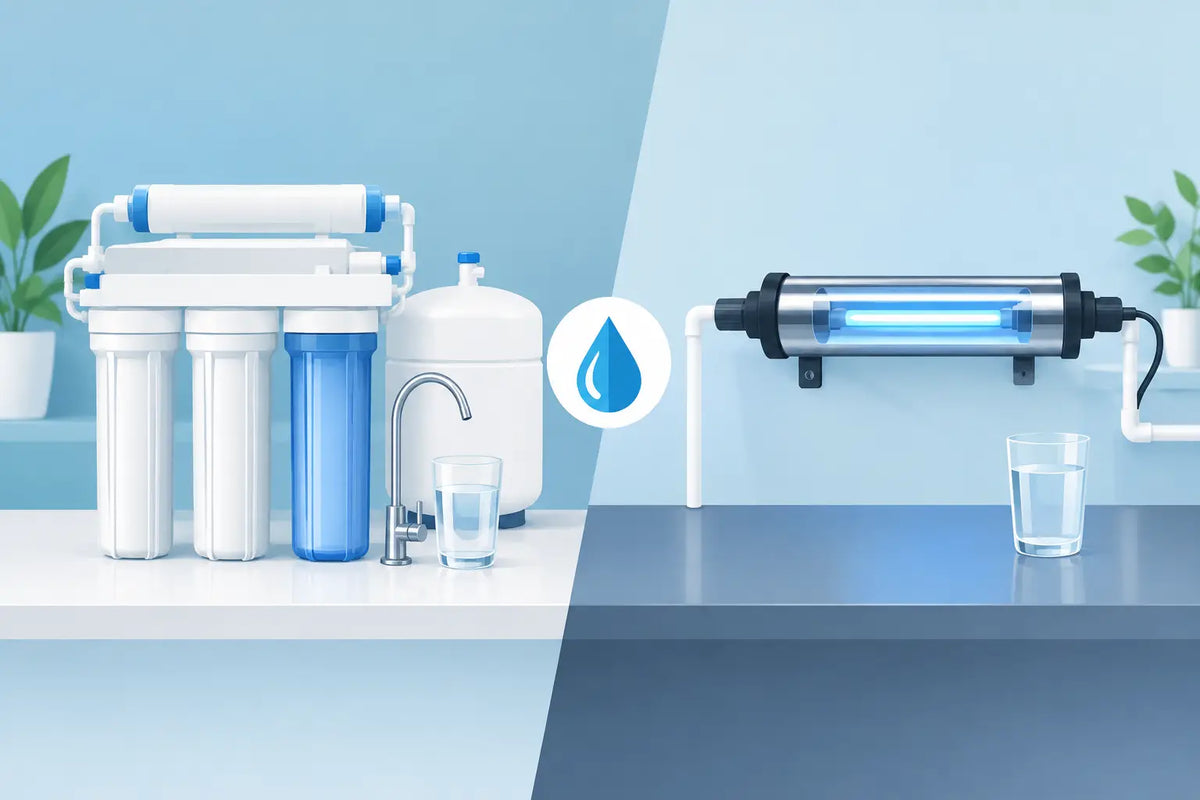
A water treatment system should solve the problem in your water, not simply add another piece of equipment under the sink. In the RO versus UV decision, the key difference is simple: reverse osmosis removes a wide range of dissolved contaminants, while ultraviolet treatment disinfects water by inactivating microorganisms. One is not automatically better than the other. The right choice depends on what your water test, water source, and household or facility actually require.
For many homeowners, the best answer is a combination of both technologies. For others, installing the wrong system can leave the real issue untouched. If you are concerned about PFAS, lead, dissolved solids, or unpleasant taste, RO is typically the stronger fit. If bacteria, viruses, or other microbiological risks are the concern, UV treatment deserves serious attention.
RO Versus UV: The Core Difference
Reverse osmosis, commonly called RO, pushes water through a semi-permeable membrane. That membrane reduces many dissolved substances that ordinary sediment or carbon filters may not address effectively. Depending on the system and water conditions, RO can reduce contaminants such as lead, arsenic, fluoride, nitrates, chromium, PFAS, dissolved salts, and total dissolved solids. It also commonly improves taste and odor when paired with carbon filtration.
UV water treatment works differently. Water passes through a chamber containing a UV lamp. The ultraviolet light damages the genetic material of microorganisms, preventing bacteria, viruses, and cysts from reproducing. UV does not strain contaminants out of the water. It disinfects clear water without adding chemicals.
That distinction matters. A UV system will not reduce lead, fluoride, PFAS, sodium, minerals, or chlorine. An RO system may significantly reduce many of those substances, but it is not a substitute for a properly sized UV unit when a water source has confirmed microbial contamination or ongoing bacteria risk.
When Reverse Osmosis Is the Better Choice
An RO drinking water system is usually installed at a single point of use, most often beneath the kitchen sink with a dedicated drinking water faucet. It is a practical choice for families who want higher-quality water for drinking, cooking, coffee, ice makers, infant formula, or pet bowls without treating every gallon used for bathing or laundry.
RO makes sense when a water report shows dissolved contaminants or when city water has a noticeable chemical taste. Municipal water may be disinfected and generally safe, yet still contain chlorine, chloramine, trace contaminants, or mineral content that affects taste. A properly configured RO system provides an extra level of reduction for the water your family consumes most often.
It is also widely used for private wells where testing identifies nitrate, arsenic, heavy metals, or high total dissolved solids. Well water quality can change with rainfall, seasonal conditions, nearby land use, and shifts in groundwater. A water test should guide the system selection, especially when a contaminant has a known health concern.
RO does have trade-offs. It needs regular filter and membrane maintenance, requires adequate water pressure, and produces a reject stream as part of the purification process. Modern systems can be much more efficient than older designs, but wastewater is still a factor to consider. Because RO removes dissolved minerals along with unwanted contaminants, some homeowners also prefer a system with a remineralization stage for a more balanced taste.
When UV Water Treatment Is the Better Choice
UV treatment is designed for a different risk: microorganisms. It is especially valuable for private wells, rural properties, cabins, and facilities where bacteria exposure is possible. If a test finds total coliform or E. coli, or if there is a history of flooding, well repair, surface water influence, or recurring bacterial concerns, UV can be an essential part of the treatment plan.
Unlike chemical disinfection, UV does not change the taste, smell, or mineral content of water. It also does not add chlorine to the water. For homeowners who want continuous microbiological protection without chemical feed equipment, a correctly sized UV system can be a straightforward solution.
However, UV light needs clear water to work as intended. Sediment, iron, manganese, tannins, hardness scale, or cloudy water can block or scatter UV light before it reaches microorganisms. That is why a UV system often needs pretreatment, such as sediment filtration, iron reduction, softening, or carbon filtration. The quartz sleeve around the lamp must also be cleaned or replaced as needed, and the lamp requires scheduled replacement even if it still appears to be glowing.
For a whole-home UV installation, sizing matters. The unit must support the property’s real peak flow rate, not just average daily use. A system that is too small may not provide the intended UV dose when multiple showers, appliances, and fixtures run at once.
Can RO and UV Work Together?
Yes. In fact, RO and UV are often complementary rather than competing systems. The combination is common when water has both dissolved contaminant concerns and microbiological risk.
For example, a well owner may need sediment and iron treatment first, followed by whole-house UV disinfection for bacteria protection. At the kitchen sink, an RO system can then reduce dissolved solids, arsenic, nitrate, or other contaminants identified in the water analysis. Each component has a clear job, and the system is built around the actual source-water conditions.
A point-of-use UV stage may also be included in some advanced RO configurations. This can provide additional protection for stored RO water, particularly where microbial control is a priority. It should not replace source-water treatment when the incoming water itself has bacteria concerns. Whole-home protection requires treatment at the point where water enters the building.
City Water, Well Water, and Commercial Needs
City water and well water call for different assumptions. Municipal water has usually been disinfected before it reaches your home, so the bigger questions are often taste, chlorine or chloramine, lead from plumbing, PFAS, or other dissolved contaminants. For many city-water households, RO is the more relevant starting point.
Private well water is not regulated the same way as municipal water. Testing should cover bacteria and chemistry, because a well can have more than one issue at the same time. Sulfur odor, iron staining, hardness, low pH, bacteria, and nitrates require different treatment approaches. UV may protect against biological contamination, but it will not correct the chemical or aesthetic problems that often accompany well water.
Restaurants, laboratories, property managers, and other commercial operators may need both higher flow capacity and more specific water quality targets. A restaurant may use RO for high-quality ice, beverages, and equipment protection while using filtration or softening for the rest of the building. A facility using well water may need pretreatment and UV to protect occupants, equipment, and process water. Commercial specification should account for flow rate, demand patterns, water testing, maintenance access, and local requirements.
How to Choose the Right System
Start with a current water test whenever possible. Guessing based on taste, odor, or a neighbor’s recommendation can lead to an incomplete solution. Taste can point to chlorine, sulfur, minerals, or organic material, but it cannot confirm contaminants such as arsenic, nitrate, lead, or bacteria.
Then consider where protection is needed. If the concern is drinking water quality, an under-sink RO system may be the efficient choice. If the concern is bacteria throughout a private well home, a whole-house UV system is typically more appropriate. If the concern includes both, build a layered treatment plan instead of asking one technology to do everything.
Also plan for maintenance before buying. RO systems need replacement prefilters, postfilters, and eventually a membrane. UV systems need annual lamps and periodic sleeve service. The best system is one that matches your water and is simple enough to maintain consistently.
Pure Water. Protected Family. Whether you need RO, UV, or a combined solution, the most reliable next step is to match the equipment to verified water conditions, your household demand, and the protection you expect every day.